
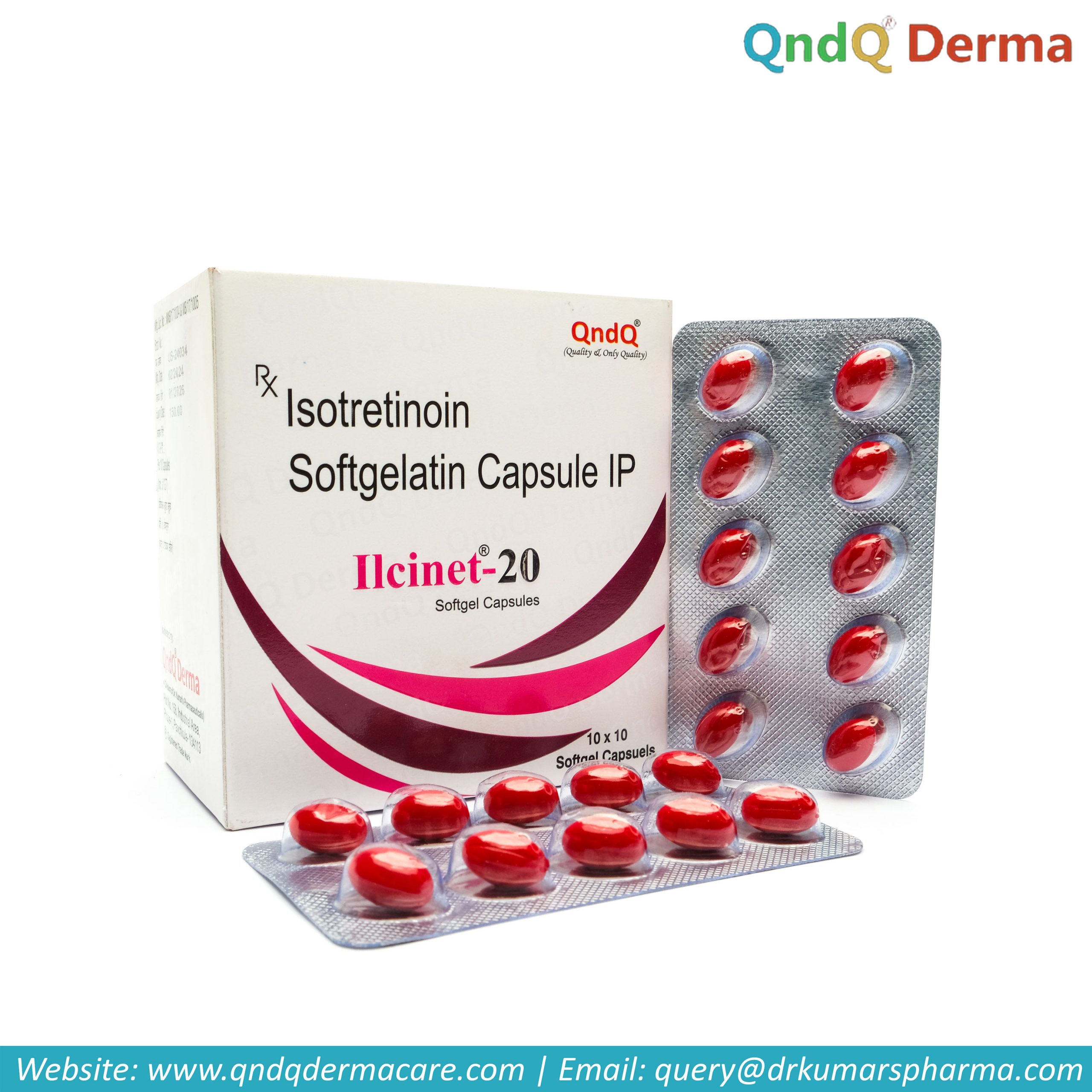
Description
Isotretinoin 20mg is a soft capsule of oral isotretinoin, a vitamin A–related medicine used for severe, stubborn acne. That includes nodular acne that has not cleared with antibiotics and creams. This page is written like a monitoring dossier. It sets out what gets checked, when, and why, so you can keep pace with your prescriber, your pharmacy and the iPLEDGE system for the whole course. Every figure below comes from the US prescribing information or official programme pages. Your prescriber sets your actual dose and schedule.
Isotretinoin 20mg at a glance
The table below is a reference card. It describes the product and the label framework. It is not a treatment plan.
| Item | What the label or programme says |
|---|---|
| Medicine | Isotretinoin, an oral retinoid (vitamin A derivative) |
| Form | Soft gelatin capsule, swallowed whole with a full glass of liquid |
| US strengths (most generics and Accutane) | 10 mg, 20 mg, 30 mg and 40 mg; some branded forms use other strengths |
| UK strengths | Vary by manufacturer; 5 mg, 10 mg, 20 mg and 40 mg capsules are among those prescribed |
| Dose basis | Weight-based: the US label range is 0.5 to 1 mg per kg of body weight per day, split into two doses |
| With food? | Yes. The label says to take the doses with food; once-daily dosing is not recommended |
| Typical course | 15 to 20 weeks, per the US label (roughly four to five months) |
| Supply per fill (US) | No more than 30 days, with no refills |
| Access route (US) | iPLEDGE REMS only: registered prescriber, certified pharmacy, enrolled patient |
| Who decides the dose | Your prescriber, based on weight, severity, tolerance and lab results |
Where does 20 mg fit? It is one of the four standard US capsule sizes. A prescriber may use it alone or combine it with other strengths to reach a daily total that matches your weight. For a lower starting point, see the isotretinoin 10 mg month-one guide. For how weight and total course dose are calculated, see the isotretinoin 30 mg dose breakdown.
The capsule should be taken the same way each time. If a dose is missed, the US label says to skip it and never take two doses at once. Our general guide to handling a missed medicine dose explains why doubling up is risky. The label is the final word for isotretinoin. Food matters here too. Isotretinoin is fat-soluble, so taking it with meals helps it absorb, as our article on timing medicines around meals explains in general terms.
The iPLEDGE month, step by step
In the US, every fill of isotretinoin 20mg passes through the same monthly cycle. The cycle is stricter for patients who can get pregnant. Below is the sequence the label, MedlinePlus and the FDA describe. Programme rules change, so confirm each step with your prescriber or on the official iPLEDGE REMS site.
Before the first capsule
- Counselling and consent. Your prescriber explains the risks of birth defects, mental health effects and other serious problems. You sign the informed consent paperwork.
- Registration. Your prescriber registers you in iPLEDGE and assigns a risk category. That category is either “can get pregnant” or “cannot get pregnant”. It decides which of the steps below apply to you.
- Contraception starts (if you can get pregnant). You must use two forms of birth control at the same time, at least one of them a primary method, for at least one month before the first dose. The only exception is a commitment to continuous abstinence. Exemptions apply only after a hysterectomy, removal of both ovaries or confirmed menopause. A tubal ligation alone does not qualify.
- Two negative pregnancy tests (if you can get pregnant). First a screening test, then a confirmation test at least 30 days later, after a month of contraception. FDA guidance says pre-treatment tests must still be done in a medical setting.
- Baseline blood tests for everyone. A fasting lipid panel and liver function tests are drawn before treatment starts (see the calendar below).
Every month during treatment
- A prescriber visit. This can be in person or by telemedicine, and a new prescription is needed each month.
- A pregnancy test (if you can get pregnant). The prescriber enters the result in iPLEDGE. Since October 2023, the FDA has let prescribers accept home pregnancy tests during and after treatment if they choose to. They must have safeguards against misread or falsified results.
- Comprehension questions. Patients who can get pregnant log in to iPLEDGE each month. They confirm their two birth control methods and answer questions about the programme.
- The 7-day pickup window. Patients who can get pregnant must collect the prescription within 7 days of the pregnancy test specimen date. If the window closes, the authorisation lapses and a new test is needed. FDA-approved changes, now scheduled to take effect on 15 November 2026, say the repeat test can be done right away. Before the first dose, however, that repeat test must be done in a medical setting.
- Pharmacy check. The certified pharmacist confirms in iPLEDGE that every requirement is met before dispensing a supply of up to 30 days.
If you cannot get pregnant, the cycle is shorter. You still need registration, counselling, monthly prescriber contact and lab monitoring. You do not need pregnancy tests or the contraception steps. Your past pickup deadline was 30 days. The 2026 changes remove that deadline and end monthly counselling documentation. They still require counselling at enrolment. Never share capsules with anyone. A capsule given to a person who could be pregnant bypasses every safeguard above.
At the end of the course
- Final pregnancy tests (if you can get pregnant). One test at the end of treatment and another one month after the last dose.
- Contraception continues for one month after the last capsule, as covered in the after-the-course section below.
Your lab-test calendar on isotretinoin 20mg
Blood tests are what make isotretinoin safe enough to use. The schedule below follows the US prescribing information. Your prescriber may test more often, especially if you have diabetes, obesity, a lipid disorder, heavy alcohol use or a family history of high triglycerides.
| When | Test | Who | Notes |
|---|---|---|---|
| Before treatment | Fasting lipid panel (cholesterol, HDL, triglycerides) | Everyone | Fast as instructed; the label advises no alcohol for at least 36 hours before the draw |
| Before treatment | Liver function tests (liver enzymes) | Everyone | Sets your personal baseline |
| Before treatment | Two pregnancy tests, at least 30 days apart | Patients who can get pregnant | Done in a medical setting |
| First weeks of treatment | Repeat fasting lipids | Everyone | The label says to repeat at intervals until the lipid response is known, usually within about 4 weeks |
| During treatment | Repeat liver function tests | Everyone | Periodically, as your prescriber directs |
| Every month | Pregnancy test | Patients who can get pregnant | Must fall within 7 days before each prescription |
| Last dose | Pregnancy test | Patients who can get pregnant | End-of-treatment check |
| One month after last dose | Pregnancy test | Patients who can get pregnant | Final programme test |
| As needed | Blood sugar, muscle enzymes (CPK) or others | Selected patients | The label notes blood sugar problems and raised CPK in some patients |
Keep a copy of each result. A simple folder or phone note helps you spot trends and answer questions at the next visit. If you have diabetes, our article on managing diabetes alongside other prescriptions covers general habits for tracking glucose readings.
When a result comes back abnormal
Out-of-range numbers are common on isotretinoin, and most are managed without drama. Here is what the label reports and what prescribers typically do.
Raised triglycerides and cholesterol
In clinical trials, about one in four patients had a marked rise in triglycerides. About 15% had a drop in HDL (“good”) cholesterol, and about 7% had a rise in total cholesterol. Levels above 800 mg/dL have been reported. Very high triglycerides matter because they are linked with acute pancreatitis. The label also says pancreatitis has occurred in people with normal triglycerides, and rare cases have been fatal.
What prescribers may do: repeat the test fasting, reduce the dose, advise cutting alcohol and refined sugars, or pause treatment. The label says to stop isotretinoin if high triglycerides cannot be controlled. For general background on lipid numbers, see our guide to living with high cholesterol and triglycerides.
Rising liver enzymes
About 15% of trial patients had mild to moderate liver enzyme rises. Clinical hepatitis has been reported, though it is uncommon. If enzymes do not settle, or hepatitis is suspected, the label says to stop the drug and investigate. Avoiding alcohol helps the liver numbers stay readable. Our article on medicines and liver health explains in plain terms what liver enzyme tests measure.
Stop and get urgent care for: severe upper stomach pain that may spread to the back, with nausea, vomiting or fever (possible pancreatitis). Also seek help for yellow skin or eyes or dark urine (possible liver injury), and for rectal bleeding or severe diarrhoea. The same applies to a severe headache with blurred vision, nausea or vomiting (possible raised pressure in the skull). Call 911 in an emergency. For a suspected overdose, call Poison Help on 1-800-222-1222.
Signals you track at home
Lab tests catch silent changes. Your own log catches the rest. Bring this table, filled in, to each monthly visit. Most entries will say “fine”. The value is in spotting a change early.
| Signal | What to note | Why it is on the list |
|---|---|---|
| Mood and behaviour | Low mood, irritability, anger, withdrawal, poor sleep, loss of interest | The label warns of depression, psychosis and suicidal thoughts |
| Headaches | New, severe or persistent headaches, especially with nausea | Possible raised pressure in the skull (pseudotumor cerebri) |
| Vision | Blurred vision, poor night vision, dry or sore eyes | Decreased night vision can persist; corneal changes are reported |
| Hearing | Ringing in the ears or reduced hearing | The label says hearing loss may be permanent; stop and report it |
| Joints, back and muscles | Back pain, joint pain, muscle aches after exercise | Musculoskeletal pain and raised CPK are reported; rare muscle breakdown |
| Bowel | Stomach pain, rectal bleeding, severe diarrhoea | Linked to inflammatory bowel disease, even without prior history |
| Skin and lips | Dryness, cracking, rash, peeling, nosebleeds | Expected dryness; severe rashes need urgent review |
| Acne itself | Flare in the first weeks, then progress | Acne can worsen briefly before improving |
Some of these signals overlap with general medicine side effects. These guides cover when a headache needs attention, blurred vision while on medication, ringing in the ears and bowel symptoms and gut sensitivity. For isotretinoin, report any of them to your prescriber rather than waiting for the next visit.
Two practical notes come from the label. First, do not drive at night until you know how your night vision has been affected. Second, take care with intense exercise. Bone and muscle effects have been reported, and teenagers in high-impact sports may face extra risk. Our article on exercising safely while on a prescription offers general pacing tips. Ask your prescriber before starting a new training plan.
Dry lips and skin are the most common complaints. Gentle cleansers, lip balm and moisturiser help. Do not add harsh spot treatments without asking first. Our general piece on quick spot care is written for people not on isotretinoin, and many of its products are too drying during a course. Avoid waxing, laser treatments and dermabrasion during treatment and for six months afterwards, because of scarring risk.
Mental health checks are part of the monitoring
The US label warns that isotretinoin may cause depression, psychosis and, rarely, suicidal thoughts, suicide attempts, suicide and aggressive or violent behaviour. A direct cause has not been proven. Even so, prescribers must ask about psychiatric history before starting and check mood at every visit. In the UK, MHRA measures announced in October 2023 added a mental and sexual health assessment before treatment and at each follow-up. For context on how medicines can affect mood, see our article on when a medicine may be linked to depression.
Ask a family member or close friend to watch for changes too. People often notice in others what they miss in themselves. Signs include sadness, crying spells, withdrawal from friends, loss of interest in activities, sleep changes, unusual anger, or seeing or hearing things that are not there. Stopping the capsules may not be enough on its own, and your prescriber may refer you for further care. Background reading on what drives mental illness and self-care routines that support mental wellness can help families talk about it. They do not replace professional help.
If you have thoughts of harming yourself: stop taking isotretinoin and get help now. In the US, call or text 988 (Suicide & Crisis Lifeline), or call 911 if you are in immediate danger. In the UK, call NHS 111, Samaritans on 116 123, or 999 in an emergency. Then tell your prescriber.
Interactions to clear before the first dose
Give your prescriber and pharmacist a full list of everything you take, including vitamins, herbal products and anything bought without a prescription. The table follows the US label’s drug interaction section.
| Product | Label position | Reason |
|---|---|---|
| Vitamin A supplements (including some multivitamins) | Avoid | Added vitamin A toxicity |
| Tetracycline antibiotics (doxycycline, minocycline, tetracycline) | Avoid | Both are linked with raised pressure in the skull |
| Microdosed progestin “minipills” | Not adequate birth control | May not prevent pregnancy reliably during treatment |
| St John’s wort | Do not self-medicate | May weaken hormonal birth control; pregnancies have been reported |
| Phenytoin | Use with caution | Phenytoin can soften bones (osteomalacia); combined bone effects are unstudied |
| Systemic corticosteroids (e.g. oral prednisone) | Use with caution | Steroids can cause osteoporosis; combined bone effects are unstudied |
Check multivitamin labels for vitamin A (retinol or retinyl esters). Our general article on combining vitamins with prescription medicines explains how to read supplement labels. Tetracyclines are common acne antibiotics, so many people stop one just before starting isotretinoin. Our note on antibiotics and other prescriptions covers why every new antibiotic should be flagged to your pharmacist. For a broader view, see our overview of how drug interaction checks work.
The blood donation rule
Do not donate blood while taking isotretinoin 20mg or for one month after your last dose. Donated blood could reach a pregnant patient and expose the baby to the drug. This is a label requirement, not a preference. For general context on medicines and donor eligibility, see our guide on blood donation while taking a prescription. Tell the donation centre about your isotretinoin course when you return after the waiting period.
Other “one-month” and handling rules apply too. Breastfeeding is not advised during treatment. The Accutane-family label also advises avoiding it for a period after the last dose, so ask your prescriber about timing. Our article on breastfeeding and prescription medicines gives general background. Store capsules in their original pack, away from light and out of reach of others. Return leftover capsules to the pharmacy rather than keeping them. See our guides to safe medicine storage at home and disposing of unused medicines for practical steps.
After the course: relapse, retreatment and stopping birth control
Results. The American Academy of Dermatology notes that isotretinoin often leads to long-lasting clearance, which can be permanent for some people. Skin often keeps improving for a while after the last capsule.
Relapse. Acne can return in some patients. If it does, the US label says a second course can be considered only after at least two months off the drug. It is mainly for people who have finished growing. Long-term continuous use, even at low doses, has not been studied and is not recommended.
When birth control can stop. Patients who can get pregnant must keep using two forms of contraception for one month after the last dose. They also need the final pregnancy test at that one-month mark. After that, iPLEDGE requirements end, but plan any pregnancy with your doctor. The NHS advises waiting at least one month after stopping before trying to conceive. Our general article on medicine safety in pregnancy covers why timing matters. If fertility is a concern for any reason, read our overview of how medicines can affect fertility and raise it with your prescriber.
Checks after stopping. Lipids and liver enzymes usually settle once treatment ends. Night vision, hearing or mood changes that persist should still be reported. For tips on bringing a clear list of questions to appointments, see our guide on talking openly with your doctor about a prescription. If you are moving to a higher strength mid-course, the isotretinoin 40 mg side-effect manual explains what changes at the top of the dose range.
Isotretinoin 20mg questions, answered
How often do you need blood tests on isotretinoin 20mg?
The label calls for fasting lipids and liver tests before you start. Lipids are repeated until your response is clear, usually within about four weeks. Liver tests are repeated periodically. Patients who can get pregnant also need a pregnancy test every month. Your prescriber may test more often.
What happens if I miss the iPLEDGE 7-day window?
The authorisation lapses and the pharmacy cannot dispense. You will need a new pregnancy test before a new prescription. Under FDA-approved changes due on 15 November 2026, the repeat test can be done right away. If you have not yet taken a first dose, it must be done in a medical setting. Ask your prescriber which rules apply on your date.
Can I drink alcohol before an isotretinoin blood test?
The label advises no alcohol for at least 36 hours before a lipid test, because alcohol can raise triglycerides. Many prescribers also advise limiting alcohol for the whole course to protect the liver and lipid results.
What should I not take with isotretinoin?
Avoid vitamin A supplements and tetracycline antibiotics. Do not rely on progestin-only minipills for birth control. Do not self-medicate with St John’s wort. Phenytoin and systemic steroids need caution. Always check new products with your pharmacist.
Is 20 mg of isotretinoin a low dose?
Not on its own terms. The right daily amount depends on body weight and the plan your prescriber chooses. A 20 mg capsule may be one of two daily doses, or part of a combination. It is a building block, not a fixed label of “low” or “high”.
Can I donate blood on isotretinoin?
No. Do not donate during treatment or for one month after the last dose, so that the drug cannot reach a pregnant recipient.
How long after isotretinoin can I stop birth control?
The label requires two forms of contraception for one month after the last dose, plus a pregnancy test at that point. Talk to your prescriber before stopping, and before trying to conceive.
Can acne come back after isotretinoin?
Yes, it can return in some people. If it does, a second course may be considered after at least two months off the drug, under the full programme again.
Can I buy isotretinoin 20mg online without seeing a prescriber?
No. The FDA warns that buying isotretinoin online without a prescription is illegal and dangerous. In the US, it can only be dispensed by an iPLEDGE-certified pharmacy to an enrolled patient. In the UK and EU, it is prescribed under specialist supervision.
Do I need iPLEDGE if I cannot get pregnant?
Yes. Every US patient must be registered and counselled, and must fill prescriptions through a certified pharmacy. The pregnancy test and contraception steps apply only to patients who can get pregnant.
Key takeaways
- Isotretinoin 20mg is prescription-only. In the US, it is dispensed only through iPLEDGE-certified pharmacies to enrolled patients.
- Patients who can get pregnant need two forms of birth control from one month before to one month after treatment. They also need two negative tests before starting and a test every month.
- Collect each prescription within the 7-day window after the pregnancy test.
- Baseline fasting lipids and liver tests are required, with repeats during treatment.
- Very high triglycerides and liver enzyme rises can mean a dose change or a stop.
- Log mood, headaches, vision, hearing, joint and bowel symptoms, and report changes quickly. Call or text 988 in a mental health crisis.
- Avoid vitamin A supplements, tetracyclines, minipills as contraception, and St John’s wort. Use phenytoin and systemic steroids only with caution.
- No blood donation during treatment or for one month afterwards.
Further reading: the MedlinePlus isotretinoin guide, the Accutane prescribing information on DailyMed, the FDA isotretinoin information page, the AAD isotretinoin overview, the NHS isotretinoin capsules page, the MHRA’s 2023 safety measures and the MHRA’s January 2026 update. To check how a pharmacy label should look, see our guide to reading a prescription label.
This description is for information only and does not replace advice from your doctor or pharmacist. Use only as prescribed.
Prescription required. Restricted medicine. Isotretinoin can cause severe, life-threatening birth defects, even after a single dose taken during pregnancy. It must never be taken by anyone who is pregnant or could become pregnant without following a pregnancy prevention programme.
United States: isotretinoin is available only through the FDA-required iPLEDGE REMS programme. US patients can only receive it from an iPLEDGE-certified pharmacy, on a prescription from an iPLEDGE-registered prescriber, after their own enrolment. United Kingdom and EU: it is prescribed under a Pregnancy Prevention Programme with specialist oversight. No order on this page can replace, skip or shorten any of these steps.
Reviews
There are no reviews yet.