
Description
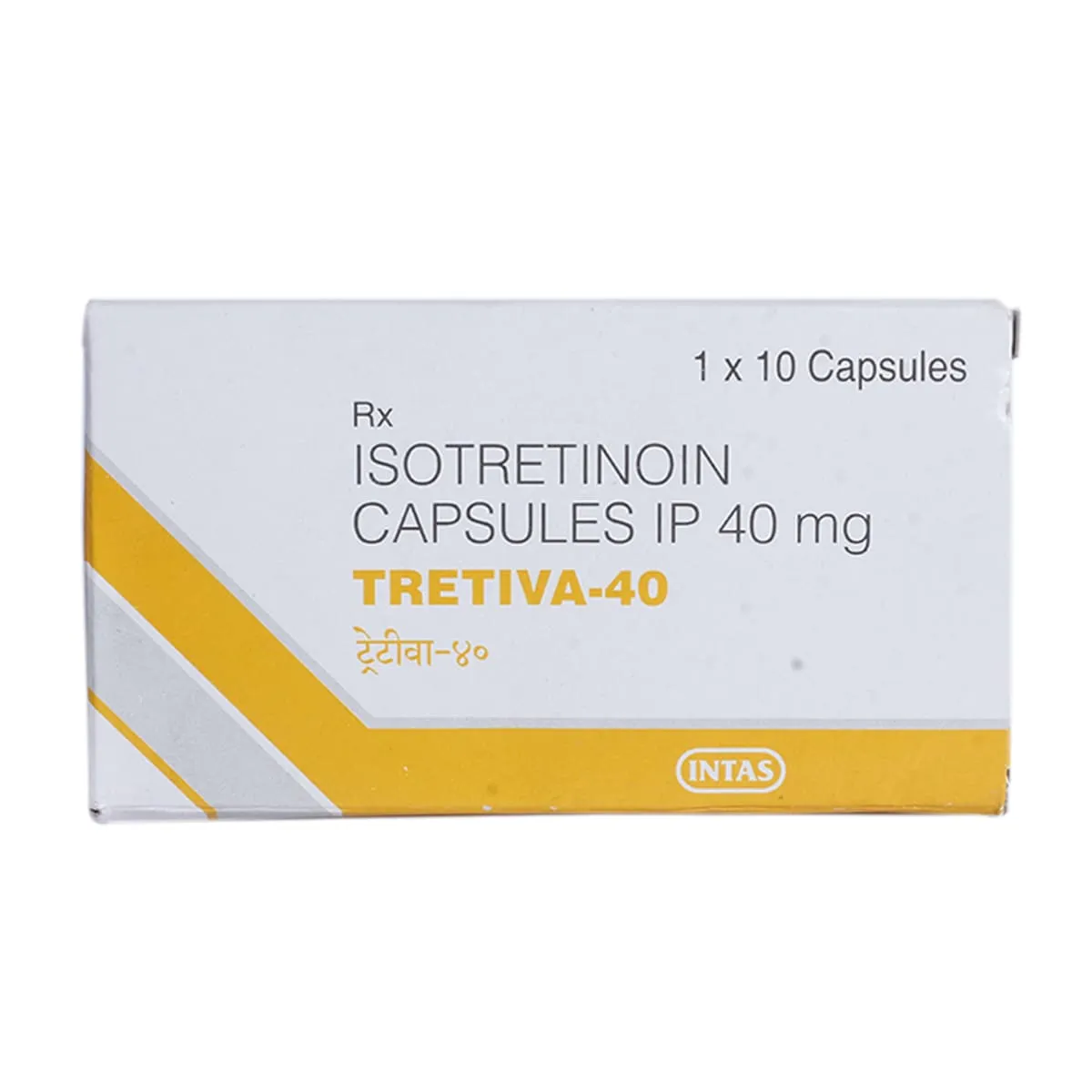
Isotretinoin 40mg is the largest single capsule strength made for US acne treatment. It is usually reserved for adults with heavier body weight and severe, scarring acne who are on a full-dose course. At this level, side effects are expected rather than rare. This page is a practical manual for living with them: what each symptom looks like, which ones you can manage at home, which ones need a call to your prescriber, and which ones mean you stop and get help now.
The guide is organised by body system, so you can jump to what you are feeling today. It follows the US prescribing information and guidance from MedlinePlus, the NHS and the AAD. Your prescriber has the final word.
Who is usually prescribed isotretinoin 40mg
Isotretinoin dosing is based on body weight. The US labels give a usual range of 0.5 to 1 mg per kilogram per day, split into two doses, for 15 to 20 weeks. For adults with very severe disease, such as scarring acne or acne mainly on the chest and back, the label allows up to 2 mg/kg/day. The labels do not recommend taking the whole day’s amount once a day.
That math explains who ends up on this capsule. Someone weighing around 80 kg (about 176 lb) at the top of the usual range would need 80 mg a day. That works out to one 40 mg capsule twice daily. A lighter adult might take 40 mg in the morning and a smaller capsule at night, or 40 mg a day split as two 20 mg doses. If you want to see how prescribers move between strengths, our isotretinoin 30 mg dose-math guide walks through the weight calculations step by step.
Typical people on isotretinoin 40mg include:
- Adults with severe nodular or cystic acne that has not cleared with antibiotics and topical treatment.
- Larger adults, often men, whose weight puts their daily target at 70–100 mg.
- People with acne on the trunk, where the label allows higher mg/kg dosing.
Which 40 mg products exist
In the US, generic isotretinoin capsules are sold in 10, 20, 30 and 40 mg. Most are taken with food. Absorica, a branded version, also comes in 40 mg and can be taken with or without meals. Absorica LD is a different, lower-dose formulation with no 40 mg strength, and its label says it cannot be swapped mg-for-mg with Absorica. Your pharmacist will only dispense the product your prescriber wrote.
In the UK, the products listed on the electronic Medicines Compendium are 5, 10 and 20 mg capsules. A UK patient needing a large daily dose would normally take several of these capsules rather than a single 40 mg. If you are reading this outside the US, follow the product your specialist prescribes.
The body-system field guide to isotretinoin 40mg
Each section below uses the same three tiers. Expected means common and usually manageable. Call your prescriber means book a call within a day or two, or sooner if it is getting worse. Emergency means stop taking the capsules and call 911 or go to the nearest emergency department.
Many side effects are dose-related, so they can be stronger at 80 mg a day than at 20 mg. If a symptom is wearing you down, tell your prescriber. A temporary dose reduction is a common fix.
Lips and skin
Dry, cracked lips (cheilitis) are the side effect almost everyone on isotretinoin notices. The label lists it as one of the most common reactions and notes it is dose-related, so expect it early on a 40 mg course. Your face, hands and shins may also become dry, flaky or itchy.
What helps: a thick ointment on your lips many times a day, and a lip balm with SPF 30 or higher outside. Use a gentle cleanser and a fragrance-free moisturiser on damp skin. Stop exfoliants, retinol, benzoyl peroxide and toners for now. If itching keeps you awake, our guide to why medicines cause itching and when to worry explains the warning signs that point to an allergy rather than dryness.
- Expected: peeling lips, dry patches, mild itch, fragile skin that tears or bruises easily, a short flare of acne in the first 1–2 months.
- Call your prescriber: lips splitting and bleeding despite care, a rash that keeps spreading, signs of a skin infection (see below), or acne that is much worse after two months.
- Emergency: blistering, peeling skin, sores in the mouth or eyes, or a rash with fever. These can mean a severe skin reaction (covered further down).
Avoid waxing, dermabrasion and laser treatments while you take isotretinoin and for at least six months after the last dose. The label warns these can cause scarring.
Eyes: dryness, night vision and contact lenses
Dry eyes are also among the most common reactions. Contact lenses may feel scratchy, and some people have to switch to glasses for the course. Preservative-free artificial tears and UV-blocking sunglasses help.
The less obvious problem is night vision. The label warns that isotretinoin can reduce your ability to see in the dark, that this can begin suddenly, and that in some people it has continued after treatment ended. Be very careful driving at night, and stop if headlights or dark roads feel harder to judge. Our article on deciding when it is safe to drive on a medicine offers a useful self-check.
- Expected: gritty, dry eyes; contact lens discomfort; mild sensitivity to light.
- Call your prescriber: trouble seeing at night, eyes that stay red or painful, or vision that is slightly blurry and not improving with drops. Ongoing blurred vision while on a medicine always needs checking. You may be referred to an eye doctor.
- Emergency: sudden vision loss or blurred vision with a severe headache. This can be a sign of raised pressure around the brain (see “Head”).
Nose and mouth
The lining of the nose dries out, and that makes nosebleeds common, especially in heated rooms in winter. Use a saline nasal spray, or apply a tiny smear of petroleum jelly just inside each nostril. A humidifier by your bed can help. Your mouth and throat may also feel dry; the tips in our dry mouth relief guide apply here too.
- Expected: crusting inside the nose, small nosebleeds that stop with 10 minutes of firm pressure, dry throat.
- Call your prescriber: nosebleeds several times a week, or bleeding gums or easy bruising elsewhere.
- Emergency: a nosebleed that will not stop after 20 minutes of pressure, or one with dizziness or fainting.
Joints, muscles and back
Back pain and joint aches are common, and they are more noticeable at higher doses. Isotretinoin can also raise a muscle enzyme called CPK (creatine phosphokinase), especially after hard exercise. Rarely, muscle breakdown (rhabdomyolysis) has been reported. The label also lists bone effects, including lower bone density and, in teenagers, early closure of growth plates.
You do not have to stop exercising. Many dermatologists suggest easing back on very intense or repetitive-impact training, staying well hydrated and telling your prescriber about your routine before a blood test, because a hard workout can push CPK up and confuse the results. Our article on exercising safely while on a prescription medicine has a sensible warm-up and pacing checklist. If you get cramps, our explainer on what causes muscle spasms can help you tell an ordinary cramp from something else.
- Expected: stiff lower back in the morning, achy knees after a run, mild muscle soreness.
- Call your prescriber: pain that limits normal activity, pain in a hip or one specific spot that does not settle, or soreness that lasts days after a workout.
- Emergency: severe muscle pain or weakness with dark, cola-coloured urine. This can signal muscle breakdown.
Gut and bowel
The label links isotretinoin with inflammatory bowel disease, including in people with no prior history. It advises stopping the drug right away if you develop abdominal pain, bleeding from the rectum or severe diarrhoea. Some people have had lasting symptoms after stopping.
Mild queasiness can happen, especially if you take capsules on an empty stomach when your product says to take them with food. For tips on settling a mild upset stomach, see our nausea relief tips. For background on bowel symptoms that change over weeks, our guide to medicines and IBS-type symptoms explains what to track.
- Expected: mild nausea that eases with food.
- Call your prescriber (and pause the capsules): new diarrhoea that lasts more than a day or two, or ongoing belly cramps.
- Emergency: blood in your stool, severe bloody diarrhoea, or severe belly pain.
Head: headaches and raised pressure
Mild headaches are common in the first weeks. Rest and fluids usually help. Our article on medicine-related headaches covers the usual patterns.
Headache plus vision change is an emergency. Isotretinoin can cause idiopathic intracranial hypertension (sometimes called pseudotumor cerebri), a build-up of pressure around the brain. Warning signs are a severe or worsening headache, blurred or double vision, nausea and vomiting. If these happen together, stop the capsules and get same-day medical care. The label says patients should be referred to a neurologist. The risk is higher if isotretinoin is taken with tetracycline antibiotics such as doxycycline or minocycline, so these must not be combined.
Tell every doctor and dentist that you take isotretinoin. Our guide to checking antibiotics against your other medicines has a useful list of questions to ask.
Mood and thinking
The US label warns that isotretinoin may cause depression, psychosis and, rarely, suicidal thoughts, suicide attempts, suicide and aggressive or violent behaviour. No one can predict who will be affected. Your prescriber should ask about your mental health before and during treatment. In the UK, the MHRA asks prescribers to check mood at the start and at every follow-up.
Tell a family member or friend you are on isotretinoin and ask them to tell you if they notice a change. Early signs include low mood that lasts, losing interest in things, withdrawing from people, changes in sleep or appetite, irritability or anger, and trouble concentrating. Our article on recognising medicine-linked depression describes these signs in more detail.
- Expected: feeling tired or a little flat on some days, especially with poor sleep from dry skin or eyes.
- Call your prescriber: low mood, anxiety or irritability that lasts more than a few days, or friends noticing you are not yourself.
- Emergency: thoughts of suicide or self-harm, hearing or seeing things others do not, or feeling out of control. Call or text 988 (Suicide & Crisis Lifeline) or call 911. In the UK, call NHS 111 or 999.
Skin infections and sun
Isotretinoin thins the outer skin layer, so small cuts can become infected. Watch for red, hot, swollen or pus-filled spots, especially around nostrils, nail folds and shaving areas. A fever with a skin infection needs a prompt call; our article on when a fever on a medicine needs attention explains the thresholds.
Your skin will also burn faster. Use SPF 30 or higher, reapply outdoors and avoid tanning beds.
- Expected: burning more quickly than usual, slight redness after sun.
- Call your prescriber: a spreading red patch, a boil, swollen nail folds or yellow crusting.
- Emergency: a fast-spreading hot red area with fever and chills.
Hyperlipidemia and pancreatitis on a high-dose course
Isotretinoin often raises blood fats, especially triglycerides. The label notes that triglycerides above 800 mg/dL have been reported and that very high levels can lead to inflammation of the pancreas (pancreatitis), which can be fatal. This is why you have fasting lipid tests before starting and again until your prescriber knows how your body is responding. Liver enzymes are checked at the same time, because hepatitis and raised liver enzymes have also been reported.
At 80 mg a day, lipid changes deserve extra respect. Things that help your numbers include limiting alcohol, cutting back on sugary drinks and fried food, and keeping up regular moderate activity. Our article on managing high cholesterol alongside a prescription has practical diet tips. Alcohol also adds strain on the liver; see why alcohol and prescription medicines mix poorly.
The label also notes problems controlling blood sugar and new diabetes diagnoses during treatment. If you have diabetes, our guide to managing diabetes with another prescription explains what extra monitoring to ask about.
- Expected: a modest rise in triglycerides or cholesterol on blood tests, which your prescriber watches.
- Call your prescriber: unusual thirst or passing urine more often, yellowing skin or eyes, dark urine.
- Emergency: severe pain in the upper belly that may spread to your back, with or without nausea and vomiting. Stop the capsules and get urgent care. This can be pancreatitis.
Severe skin reactions and allergy
The label lists serious skin reactions, including erythema multiforme, Stevens-Johnson syndrome (SJS) and toxic epidermal necrolysis (TEN). These are rare but can be life-threatening. Severe allergic reactions, including anaphylaxis, have also been reported. People who are allergic to vitamin A, or to any ingredient in the capsule, should not take isotretinoin.
Stop the medicine and call 911 if you notice any of these:
- A painful red or purple rash that spreads and forms blisters.
- Skin that peels off in sheets.
- Sores in the mouth, throat, nose, genitals or eyes, often with fever or flu-like symptoms.
- Swelling of the face, lips, tongue or throat, wheezing or trouble breathing.
The UK product information says isotretinoin should not be restarted after one of these reactions.
Hearing changes
The label lists impaired hearing and ringing in the ears (tinnitus) as possible effects. In some people, hearing problems have continued after stopping. The label tells prescribers to stop isotretinoin in anyone who develops tinnitus or hearing loss and to refer them for specialist care. Don’t wait for your next routine visit: call your prescriber the same day if your hearing changes or a new ringing starts. Our article on ringing in the ears linked to medicines explains how to describe the symptom clearly.
Pregnancy and iPLEDGE: the 40 mg recap
The pregnancy rules do not change with dose. Even one capsule during pregnancy can harm the baby. The labels describe a high risk of miscarriage, premature birth, infant death and severe birth defects affecting the face, ears, heart and brain.
Under iPLEDGE in the US:
- All patients, including men and people who cannot become pregnant, must register. So must prescribers and pharmacies.
- Prescriptions cover no more than 30 days, with no refills. You need a check-in with your prescriber every month.
- Patients who can become pregnant need negative pregnancy tests before, during and after treatment. They must use two forms of birth control from one month before until one month after treatment, unless an exemption applies (such as committing to abstinence). They must also pick up each prescription within 7 days of the test. The progestin-only “mini-pill” does not count as adequate birth control.
- The FDA approved changes to iPLEDGE in February 2026, including allowing at-home pregnancy tests during and after treatment if the prescriber allows it. These changes are due to take effect on 15 November 2026. Check with your prescriber which rules apply to your next fill.
Do not share capsules with anyone, and do not donate blood during treatment or for one month after your last dose, because the blood could reach a pregnant patient. Our guide to blood donation rules while on medication explains how donor screening works. Store capsules where others cannot reach them; our tips on storing prescription medicines safely at home apply to any high-risk drug. Return unused capsules to your pharmacist or a take-back site rather than keeping them; see how to dispose of unused medicines.
If you think you could be pregnant, miss a period or have sex without birth control, stop isotretinoin at once and call your prescriber. Isotretinoin is also not recommended while breastfeeding.
Supplements and other medicines
Do not take vitamin A supplements, because isotretinoin is closely related to vitamin A and the effects add up. Check every multivitamin label. Our article on checking vitamins against your prescription shows how to read supplement labels. Tell your prescriber about every medicine and herbal product you use, including tetracycline antibiotics and any hormonal birth control.
After isotretinoin 40mg: finishing the course
The UK product information says a course of 16 to 24 weeks is usually enough. It also says that going beyond a total of 120–150 mg/kg over the course gives little extra benefit. On a higher-dose course, you may reach that total sooner than someone on 20 mg a day. Your prescriber decides when to stop, and some taper the dose in the last few weeks.
What to expect after the last capsule:
- Dryness fades. Lips, skin and eyes usually return to normal over a few weeks. Night vision or hearing changes can last longer and need follow-up.
- Acne may keep improving. Some people continue to clear for weeks after stopping. The AAD notes clearance is long-lasting and can be permanent for some patients.
- The pregnancy rules continue for one month. Birth control and a final pregnancy test apply after the last dose for patients who can become pregnant.
- No blood donation for one month.
- Wait on cosmetic procedures. No waxing, laser or dermabrasion for at least six months.
- Second course? If acne returns, the US label says a second course should wait at least two months after the first, and only in patients who have finished growing.
For a full picture of the monthly blood tests and iPLEDGE check-ins you will have been through, our isotretinoin 20 mg monitoring dossier sets out the lab and authorization cycle in detail.
Isotretinoin 40mg FAQ
Is isotretinoin 40mg a high dose?
It depends on your weight. A dose of 40 mg a day is in the middle of the usual range for someone around 60 kg. One 40 mg capsule twice daily (80 mg a day) is the top of the usual range for someone around 80 kg. The label allows up to 2 mg/kg/day for very severe disease. Your prescriber chooses the dose, not the capsule size.
Can you take 40 mg isotretinoin twice a day?
Yes, if your prescriber orders it. The US labels split the daily dose into two doses and do not recommend taking it all at once. Generic capsules are usually taken with food. Absorica can be taken with or without food. If you miss a dose, skip it. Do not double up.
What are the worst side effects of isotretinoin?
The most serious are birth defects, depression or suicidal thoughts, raised pressure around the brain, pancreatitis, severe skin reactions, inflammatory bowel disease, liver problems and hearing loss. Each has warning signs listed in the field guide above. The most common side effects are dry lips, skin and eyes, nosebleeds and joint pain.
Can I work out while taking isotretinoin 40mg?
Usually yes, but ease off very intense training. Hard exercise can raise CPK, a muscle enzyme, and the label warns about muscle and bone effects. Tell your prescriber about your training before blood tests. Stop and seek care if you have severe muscle pain with dark urine.
Why do my joints hurt on isotretinoin?
Joint and back pain are common reactions and often get worse at higher doses. They usually ease after the course ends. Pain in one hip or one spot that does not settle, especially in a teenager, should be checked.
Does isotretinoin raise cholesterol and triglycerides?
Often, yes. That is why fasting lipid tests are part of treatment. Very high triglycerides can cause pancreatitis. Severe pain in the upper belly that spreads to the back is an emergency.
What are the warning signs of pseudotumor cerebri on isotretinoin?
A severe headache together with blurred vision, nausea or vomiting. Stop the capsules and get same-day care. Never take tetracycline antibiotics with isotretinoin.
Is isotretinoin 40 mg available in the UK?
The UK products listed on the eMC are 5, 10 and 20 mg capsules. A UK specialist would normally prescribe a combination of these. All patients who could become pregnant must be in the Pregnancy Prevention Programme. Since January 2026, a second prescriber no longer has to sign off treatment for under-18s, but mental and sexual health checks still apply to everyone.
How long do side effects last after stopping isotretinoin?
Dryness usually settles within a few weeks. Some effects, including night-vision changes, hearing problems and bowel symptoms, have continued after stopping in some people. Report anything that is still there a month after your last dose.
Can I order isotretinoin 40mg without seeing a doctor?
No. In the US, isotretinoin is only dispensed by an iPLEDGE-certified pharmacy, against a prescription from a registered prescriber, after the monthly iPLEDGE authorization. Any seller offering it without these steps is not legitimate and may be selling unsafe products.
Key takeaways
- Isotretinoin 40mg is a prescription-only capsule used mainly for heavier adults with severe acne, often as 40 mg twice a day.
- In the US it is available only through iPLEDGE and certified pharmacies; in the UK, 40 mg capsules are not listed and a Pregnancy Prevention Programme applies.
- Dryness, nosebleeds and joint aches are expected. Lowering the dose is a normal fix if they become hard to live with.
- Stop and get urgent help for headache with vision changes, severe belly pain, bloody diarrhoea, blistering rash, hearing loss, or thoughts of self-harm (call or text 988).
- Avoid tetracyclines, vitamin A supplements, blood donation and pregnancy, and keep up all lipid and liver tests.
- After the course, dryness fades. Pregnancy precautions and the blood-donation ban continue for one month, and cosmetic procedures should wait six months.
Useful official sources: US isotretinoin prescribing information (DailyMed), Absorica and Absorica LD label (DailyMed), FDA iPLEDGE REMS updates, iPLEDGE REMS programme site, MedlinePlus isotretinoin patient guide, AAD tips for isotretinoin side effects, NHS isotretinoin capsules guide, MHRA isotretinoin safety measures, UK isotretinoin 20 mg SmPC (eMC) and 988 Suicide & Crisis Lifeline. For a gentler introduction to month one, see our isotretinoin 10 mg first-month handbook.
This description is for information only and does not replace advice from your doctor or pharmacist. Use only as prescribed.
Prescription only. Serious birth-defect risk. Isotretinoin 40mg, like every strength, can cause severe, life-threatening birth defects and must never be taken during pregnancy. In the US, every isotretinoin product is supplied only under the FDA-required iPLEDGE REMS programme: you, your prescriber and the dispensing pharmacy must all be registered, and isotretinoin can only be dispensed by an iPLEDGE-certified pharmacy after an authorization is issued for that month. In the UK and EU, patients who could become pregnant must be enrolled in a Pregnancy Prevention Programme. There is no legitimate way to get isotretinoin outside these programmes, and you should never buy it from a website that does not ask for a prescription.
Reviews
There are no reviews yet.