
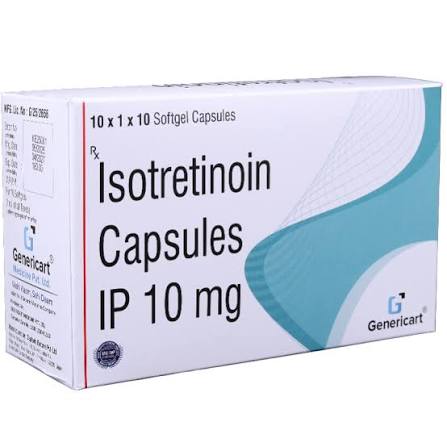
Description
Your dermatologist has prescribed isotretinoin 10mg capsules, and you are about to start a course that usually lasts four to six months. This page is written as a month-one handbook. It walks you through what to do before your first capsule, what the first weeks tend to feel like, how to manage dryness, and which symptoms mean you should call your prescriber the same day. It does not replace the Medication Guide that comes with every pack, so read that too.
Isotretinoin is a vitamin A derivative (a retinoid) for severe, nodular acne that has not cleared with other treatments, including antibiotics. It shrinks oil glands and cuts oil production. For many people, one course brings long-lasting clearance, in exchange for a demanding safety programme and side effects you manage day by day.
Why many courses begin with isotretinoin 10mg
US labels describe a usual dose range of 0.5 to 1 mg per kilogram of body weight per day, split into two doses, for 15 to 20 weeks. The UK product information for Roaccutane says treatment should start at 0.5 mg/kg daily and then be adjusted to the person’s response and tolerance. Your prescriber picks the exact amount. The 10 mg capsule is the smallest strength in most US generic product lines, which also include 20, 25, 30, 35 and 40 mg. That makes it a flexible building block.
Here is how the arithmetic can work in practice. For someone weighing about 40 kg, 0.5 mg/kg/day comes to 20 mg a day, which could be one 10 mg capsule twice daily. For a heavier person, a 10 mg capsule may be paired with another strength to reach the target, or used on its own for a gentler first month. If you want to see how starting doses compare with the smallest available strength, the low-dose isotretinoin 5 mg guide covers that territory.
Why start low at all? Dermatologists often prefer a gentle first month for three reasons:
- To soften the early flare. Some people see acne get worse before it gets better. A lower opening dose may make this flare milder, particularly when there are many deep nodules.
- To let your skin adjust to dryness. Dry lips and skin arrive in the first weeks for almost everyone. Starting low gives you time to build a routine before the dose rises.
- To check your first blood results. Fats in the blood (triglycerides) and liver enzymes can rise. Your prescriber can review early tests before stepping up.
Whether you stay on isotretinoin 10mg or move up depends on your weight, response, side effects and lab results. Never change your own dose; raise concerns at your monthly visit.
Before your first capsule: the setup checklist
Getting started takes a few weeks. Items marked “if you can get pregnant” apply to anyone in the iPLEDGE category for patients who can become pregnant.
- Talk through risks and benefits. Your prescriber should explain birth-defect risk, mood changes, dryness, eye effects, blood fat changes and more. Ask every question you have. The guide on preparing questions for your doctor has useful tips for any appointment.
- Register with iPLEDGE (US). Your prescriber enrols you in the programme. You receive login details for the iPLEDGE program website, where you confirm that you understand the rules. Patients who can get pregnant also answer comprehension questions each month.
- Baseline pregnancy tests (if you can get pregnant). US labels require two negative pregnancy tests before the first prescription. The tests before treatment must be done in a medical setting.
- Contraception counselling (if you can get pregnant). You must use two forms of birth control for at least one month before, during, and for one month after treatment, unless you commit to complete abstinence. Progestin-only “minipills” do not count as an acceptable method. Ask whether you should see a family planning specialist.
- Baseline blood tests. The label calls for a fasting lipid panel (including triglycerides) and liver function tests before you start. If you already have high cholesterol, the article on managing medicines with high cholesterol explains why baseline numbers matter.
- Review every medicine and supplement. Stop vitamin A supplements, because isotretinoin is related to vitamin A and the effects add up. Tetracycline antibiotics (such as doxycycline and minocycline) must be stopped, because together they raise the risk of increased pressure around the brain. Avoid St John’s wort, which can make hormonal birth control less effective.
- Tell your prescriber your history. Mention any depression, anxiety, or self-harm thoughts (past or present), diabetes, liver disease, high triglycerides, bowel disease, eating disorders, bone problems or hearing problems.
- Pick up within your window. Patients who can get pregnant must collect each prescription within 7 days of their pregnancy test. Plan the pharmacy trip in advance.
Multivitamins, “hair, skin and nails” blends and some cod liver oils contain vitamin A. Bring every bottle to your appointment, and read our general guide to checking vitamins against your prescriptions for the habits that help.
A note on recent iPLEDGE changes. In February 2026 the FDA approved changes to the iPLEDGE REMS. These include letting prescribers allow home pregnancy tests during and after treatment, and confirming the end of the old 19-day lockout. FDA has said the changes will be implemented on 15 November 2026. Until then, the FDA’s 2023 flexibility on pregnancy testing continues. Follow what your prescriber and pharmacist tell you each month.
Outside the US. In the UK, the MHRA brought in extra measures in October 2023, and all patients now have their mental and sexual health checked before starting and at follow-ups. The 2023 rule that two prescribers had to agree before an under-18 could start was dropped in January 2026, though a second opinion can still be requested. Read the MHRA’s January 2026 update on GOV.UK for the details.
Your course at a glance: a month-by-month timeline
Every course is different, but most follow a similar arc. Use this table as a rough map, not a promise. Your dermatologist adjusts the plan at each monthly visit.
| Stage | What your skin often does | What you will likely notice | Visits and checks |
|---|---|---|---|
| Month 1 | Possible early flare; new spots can appear as old ones surface | Dry lips within days to weeks, drier skin, maybe dry eyes or nose | Monthly visit; repeat lipids and liver tests often within the first weeks; monthly pregnancy test if applicable |
| Months 2–3 | Flare usually settles; fewer new spots, less oil | Dryness is steady; routine is in place; dose may be adjusted | Monthly visit and iPLEDGE confirmation; further blood tests as advised |
| Months 4–5 | Most people see clear or near-clear skin | Red marks from old spots fade slowly; dryness continues | Monthly visits; your prescriber reviews how far into the course you are |
| After the course | Skin can keep improving for several weeks | Dryness fades over a few weeks | Pregnancy test at the end and one month after, if applicable; wait before cosmetic procedures |
Courses often run 15 to 20 weeks under US labels, or 16 to 24 weeks under UK labels. Some prescribers think about the total amount you take over the whole course, which is why your course may be shorter or longer than a friend’s. The isotretinoin 20 mg monitoring guide explains the monthly blood test and iPLEDGE cycle in more depth.
After you finish, acne can keep improving. UK product information notes that improvement may continue for up to 8 weeks after stopping, and US labels say a second course should not begin until at least 2 months have passed. Most people never need a second course, but some do.
The first-month flare, explained
The early flare (often called a “purge” online) is one of the most talked-about parts of starting isotretinoin. The US label notes that a short-term worsening of acne has been seen, generally in the early period of treatment. MedlinePlus also says acne may get worse at the start. Not everyone gets it, and it is usually temporary.
One common explanation is that blocked pores already forming come to the surface faster. You might see more whiteheads or a few new inflamed spots for a few weeks.
What helps during a flare:
- Hands off. Picking or squeezing raises the risk of scarring, and skin heals more slowly on isotretinoin.
- Simplify your skincare. Stop harsh scrubs and drying acne products unless your dermatologist says otherwise. The NHS advises avoiding products with salicylic acid or benzoyl peroxide during treatment.
- Use gentle cover-ups. A non-comedogenic concealer is fine for most people. Our article on calming a pimple quickly has general tips, but skip any harsh home remedies while on isotretinoin.
- Report a severe flare. Rarely, acne becomes very inflamed with fever, joint pain or open, crusted lesions. Call your prescriber promptly. They may lower your dose or add other treatment.
Your daily routine on isotretinoin 10mg
A steady routine makes isotretinoin 10mg capsules easier to take and easier to tolerate. These points come from the label and Medication Guide.
- Swallow whole. Take each capsule with a full glass of water or other liquid. Do not chew, crush, suck or open the capsule. The full glass helps stop the capsule from irritating your food pipe.
- Food: follow your own label. UK labels and the NHS say to take isotretinoin with food. Many US generic labels say it can be taken with or without meals, while some brands are different. Isotretinoin is absorbed better with fat, so many prescribers suggest a meal. Read your pharmacy label and ask if unsure. Our general article on timing tablets around meals explains why food can matter.
- Two doses, not one. US labels say once-daily dosing is not recommended. Space your two doses morning and evening unless told otherwise.
- Missed a dose? US labels say to skip it and take the next one at the usual time. Never double up. For general habits that prevent missed doses, see our guide on what to do after a missed dose.
- Store it safely. Keep capsules in the original pack, away from light and heat and out of reach of children and anyone else. The general principles in our guide to storing prescription medicines securely apply here too.
A sample morning and evening plan
This example assumes your prescriber has asked you to take one capsule twice daily. Your own schedule may differ.
| Time | Medicine | Skin and comfort routine |
|---|---|---|
| Morning (with breakfast) | First capsule, full glass of liquid, swallowed whole | Gentle cleanser or water rinse; light moisturiser; broad-spectrum SPF 30+ sunscreen; lip balm with SPF; lubricating eye drops if needed |
| Midday | None | Reapply lip balm and sunscreen; sip water |
| Evening (with dinner) | Second capsule, full glass of liquid, swallowed whole | Gentle cleanse; thicker moisturiser; ointment-type lip balm |
| Bedtime | None | Lip ointment; saline nasal gel; bedroom humidifier if air is dry |
Two phone alarms linked to meals help you stay on track. Our guide to reading a prescription label explains the information printed on your pack.
The dryness toolkit: lips, skin, eyes and nose
Dryness affects almost everyone, starting with the lips and spreading to skin, eyes and nose. Build your toolkit before day one. We list product types, not brands.
Lips
- Use a thick, fragrance-free lip ointment (petrolatum-based types work well) many times a day.
- Choose a lip balm with SPF for daytime.
- Avoid licking your lips and avoid flavoured or “tingling” balms, which can irritate.
- If the corners of your mouth crack and stay sore, ask your prescriber or pharmacist.
Skin
- Switch to a mild, soap-free cleanser.
- Apply a fragrance-free moisturiser within a few minutes of washing.
- Keep showers short and lukewarm.
- Skip scrubs, peels, toners with alcohol and harsh acne products.
- Chlorinated water dries skin further. If you swim regularly, rinse and moisturise straight afterwards. Our article on swimming safely while on medication covers other practical points.
Eyes
- Use preservative-free lubricating eye drops (artificial tears) as needed.
- Wear sunglasses outdoors and consider glasses instead of lenses on bad days.
- Report persistent eye pain, redness or any change in vision.
Nose and mouth
- A saline nasal spray or gel can ease dryness and help prevent nosebleeds.
- A humidifier in the bedroom helps in winter or with air conditioning.
- Sip water through the day. Our guide to easing dry mouth has extra comfort tips that also suit isotretinoin.
If dryness becomes painful, your skin cracks and bleeds, or you develop a spreading rash, contact your prescriber. Do not lower your dose on your own.
Sun, waxing, lasers and other skin procedures
Isotretinoin makes skin more sensitive and slower to heal. Two rules follow from that.
Sun protection. The label advises avoiding long exposure to sunlight and UV light. Use a broad-spectrum sunscreen of SPF 30 or higher, reapply often, and wear a hat and sunglasses. Do not use sunbeds or sun lamps. Sunburn can come on faster than you expect, even on cloudy days.
Hair removal and resurfacing. US labels say to avoid wax epilation, dermabrasion and laser skin procedures during treatment and for at least 6 months after your last dose, because of the risk of scarring. UK product information gives similar guidance. In practice this means:
- No waxing, including eyebrow and lip waxing, during the course and for 6 months after.
- No laser hair removal, laser resurfacing, or dermabrasion during the same period.
- Ask your dermatologist before chemical peels, microneedling, threading or any other cosmetic treatment.
- Shaving is generally fine, but use a fresh blade and a gentle shaving gel.
Tell any beautician you are taking isotretinoin, or took it in the last 6 months.
Blood donation. You must not donate blood during treatment or for one month after stopping. If the donated blood went to a pregnant person, it could harm the baby. Our page on donating blood while taking a prescription medicine explains why waiting periods exist.
Contact lenses, night vision and your eyes
- Contact lenses may feel uncomfortable. Dry eyes make lenses scratchy. Many people switch to glasses for part of the day or for the whole course. Lubricating drops designed for lens wearers can help.
- Night vision can drop. MedlinePlus notes that reduced night vision may start suddenly. Be very careful driving or cycling after dark, especially in the first weeks, until you know how your eyes respond. Our guide on deciding whether it is safe to drive on a new medicine offers a sensible checklist.
- Blurred vision needs attention. Blurred vision with headache can signal raised pressure around the brain (see the next section). Any vision change should be reported. Our article on what to do about blurred vision on medication explains which changes are urgent.
The US label advises an eye exam if visual problems develop.
When to call your prescriber, and when to get emergency help
Most side effects are uncomfortable rather than dangerous. A few need quick action. Stop taking isotretinoin and contact your prescriber straight away, or call 911, if you notice any of these:
Red flags on isotretinoin 10mg (or any strength)
- Mood changes: new or worse sadness, anxiety, irritability, anger, withdrawing from friends, losing interest in things, or thoughts of self-harm or suicide. In the US, call or text 988 any time, day or night.
- Headache with blurred vision, nausea or vomiting: possible raised pressure around the brain. This risk is higher if tetracyclines are taken at the same time.
- Severe stomach, chest or bowel pain, trouble swallowing, rectal bleeding, severe diarrhoea, or dark urine or yellowing of the skin or eyes.
- Serious skin reactions: a spreading rash, blisters, peeling skin, or sores in the mouth, eyes or genitals, especially with fever.
- Allergic reaction: swelling of the face or throat, hives, or trouble breathing.
- Ringing in the ears or hearing loss, new muscle weakness, or severe bone or joint pain.
- Possible pregnancy: a missed period or unprotected sex. Stop the medicine and call your prescriber at once.
If someone swallows your capsules or takes too many, call Poison Help at 1-800-222-1222. In an emergency, call 911.
Mood deserves extra attention. The label warns that isotretinoin may cause depression, psychosis and, rarely, suicidal thoughts or actions. A clear link has not been proven in every study, but the warning is taken seriously. Ask a family member or close friend to watch for changes too, because they may notice before you do. Our article on spotting medication-related depression describes early signs, and the piece on daily self-care habits for mental wellness offers supportive ideas alongside, never instead of, medical help.
Headaches are common and usually mild, but a severe or persistent headache, especially with vision changes, is a red flag. Our guide to telling everyday headaches from warning headaches may help you judge when to call. For ear symptoms, our page on ringing in the ears and medicines gives background, but report tinnitus to your prescriber promptly.
Other things to mention at your monthly visit: back or joint pain, muscle aches after exercise, nosebleeds, hair thinning, or any change in your period. If you train hard, tell your prescriber. The label notes muscle enzyme rises can occur with vigorous exercise. Our guide on exercising safely on a prescription medicine has general pacing tips. If you have diabetes, blood sugar may need closer checks; see our page on managing diabetes alongside other prescriptions.
Liver and blood fats. Your blood tests check for raised liver enzymes and triglycerides. Very high triglycerides can lead to pancreatitis, which causes severe stomach pain. Limit alcohol, which also strains the liver and raises triglycerides. If you have a liver condition, our article on medicines and liver disease explains why monitoring matters. The higher the dose, the more these effects may show; the isotretinoin 40 mg side-effect guide covers what changes at the top of the range.
Medicines, antibiotics and supplements to avoid
Check with your pharmacist before starting anything new. Beyond the checklist items, watch for:
- Tetracycline antibiotics (doxycycline, minocycline, tetracycline): raise the risk of raised pressure around the brain. If a doctor or dentist plans to give you any antibiotic, tell them you take isotretinoin. Our guide on checking antibiotics against your other medicines explains the questions to ask.
- Vitamin A supplements, St John’s wort and minipills: covered in the checklist above.
- Some medicines that weaken bones, such as long-term corticosteroids and certain seizure medicines: your prescriber may want to review these.
When the course ends, take any leftover capsules back to your pharmacy. Never keep them “for later” or give them to anyone else. Our article on safe disposal of unused medicines lists take-back options.
Isotretinoin 10mg: questions new patients ask
Is 10 mg of isotretinoin a low dose?
For most adults, yes. Isotretinoin 10mg is the lowest strength in most US generic lines. Whether it is “low” for you depends on your body weight and how many capsules your prescriber asks you to take each day. Two 10 mg capsules a day may match the label’s starting range for a lighter person.
How long does isotretinoin 10mg take to work?
Most people see fewer new spots by the second or third month, with clearer skin around months four to five. The first month can include an early flare. Results continue to build after you stop, for up to about 8 weeks per UK product information.
Does everyone get the initial breakout?
No. Some people have no flare at all, and others have a mild one for a few weeks. A severe flare with fever or joint pain is rare and needs prompt contact with your prescriber.
Should I take isotretinoin with food?
UK labels and the NHS say yes. Many US generic labels say with or without meals, while some brands give different instructions. Follow your own pharmacy label. Many prescribers suggest taking it with a meal because absorption is better with fat.
Can I drink alcohol while taking isotretinoin?
Isotretinoin can raise liver enzymes and triglycerides, and alcohol can do the same. Ask your prescriber what is safe for you. Many advise keeping alcohol to a minimum or avoiding it during the course.
Can I wear contact lenses?
You can, but they may become uncomfortable because isotretinoin dries the eyes. Use lubricating drops made for lens wearers and switch to glasses when your eyes feel sore. Report any vision change.
What should I avoid during the course?
Avoid pregnancy, vitamin A supplements, tetracycline antibiotics, St John’s wort, blood donation, sunbeds and too much sun. Also avoid waxing, laser treatment and dermabrasion during treatment and for 6 months after.
How do I get isotretinoin in the US?
Only with a prescription from a prescriber registered in iPLEDGE, and only from an iPLEDGE-certified pharmacy. You must be registered and meet your monthly requirements before each fill. Buying isotretinoin outside the programme is unsafe and is not legal.
Key takeaways
- Isotretinoin 10mg capsules are prescription only. In the US they are available only through iPLEDGE and certified pharmacies; in the UK and EU, under a Pregnancy Prevention Programme.
- Many courses start low, around 0.5 mg/kg/day split into two doses, to ease the early flare and dryness. Your prescriber sets and adjusts the dose.
- Before you start: baseline labs, pregnancy tests and contraception (if relevant), and stopping vitamin A and tetracyclines.
- Swallow capsules whole with a full glass of liquid, twice daily, and follow your label on food.
- Build a dryness toolkit for lips, skin, eyes and nose before day one.
- Protect your skin from the sun, and avoid waxing, laser and dermabrasion during treatment and for 6 months after.
- Report mood changes, headache with blurred vision, severe stomach pain, or a spreading rash right away. Call 988 for a mental health crisis and 911 for emergencies.
Further reading: MedlinePlus isotretinoin patient information, the isotretinoin capsules prescribing information on DailyMed, the NHS guide to isotretinoin capsules, the Roaccutane 10 mg summary of product characteristics, and the American Academy of Dermatology’s isotretinoin overview.
This description is for information only and does not replace advice from your doctor or pharmacist. Use only as prescribed.
Prescription only, and only through a pregnancy prevention programme. Isotretinoin can cause severe, life-threatening birth defects, even from a single dose taken during pregnancy. In the United States it can only be prescribed, dispensed and taken under the FDA’s iPLEDGE REMS, and US patients can only receive it from an iPLEDGE-certified pharmacy after their prescriber has registered them. In the UK and EU it is prescribed by, or under the supervision of, a specialist experienced in systemic retinoids, within a Pregnancy Prevention Programme. Do not take isotretinoin you were not prescribed, and never share your capsules.
Reviews
There are no reviews yet.