
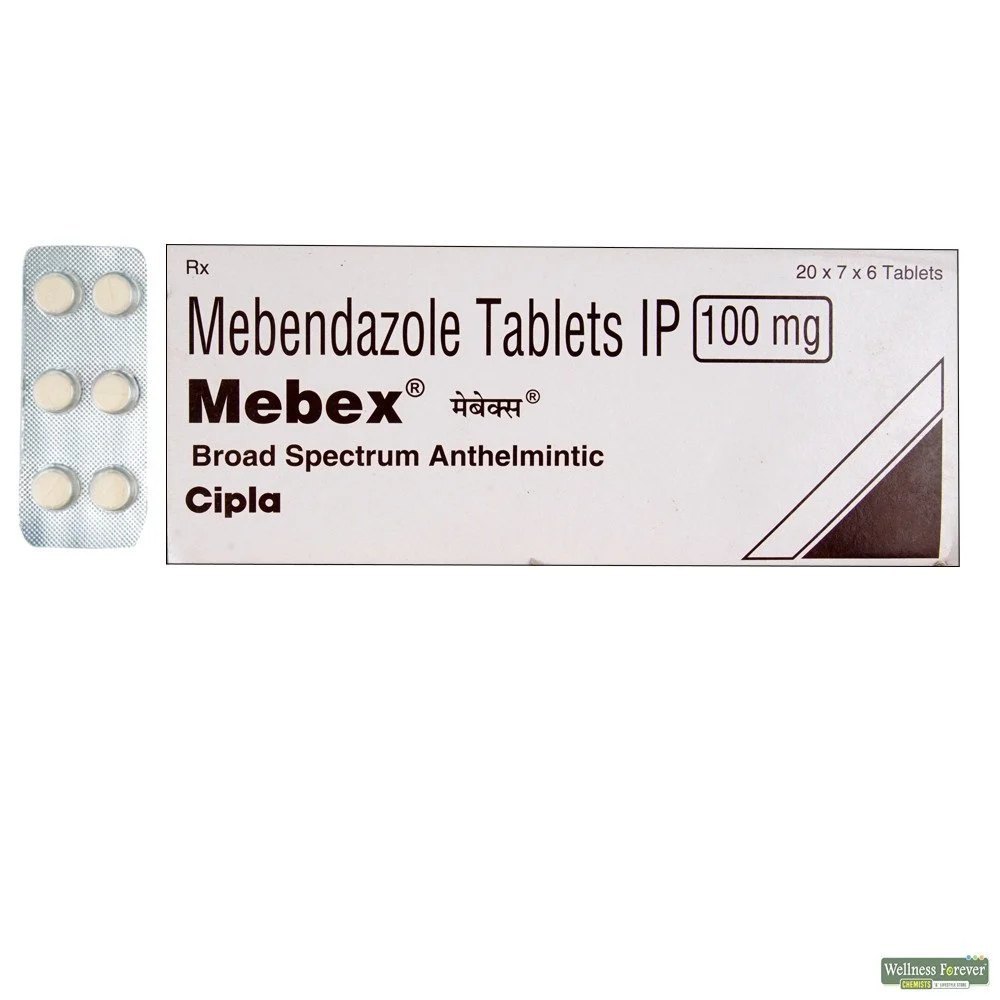
Description
What exactly does mebendazole 100mg treat?
The current US label on DailyMed (Emverm prescribing information) lists four infections of the gut in people aged 2 and older:
- Pinworm (Enterobius vermicularis), the tiny white worm behind night-time bottom itching in children.
- Roundworm (Ascaris lumbricoides), a much larger worm picked up from soil contaminated with eggs.
- Whipworm (Trichuris trichiura), another soil-spread worm.
- Hookworm (Ancylostoma duodenale and Necator americanus), which can enter through bare skin and feed on blood in the gut.
Mebendazole works inside the gut. It stops the worms taking up the sugar they need, so they weaken and pass out in stool. Very little of the drug is absorbed into the blood, which is one reason side effects are usually mild.
That is the full list. Mebendazole is not approved for cancer, COVID-19, “parasite cleanses” or general detox. You may see those claims online. The approved label does not support them, and you should not use this medicine for anything your prescriber has not diagnosed.
Which schedule am I on: one tablet or the three-day course?
This is the question that causes the most mix-ups at home. The tablet strength never changes; the number of tablets does. The table below sets out what the labels and public health sources say. Your own prescription label always wins.
| Infection | What the label or guidance says | Repeat? | Total tablets per person (typical) |
|---|---|---|---|
| Pinworm / threadworm | One 100 mg tablet, taken once (US label). The NHS also describes a one-off dose. | CDC advises a second dose two weeks later for everyone treated. The NHS says a second dose may be needed after 2 weeks if symptoms return. | 1 or 2 |
| Roundworm | One 100 mg tablet morning and evening for 3 days in a row | Only if not cured three weeks after treatment (US label) | 6 |
| Whipworm | One 100 mg tablet morning and evening for 3 days in a row | Only if not cured three weeks after treatment | 6 |
| Hookworm | One 100 mg tablet morning and evening for 3 days in a row | Only if not cured three weeks after treatment | 6 |
Three practical points follow from this table:
- Adults and children aged 2 and over take the same dose. The US label does not scale mebendazole 100mg by weight. A 4-year-old and a 40-year-old with pinworm both take one tablet.
- The three-day course has a rhythm. The NHS suggests spacing the two daily doses about 10 to 12 hours apart, such as breakfast and bedtime. Write the six doses on a sheet and tick each one.
- The pinworm “second dose” is about timing, not strength. The CDC clinical overview for pinworm explains that the medicine kills worms but not eggs. A second dose two weeks later catches worms that hatched after the first dose. Ask your prescriber whether they want that repeat dose for your household.
If you have been given a different plan, follow it. Some clinicians use other repeat intervals, and travellers or people with mixed infections may be on a tailored course.
What if I have the 500 mg tablet instead?
A 500 mg tablet is a different product with a different use pattern, often given as a single dose for soil-transmitted worms in some countries. Do not swap one strength for the other. Our mebendazole 500 mg single-dose product page covers that strength separately.
Is my child old enough for mebendazole?
Age is the second big question, and the answer depends on where you live and who is advising you.
- US label: Approved for patients 2 years and older. Safety and effectiveness have not been established under 2. The label also notes post-marketing reports of convulsions (seizures) in children under 1 year old.
- UK (NHS): Pharmacies can sell it for threadworm in children aged 2 and over. A doctor may prescribe it for children aged 6 months to 2 years.
- Under 6 months: Not covered by either source above. Speak to a doctor.
If a baby or toddler under 2 lives in a house where everyone else is being treated, do not give them a piece of a sibling’s tablet. Tell the pharmacist or doctor. The NHS threadworms page advises speaking to a pharmacist or GP when you need to treat a child under 2. Hygiene measures (below) are often the first step for this age group.
How do I know it is pinworm and not something else?
Pinworm is the worm most families meet. It is common in school-age children and spreads easily through hands, bedding and shared towels. Many people have no symptoms at all.
Signs worth watching for
- Itching around the bottom, often much worse at night.
- In girls and women, itching around the vagina.
- Restless sleep, waking at night, or grumpiness during the day. If the itch is wrecking everyone’s nights, our tips on getting deeper sleep naturally may help once treatment is underway.
- Tiny white thread-like worms in stool or around the bottom, usually seen at night.
- Scratch marks or sore, irritated skin. Scratching can let bacteria in.
Night itching has other causes too. Head lice, eczema, thrush and skin reactions can all cause scratching. If the itch is on the scalp, read our guide to dealing with head lice at home instead. If an itch began after starting a new medicine, our article on why some medicines make you itch explains drug-related itching and when to worry.
The sticky-tape test (CDC method)
Your clinician may ask you to collect eggs at home. The CDC pinworm diagnosis page describes the steps:
- Do it first thing in the morning, before the person washes, uses the toilet or gets dressed.
- Press the sticky side of clear tape against the skin around the anus.
- Put the tape in the sealed bag, container or slide your clinic gave you.
- Repeat on three mornings in a row.
- Wash your hands thoroughly afterwards and avoid touching your face.
The clinic then checks the tape under a microscope. The CDC adds that some clinicians look around the anus 2 to 3 hours after the person falls asleep, when worms may be visible.
Roundworm, whipworm and hookworm look different
These soil-spread worms are less common in the US and UK and are more often linked to travel or living in areas with poor sanitation. They may cause tummy pain, loose stool or no symptoms. Hookworm can slowly drain iron and cause anaemia, with tiredness and pale skin. If you are recovering from hookworm, ask your doctor about your blood count. Our guides on raising iron levels through diet and supporting healthy hemoglobin explain the food side of recovery. These infections need a stool test, so they always go through a clinician.
What hygiene rules should the household follow, and for how long?
Medicine clears the worms in the gut. It does not kill eggs already on fingers, sheets and toilet seats. Pinworm eggs can survive on objects for two to three weeks, according to the CDC pinworm overview. That is why hygiene matters as much as the tablet.
How long to keep it up: The NHS says to follow hygiene measures for 2 weeks if you are taking medicine, or for 6 weeks if you are not taking medicine (for example, during pregnancy or for a baby under 2). The UK children’s medicines service suggests the whole family keep going for at least 6 weeks. The CDC prevention advice says to continue for two weeks after the last dose. If in doubt, longer is safer.
Household hygiene checklist (print and stick on the fridge)
- ☐ Treat everyone in the household aged 2 and over on the same day, even people without symptoms (unless a doctor advises otherwise for pregnancy or a baby).
- ☐ Wash hands with soap and scrub under nails after the toilet, after nappy changes and before eating or cooking.
- ☐ Keep nails short. No nail biting or thumb sucking.
- ☐ Shower every morning to wash off eggs laid overnight. Children should bathe separately; showers are better than shared baths.
- ☐ Wear close-fitting underwear at night and change it every morning.
- ☐ Wash pyjamas, sheets, towels and soft toys on a hot cycle. Do this daily for the first few days after treatment.
- ☐ Fold bedding gently. Do not shake sheets or clothes, which spreads eggs into the air.
- ☐ Never share towels or flannels.
- ☐ Wipe toilet seats, taps and kitchen surfaces, and vacuum or damp-dust bedrooms.
- ☐ Rinse toothbrushes before use.
Children do not need to stay off school or nursery, the NHS says. Pets do not carry human pinworm, and the CDC says swimming pools are an extremely unlikely source. For more everyday family routines, browse our general health tips.
How do I get a child to chew mebendazole 100mg?
The tablet is designed to be chewed, and many children manage it easily. Some do not. Here is what the official sources allow:
- Chew it. Then have a drink of water or juice to wash it down.
- Swallow it whole if the child can swallow tablets.
- Crush it and mix with a little food (US Emverm label). Use a spoonful of something soft, such as yogurt or apple sauce, and make sure the child eats the whole spoonful.
- Soften it on a spoon (Vermox only). MedlinePlus describes placing a Vermox chewable on a spoon with 2 to 3 mL of water so it softens into a paste. This method is described for Vermox, not Emverm, so check your brand.
Food is fine either way. The tablet can be taken with or without a meal, and no fasting or laxative is needed.
What if they spit it out or vomit?
This is common, and it is a question for your pharmacist or prescriber, not for guesswork. Do not give a second tablet on your own without checking. As a general guide, the UK Medicines for Children mebendazole leaflet says:
- If your child is sick within 30 minutes of a dose, give the same dose again.
- If it is more than 30 minutes, do not repeat it; wait for the next planned dose.
- If they are sick again, ask a doctor or pharmacist what to do.
If they spat out part of a chewed tablet, call the pharmacy and describe how much came out. Keep the box in hand when you call. For the general rules on catching up, see our guide on what to do when a dose is missed; the NHS rule for mebendazole is simple: take it when you remember, unless the next dose is nearly due, and never double up.
Keeping tablets away from small hands
Chewable tablets can look like sweets. Store the pack in its original box, at room temperature (the US label gives 20 to 25 °C / 68 to 77 °F), out of sight and reach. Our article on keeping medicines safe around children has storage ideas that apply to any prescription. When the course is over, use a take-back scheme; our guide to disposing of unused medicines explains how.
If a child swallows extra tablets, call Poison Help on 1-800-222-1222 (US) or NHS 111 (UK). Call 911 or 999 if they have a seizure, trouble breathing or will not wake. Our page on what to do after an accidental extra dose walks through the first few minutes.
Which side effects are normal, and when should I call someone?
Most people notice nothing. When side effects happen, they are usually brief tummy symptoms, which may be partly due to the worms themselves.
Usually mild
- Tummy pain or cramps
- Diarrhoea
- Wind (flatulence) or bloating. Our guide to easing bloating has simple comfort measures.
- Nausea, vomiting or loss of appetite. See our practical tips for settling nausea.
- Mild rash
Get help straight away
- Seizures (fits): call 911 or 999.
- Signs of a severe allergic reaction: swollen face, lips, tongue or throat, wheeze, trouble breathing, or a widespread itchy rash. Call 911 or 999.
- Blistering or peeling skin, or sores in the mouth, eyes or genitals. This can signal a serious skin reaction such as Stevens-Johnson syndrome.
- Fever, sore throat or chills, or frequent infections, which could mean low white blood cells. Our note on when a fever during treatment needs attention covers what to report.
- Yellow skin or eyes, dark urine or pale stools, which can point to liver problems. Tell your doctor about any liver disease before starting; our guide on how liver disease affects medicine safety explains why.
- Easy bruising or bleeding that will not stop.
The US label notes that the blood-count problems (neutropenia and agranulocytosis) were seen mainly with doses higher, or courses longer, than recommended. That is one more reason to stick exactly to the prescribed schedule for mebendazole 100mg.
Mebendazole should not affect driving or using machines, according to the NHS. In the UK you can report side effects through the Yellow Card scheme; in the US, through FDA MedWatch.
Can I take mebendazole with my other medicines?
The interaction list is short, but one entry matters a lot.
- Metronidazole (Flagyl): The US label says to avoid taking it with mebendazole, because serious skin reactions (SJS/TEN) have been reported with the combination. The NHS also lists it. Metronidazole is a common antibiotic for some gut, dental and vaginal infections, so check if you have recently been given one. Our article on how antibiotics interact with other prescriptions explains why your pharmacist asks about every course.
- Cimetidine: The NHS lists this acid-reducing medicine as one that may not mix well with mebendazole. It may raise mebendazole levels.
- Everything else: Tell your prescriber about all prescription and over-the-counter medicines, vitamins and supplements. If you are using an antihistamine to calm night itching, mention it; our guide on combining allergy medicines with other prescriptions covers the general questions to ask.
The NHS says you can eat and drink normally, including alcohol, while taking mebendazole. For a broader primer on why some pairs of drugs clash, see our guide to how drug interactions work.
Is mebendazole 100mg safe in pregnancy or while breastfeeding?
The advice is more cautious here, and different sources frame it differently. Always speak to a doctor or pharmacist first.
Pregnancy
- NHS: Mebendazole can be used in pregnancy if the benefits outweigh the risks. A doctor may suggest hygiene measures first, especially in early pregnancy. If you are pregnant, tell the pharmacist before buying it; you may be referred to a GP.
- US label: Published studies have not shown a clear link to major birth defects or miscarriage. Untreated worm infections can carry their own risks in pregnancy.
- CDC (pinworm): Safety has not been formally studied in pregnancy. Treatment may be considered if the infection is affecting the pregnancy, but it is generally delayed until the third trimester.
Pinworm itself does not harm the baby. That is why many clinicians start with six weeks of strict hygiene, and treat the rest of the household with medicine as usual.
Breastfeeding
A small amount passes into breast milk. The NHS says it can often be used while breastfeeding, but check first. The CDC says breastfeeding does not need to stop for mebendazole. Contact your doctor if your baby seems unwell, has diarrhoea or is feeding poorly.
Planning a conversation with your prescriber? Our tips on preparing questions for your doctor work for any medicine.
Why do the worms keep coming back?
Pinworm returning is very common. It rarely means the medicine failed. Usually it means eggs were swallowed again. The most common reasons:
- Not everyone was treated on the same day. One untreated person can re-seed the whole house.
- The second dose was skipped or given late, when your prescriber had planned one.
- Hygiene stopped too soon. Eggs on sheets and towels can last two to three weeks.
- School or nursery exposure. CDC notes that repeat infections are common in childcare settings.
- Nail biting and scratching at night, which carries eggs from the bottom to the mouth.
- The diagnosis was something else. Eczema, thrush or a skin reaction will not respond to a worm medicine.
For roundworm, whipworm and hookworm, the US label advises a second course if the infection is not cured three weeks after treatment. Your clinician will usually confirm this with a stool test, not by symptoms alone.
When to go back to your prescriber
- Symptoms have not started to improve after a few days.
- Itching returns after the second dose and full hygiene routine.
- Worms are seen in stool after a three-day course.
- Weight loss, ongoing tummy pain, blood in stool or tiredness. Long-running bowel symptoms may have another cause; our article on living with IBS-type bowel symptoms describes some of them.
- You have recently travelled and have new tummy symptoms. Our guide to packing prescription medicines for travel also covers carrying your paperwork.
How it compares to albendazole
Albendazole is a related medicine in the same family. It is sometimes used for pinworm as a single dose repeated after two weeks, and for other worm infections your doctor diagnoses. It is not interchangeable with mebendazole without a prescriber’s decision. Read our albendazole 400 mg product guide for that medicine’s own label and schedule.
Mebendazole 100mg FAQ
How long does mebendazole take to work?
It starts acting on the worms in the gut soon after the dose, and dead worms pass out in stool over the following days. Itching can take a few days to settle because eggs and skin irritation remain. The NHS advises speaking to a doctor if symptoms have not started to improve after a few days.
Do I need a second dose of mebendazole 100mg for pinworm?
CDC guidance is two doses, two weeks apart, for everyone treated. The US label lists a single tablet, and the NHS says a second dose may be needed after two weeks if symptoms return. Follow what your prescriber or pharmacist tells you for your household.
Can a 1-year-old take mebendazole?
The US label covers ages 2 and up and notes seizure reports in children under 1. In the UK, a doctor may prescribe it from 6 months. For any child under 2, speak to a doctor first, and rely on strict hygiene in the meantime.
Should the whole family take it, even without symptoms?
Usually yes. Both the CDC and NHS advise treating everyone in the household (and close carers) at the same time, because people can carry pinworm without itching. Exceptions are pregnancy, breastfeeding and babies under 2, which need individual advice.
Can you take mebendazole while pregnant?
Only after speaking to a doctor. The NHS says it can be used if the benefits outweigh the risks, and hygiene measures are often tried first, especially early in pregnancy. CDC guidance generally favours delaying treatment until the third trimester.
What happens if my child spits out the tablet?
Call your pharmacist or prescriber and describe how much came out before giving another tablet. UK children’s guidance says a dose vomited within 30 minutes is usually repeated, but your pharmacist should confirm for your situation.
Can I take mebendazole with metronidazole?
The US label says to avoid the combination because of reported serious skin reactions. If you have been prescribed both, contact your prescriber before taking either.
Does the chewable tablet have to be chewed?
No. The Emverm label allows chewing, swallowing whole, or crushing and mixing with food. MedlinePlus describes a spoon-and-water softening method for Vermox specifically.
Is mebendazole 100mg the same as an over-the-counter pinworm medicine?
Not in the US. Mebendazole is prescription-only there. The over-the-counter pinworm option in the US is a different drug, pyrantel pamoate. In the UK, mebendazole is available from pharmacies for threadworm in people aged 2 and over.
Can I catch pinworm from my dog or the swimming pool?
No and very unlikely. The CDC says pets do not spread human pinworm, and swimming pools are an extremely unlikely source. The usual route is hand to mouth.
Key takeaways
- Mebendazole 100mg is one chewable tablet used on two different schedules: a single dose for pinworm (often repeated after two weeks) and twice daily for three days for roundworm, whipworm and hookworm.
- In the US it is prescription-only. In the UK, pharmacies can supply it for threadworm in people aged 2 and over.
- The US label covers ages 2 and up. Under-2s need a doctor’s decision.
- Treat the whole household on the same day and keep up hygiene for at least two weeks, or six weeks if not using medicine.
- Chew, swallow whole, or crush into food. Ask the pharmacist before re-dosing if the tablet is spat out or vomited.
- Avoid metronidazole at the same time. Report fits, severe rash, fever with sore throat or yellowing skin right away.
- In pregnancy, speak to a doctor first; hygiene measures are often tried before medicine.
- Do not use leftover or shared tablets, and do not use mebendazole for unapproved purposes.
This description is for information only and does not replace advice from your doctor or pharmacist. Use only as prescribed.
Mebendazole 100mg is a chewable tablet used to clear four common intestinal worms: pinworm (called threadworm in the UK), roundworm, whipworm and hookworm. The same tablet is used for all four, but the schedule is very different. Pinworm usually needs one tablet, sometimes repeated two weeks later. The other three need a tablet twice a day for three days. This guide is built around the questions families actually ask: which schedule applies, whether a child is old enough, how to check for pinworm, and how to stop the itch coming back.
Prescription and status check
- United States: The 100 mg chewable tablet (brand name Emverm) is a prescription medicine. Your prescriber chooses the drug, the dose and the length of the course based on which worm is causing the infection.
- United Kingdom: Mebendazole (Ovex, Vermox) can be bought from a pharmacy for threadworm in adults and children aged 2 and over. For other worms, or for children aged 6 months to 2 years, it needs a prescription, according to the NHS mebendazole page.
- Do not use leftover or shared tablets. A tablet left over from a sibling’s course may be the wrong schedule, may be out of date, and may hide a different problem.

Reviews
There are no reviews yet.