
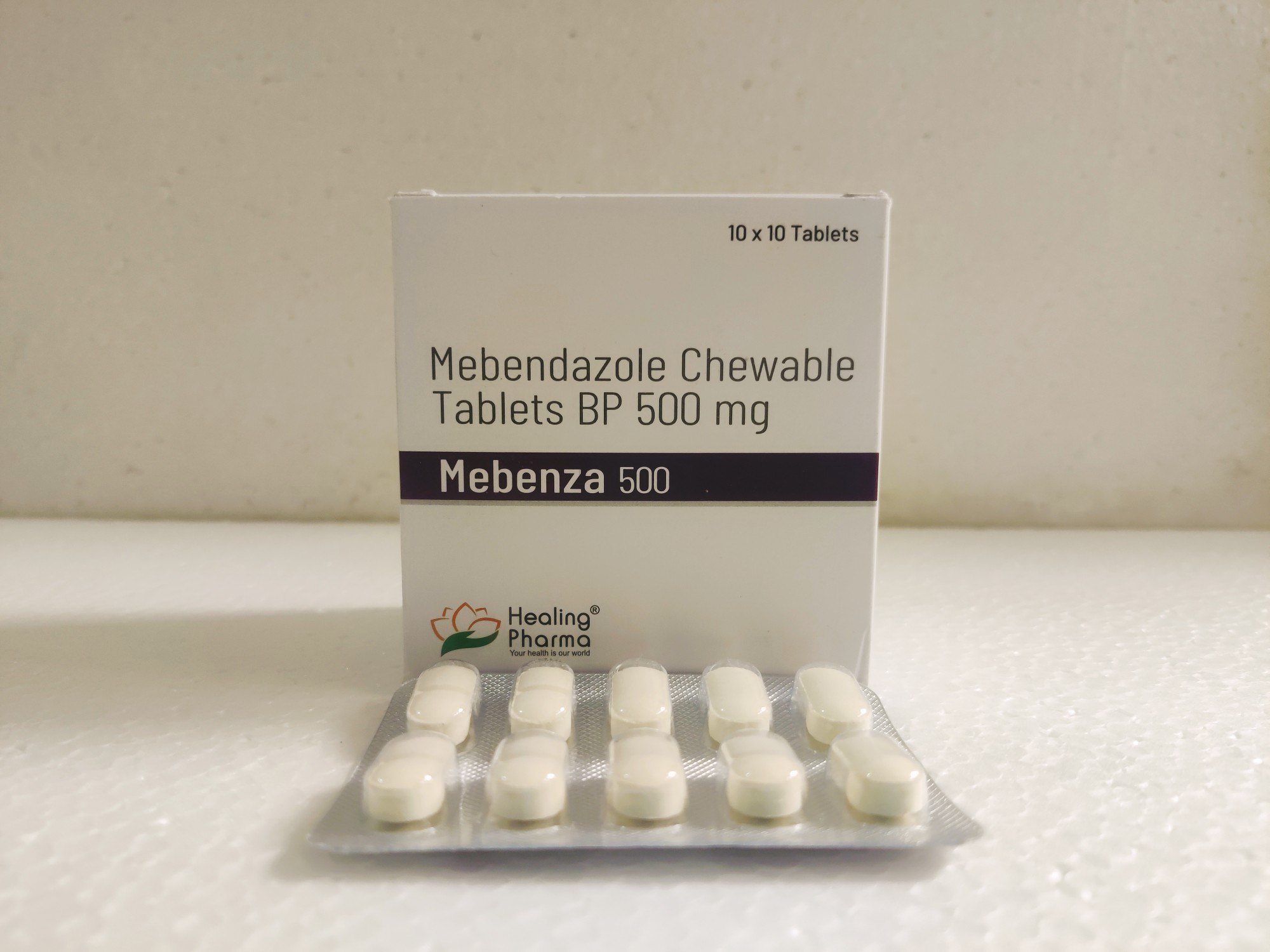
Description
One tablet, one sitting: giving mebendazole 500mg the right way
The whole treatment is one tablet, taken once. The label allows it with or without food, so you do not need to plan around meals or an empty stomach. The tablet is meant to be chewed, not swallowed whole. Older children and adults simply chew it fully and swallow.
For children who cannot chew well yet
Toddlers and some older children struggle with a whole chewable. The label describes a spoon method for this. It is simple and works well for a one-off dose:
- Put the tablet on a spoon.
- Use a dosing syringe to add 2 to 3 mL of drinking water.
- Wait about 2 minutes. The tablet soaks up the water and turns into a soft paste.
- Give the paste straight from the spoon while your child sits upright.
A few practical points make this easier and safer:
- Sit them up. Never give a tablet or paste to a child who is lying down, crying hard or half asleep. Wait until they are calm.
- Don’t hand a toddler the whole tablet. A hard tablet held in the mouth can be a choking risk for very young children. The softened-paste method avoids this.
- Follow with a drink. A few sips of water or milk help clear any paste left in the mouth.
- If they spit most of it out or vomit soon after, do not give a second tablet on your own. Call the prescriber or pharmacist and ask what to do.
Safety and effectiveness have not been shown in babies under 1 year. Seizures have been reported in infants under 1 who were given mebendazole products. Do not give this tablet to a baby unless a doctor has specifically prescribed it for that child.
Keep the pack out of sight and reach once the dose is done. Our guide to keeping prescription medicines safe around children covers locked storage and what to do after an accidental swallow. If a child takes a tablet that was not meant for them, call Poison Help on 1-800-222-1222. For seizures, trouble breathing or a child who can’t be woken, call 911.
Which worms does mebendazole 500mg target?
“Worms” covers several very different parasites. They spread in different ways, and they need different regimens. Before treating, it helps to know which worm the prescriber found or suspects. Usually this means a stool test, or a sticky-tape test for pinworm.
| Worm | How it usually spreads | Is one 500 mg tablet the usual plan? |
|---|---|---|
| Roundworm (Ascaris) | Swallowing eggs from soil on hands, unwashed produce or water | Yes. This is a US-approved use. In the label’s trial, most treated children were cured by day 19. |
| Whipworm (Trichuris) | Same as roundworm | Yes, it is a US-approved use, but one dose cured only about a third of children in the trial. The prescriber may test again or choose a longer course. |
| Hookworm | Larvae in soil pass through bare skin | WHO uses it in mass deworming. It is not a US label use for this tablet. Prescribers often use albendazole or a multi-day mebendazole course. |
| Pinworm / threadworm (Enterobius) | Person to person: eggs on fingers, bedding and surfaces | No. It is usually treated with mebendazole 100 mg (or albendazole or pyrantel), repeated after two weeks. |
| Strongyloides | Larvae in soil pass through skin | No. WHO notes it does not respond to standard mebendazole deworming. Ivermectin is used instead. |
| Tapeworms, flukes, Giardia | Varies (undercooked meat, water, etc.) | No. These need other medicines chosen by a clinician. |
The trial figures above come from the US label. A placebo-controlled study in 295 children aged 1 to 16 measured cure 19 days after the dose. Roundworm cure was far higher than whipworm cure, which is why whipworm sometimes needs a follow-up stool test.
If your family’s problem is pinworm, see our mebendazole 100 mg tablet page. It covers the pinworm dose, the three-day course and age questions. For hookworm or mixed infections, your prescriber may choose the albendazole 400 mg alternative. For Strongyloides or scabies, ivermectin 3 mg tablets are a different drug class used under prescription.
Signs that point to a worm (and those that don’t)
Light roundworm and whipworm infections often cause no symptoms. Heavier infections can cause tummy pain, diarrhoea, poor appetite and, in children, tiredness or slow growth. The CDC overview of soil-transmitted worms also lists blood and nutrient loss with heavy infections. Pinworm is different: its main sign is an itchy bottom, worse at night.
Many tummy complaints have nothing to do with worms. Wind and a swollen belly are often diet-related. Our practical guide to everyday bloating covers the common causes. Long-term pain with diarrhoea or constipation may be a bowel disorder. Our article on living with irritable bowel symptoms explains that picture. A stool test settles the question better than guessing.
Treating the whole household with mebendazole 500mg
This is where most families get confused. The answer depends on the worm.
Roundworm and whipworm: who gets a tablet?
Roundworm and whipworm eggs must spend about three weeks in soil before they can infect anyone. That is why the WHO notes that these worms do not pass directly from person to person. A child with roundworm does not “give it” to a sibling at the dinner table. However, everyone in a home may share the same exposure. That could be a vegetable garden fertilised with untreated waste, a stay in an area with poor sanitation, or the same water source.
So the prescriber may suggest testing or treating other family members who shared that exposure. This is a clinical decision, made person by person. Each person who needs mebendazole 500mg should have it prescribed for them. Don’t split one pack across the family.
Pinworm: the whole house usually counts
Pinworm spreads easily between people in the same home. Guidance from the CDC and the NHS threadworm page is to treat the household at the same time. The usual drug is a lower mebendazole dose (or an alternative), and the dose is often repeated after two weeks. The CDC clinical overview for pinworm explains that the medicine kills worms but not eggs. The second dose catches worms that hatch later. If your prescriber suspects pinworm, expect a different product from this one.
Timing: plan the dose day
- Pick a calm morning. If you are treating more than one person, a shared “dose day” makes it easier to track who has had what.
- Write it down. Note the date, time and who took a tablet. A simple list on the fridge works. Our home medicine safety checklist shows a similar record-keeping habit.
- Check the label. Each person’s pack should carry their name and directions. Our explainer on how to read a prescription label applies to any pharmacy label.
- Don’t plan a repeat yourself. A second tablet for roundworm or whipworm is not routine. The prescriber decides on it, usually after a follow-up stool test or if symptoms continue.
The 14-day household hygiene checklist
Hygiene matters most for pinworm, whose eggs live on surfaces and fingers. Eggs can survive up to two weeks outside the body. Good habits also stop soil-worm eggs getting from hands and food into mouths. Use this plan for the two weeks after anyone in the home is treated.
| Area | Days 1–3 | Days 4–14 |
|---|---|---|
| Hands | Wash with soap after the toilet, after nappy changes and before every meal or snack | Keep going. This is the single most effective habit. |
| Nails | Cut everyone’s nails short on dose day. Scrub under them. | Discourage nail-biting and thumb-sucking. Re-trim at day 7. |
| Bedding and nightwear | Wash sheets, pyjamas and towels on a hot cycle. Don’t shake them out first. | Change pyjamas and underwear daily. Wash bedding again at least weekly. |
| Bathroom | Wipe toilet seat, flush handle, taps and door handles with a damp cloth and cleaner | Repeat every few days. Give everyone their own towel and flannel. |
| Morning routine | A shower or wash in the morning removes eggs laid overnight | Keep the morning wash going. |
| Kitchen and food | Wash fruit and vegetables well, especially garden produce. Wipe surfaces. | Peel or cook produce if you are unsure about soil exposure. |
| Soft toys and floors | Wash soft toys that can go in the machine. Damp-dust and vacuum. | Repeat at day 7. |
| Outdoors | Shoes on in gardens and play areas | Gloves for gardening. Wash hands after handling soil. |
If this feels familiar, it should. Head lice clean-ups follow similar rules: hot washes, no sharing and a short, focused routine. Our head lice guide for families covers that side of household infestations.
Pinworm itch often peaks at night and can wreck a child’s sleep for a few days. A steady bedtime helps. Some of the tips in our guide to deeper, calmer sleep apply to children too.
Why worms come back after treatment
Reinfection is common. It does not usually mean the medicine failed. These are the main reasons:
- Eggs survive the tablet. Mebendazole works against worms in the gut. Eggs already on hands, nails, bedding or soil are untouched.
- The source is still there. If the family garden, water or play area holds eggs, a child can pick up a new infection within weeks.
- Not everyone was checked. With pinworm, one untreated family member can restart the cycle.
- Whipworm is harder to clear. In the label trial, one dose cured whipworm in roughly a third of children. A follow-up test catches this.
- Wrong worm, wrong drug. Strongyloides, tapeworms and Giardia won’t respond to a single dose of mebendazole 500mg.
- Childcare and school. Pinworm spreads in groups of young children. The CDC notes that repeat infections are common in these settings.
Heavy or repeated worm infections can drain iron and cause anaemia, especially in children and in pregnancy. If your child seems pale or tired, ask about a blood test. Our articles on raising low iron levels and improving haemoglobin explain the diet side. Treatment for anaemia should be guided by a clinician.
When to call the prescriber again
- Symptoms continue or come back within a few weeks of treatment.
- You see worms in stool after the dose (some may pass in the first days, which is expected; tell the prescriber if it continues).
- A child keeps losing weight, has blood in stool or seems unwell.
- You have recently travelled or lived in an area where worms are common.
Side effects: what is usual, what is not
A single dose is usually well tolerated. Across trials, the reactions reported most often were mild gut symptoms. The MedlinePlus mebendazole guide lists similar effects:
- Tummy pain or cramps
- Nausea, vomiting or poor appetite
- Diarrhoea or wind
- Mild rash
For nausea, small sips and plain food usually help. Our page on easing nausea at home has ideas, but persistent vomiting needs a call to your clinician.
Rare but serious reactions
The label and post-marketing reports describe a short list of rarer problems:
- Seizures in infants. These have been reported in babies under 1 year.
- Severe allergy. Hives, swelling of the face or throat, or trouble breathing.
- Serious skin reactions. Stevens-Johnson syndrome and toxic epidermal necrolysis (SJS/TEN) have been reported, mainly when taken with metronidazole.
- Low white blood cell counts (neutropenia, agranulocytosis). These have been seen with higher doses or longer use than recommended. Signs include fever, sore throat or repeated infections. This is not expected after one standard tablet.
- Liver effects. Hepatitis and abnormal liver tests have been reported. Tell your prescriber if you have liver disease. Our guide to medicines and liver disease explains why this matters.
- Other rare reports include dizziness, hair loss and kidney inflammation.
Get help now if anyone has a seizure, swelling of the face or throat, trouble breathing, or a blistering or peeling rash after a dose. Call 911. For a suspected accidental swallow or overdose, call Poison Help on 1-800-222-1222 or use the webPOISONCONTROL tool. For fever, sore throat or yellowing skin in the days after a dose, call your prescriber the same day.
The metronidazole warning (and other medicines)
The label’s main drug warning concerns metronidazole, an antibiotic used for Giardia, some gut infections and some vaginal infections. Taking mebendazole and metronidazole together has been linked to SJS/TEN, a rare but life-threatening skin reaction. The label advises avoiding the combination.
This matters for households because a child with tummy symptoms may see a clinician for “parasites” and receive both drugs. They may also be prescribed for different family members at the same time. Tell the prescriber and pharmacist about every medicine anyone being treated takes. The NHS mebendazole page also lists cimetidine, a stomach-acid medicine, as one to check.
Keeping a written list of medicines and supplements helps. Our example of a personal interaction list shows a simple format. Our tips on preparing questions for your doctor work for any appointment.
Pregnancy and breastfeeding
Untreated worm infections in pregnancy carry real risks. The label points to anaemia in the mother and low birth weight. Published studies have not found a clear link between mebendazole and major birth defects or miscarriage, but those studies had limits. Animal studies showed harm at doses above those used in people.
That is why the decision belongs with the prescriber. Many clinicians prefer to wait until after the first trimester unless treatment can’t wait. For pinworm, the NHS suggests hygiene measures may be tried first, especially early in pregnancy. Our article on weighing medicine risks in pregnancy explains this kind of benefit-and-risk talk.
For breastfeeding, only small amounts of mebendazole have been found in breast milk, and data are limited. Ask your prescriber before taking a dose. Our guide to medicines while breastfeeding lists questions to bring.
Myths vs evidence: cleanses, cancer and “everyone has worms”
Mebendazole has become a social media topic. Some of the claims are harmless, and some put people at risk. Here is what the evidence says. We used a similar approach in our myths-and-facts guide to a common pain medicine.
Myth: “Everyone should do a yearly parasite cleanse”
There is no credible evidence that herbal or supplement “parasite cleanses” clear infections. Experts at the Cleveland Clinic say parasite cleanses have no credible evidence behind them. They warn that cleanses can cause diarrhoea, dehydration and nutrient loss. Supplements are not checked by the FDA in the way prescription drugs are. Only a clinician can diagnose a parasite, usually with a stool test.
Cleanse plans often pair supplements with fasting or “detox” diets. Our article on what fasting really does looks at the evidence for fasting. Our explainer on how functional medicine approaches health may help if a practitioner has suggested a parasite protocol. Ask for test results before starting any treatment.
Myth: “Worm pills can treat cancer”
Mebendazole has shown anticancer effects in lab cells and animals. Small trials are looking at it in cancer. However, there is no reliable proof in people. No completed randomized trial has shown that it treats cancer. A review of the “antiparasitic cancer protocol” claims found the human evidence limited to case reports. It rated the claims unsupported. Mebendazole is not FDA-approved for any cancer. Long, high-dose use carries the blood-count risk described above.
If you or a family member has cancer and wants to explore repurposed drugs, talk to the oncology team. They can check for a proper clinical trial. Don’t use worm tablets as a stand-in for treatment.
Myth: “If one person has worms, everyone needs a tablet every few months”
Regular deworming is a public health tool in places where soil-transmitted worms are common. Even there, it is run by health programmes, not by individual households. In most US homes, treatment follows a diagnosis. For roundworm and whipworm, that may not include the whole family. Taking mebendazole 500mg “just in case” adds side-effect risk without clear benefit.
Getting mebendazole 500mg on prescription
Your prescriber will usually ask about symptoms, travel and possible soil or water exposure. They may also request a stool sample. They then decide whether this tablet, the 100 mg tablet or a different drug fits. Bring a list of every medicine and supplement each person takes, and mention pregnancy or breastfeeding.
When ordering through NewLifeMedix, a valid prescription is checked before dispensing. You can read more in how NewLifeMedix handles prescriptions and orders. Store tablets as the pack directs, away from children. If tablets are left over, don’t keep them for “next time”. Our guide to disposing of unused medicines explains take-back options. Worms are best treated after a fresh diagnosis.
Mebendazole 500mg FAQ
Is mebendazole 500mg a single dose?
Yes. The US label directs one chewable tablet, taken once, for roundworm or whipworm. Your prescriber decides whether a repeat dose is needed, usually after a follow-up test.
Should the whole family take mebendazole?
It depends on the worm. For pinworm, households are usually treated together, typically with a lower dose. Roundworm and whipworm do not spread directly between people, so the prescriber considers each person’s exposure separately.
Does mebendazole 500mg treat pinworm?
Pinworm is not a US label use for this tablet. Pinworm is usually treated with mebendazole 100 mg, albendazole or pyrantel, often repeated after two weeks. Ask your prescriber which product suits your family.
How long does mebendazole take to work?
It starts acting on worms in the gut soon after the dose. In the US trial, cure was measured at day 19. Symptoms often ease within days, but a stool test is the only way to confirm clearance.
Can a 1-year-old take mebendazole 500 mg?
The US label covers children aged 1 year and older. Children who cannot chew can take it as a softened paste on a spoon. It is not established for babies under 1, and seizures have been reported in that age group.
Can you take mebendazole with metronidazole?
The label advises against it. The combination has been linked to rare, serious skin reactions. Tell your prescriber if anyone in the family has been prescribed metronidazole.
Is mebendazole safe in pregnancy?
Studies have not shown a clear link to birth defects, but the evidence has limits. Your prescriber weighs the risks of the infection against the medicine. They often wait until after the first trimester if possible.
Does mebendazole cure cancer?
No. Lab and animal results have not been confirmed in people, and mebendazole is not approved for any cancer. Speak to an oncologist about proper clinical trials instead of self-treating.
Do I need a parasite cleanse after taking mebendazole?
No. Cleanses have no proven benefit and can cause side effects. Follow the hygiene plan above and go back to your prescriber if symptoms return.
Key takeaways
- Mebendazole 500mg is one chewable tablet, taken once, approved in the US for roundworm and whipworm in people aged 1 and over.
- Pinworm, hookworm, Strongyloides and tapeworms usually need a different dose or drug.
- Small children can take it as a soft paste on a spoon while sitting upright.
- Household treatment depends on the worm: pinworm usually means the whole house, soil worms mean shared exposure.
- A 14-day hygiene routine (hands, nails, bedding, bathroom) cuts reinfection.
- Avoid combining it with metronidazole. Get urgent help for seizures, severe allergy or a blistering rash.
- Parasite cleanses and cancer self-treatment are not supported by evidence.
This description is for information only and does not replace advice from your doctor or pharmacist. Use only as prescribed.
Mebendazole 500mg is a single chewable tablet. It is designed to clear common intestinal roundworm and whipworm infections in one sitting. This page is a planner for the people who look after a household. It covers which worms one tablet targets and how to give it to a small child. It also explains what to clean, when to call your prescriber and which online “parasite” claims to ignore.
Prescription required. Mebendazole is a prescription medicine in the US. Your prescriber decides whether it is the right drug, the right strength and whether anyone needs a second dose, based on which worm is found. Do not use leftover tablets or share one person’s tablets with the rest of the family.
US status: the FDA approved the 500 mg chewable tablet (brand name Vermox Chewable) in 2016 for gut infections caused by roundworm (Ascaris lumbricoides) and whipworm (Trichuris trichiura) in people aged 1 year and older. See the current Vermox Chewable label on DailyMed. The World Health Organization lists mebendazole 500 mg as one of its two recommended single-dose deworming medicines. Pinworm (threadworm) is a different infection. It is usually treated with a 100 mg mebendazole dose or another product, not with this tablet.

Reviews
There are no reviews yet.