
Description
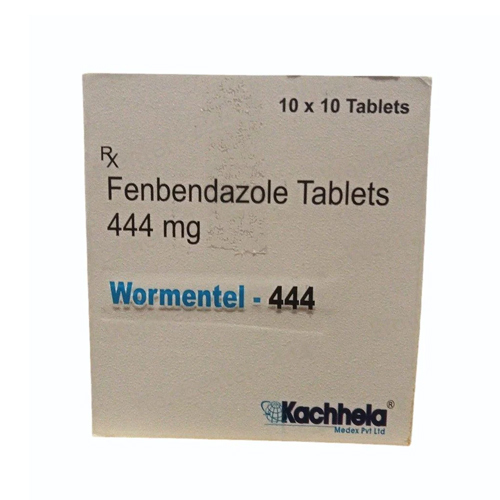
Type fenbendazole 444mg into a search bar and you will find bottles of tablets, some labelled “for human use,” sold by websites you have probably never heard of. This guide looks at those products the way a consumer-protection reporter would. We trace where the 444 mg figure came from, list what a licensed medicine has that these tablets do not, and show you the warning signs on a sales page. Fenbendazole is a veterinary dewormer. It is not approved for any use in people, and nothing here is a dose or a plan for taking it.
Read this first. Fenbendazole is not an approved human medicine in the US, the UK or the EU. Any medicine for a worm infection in a person needs a prescription, and the prescriber chooses the drug, the dose and how long to take it based on the infection. Do not use pet products, leftover tablets or tablets someone has shared with you. If you are living with cancer, speak to your oncology team before you add anything to your treatment.
Following the number: how “fenbendazole 444mg” was born
Medicine strengths are usually chosen in clinical trials. Researchers test several amounts in people and settle on the ones that balance benefit and harm. The 444 mg figure has no such history. It comes from simple arithmetic on a dog product.
A widely sold US canine dewormer comes as granules. Its product label lists the granules as 22.2% fenbendazole, or 222 mg per gram, packed in 1 g, 2 g and 4 g sachets. The sachet a vet or owner picks depends on how much the dog weighs. Two grams of those granules hold 444 mg of the drug. That is all the number means.
When online stories about fenbendazole and cancer began to spread, people started passing around packet sizes. Over time, “one 2 g packet” turned into “444 mg” in forums and video comments. Sellers then pressed tablets and filled capsules at that strength, because that is what buyers were typing into search engines. The label on a bottle of fenbendazole 444mg tablets is, in effect, a dog’s dose that has been given a human-looking package.
The same pattern explains the other strengths you may see. Our pet owner’s guide to the 222 mg label decodes the veterinary packaging line by line. For the wider picture of what the science says about this drug and cancer, see our main explainer on fenbendazole and the human evidence.
Why a dog’s dose can’t simply be moved to a person
A veterinary label is written for one species, one set of worms and a dose worked out per kilogram of body weight. Dogs and people absorb, break down and clear drugs differently. Inactive ingredients that suit a dog’s food bowl may not have been assessed for a person at all. None of this has been studied in people for fenbendazole, so no one can say what any number means for a human body. Our article on how vet and human pain medicines differ shows the same principle with a very different drug class.
The tablets that copied the dog packet
Search for fenbendazole 444mg and three kinds of product usually appear.
- Veterinary products sold for animals. These are the granules, pastes and liquids made for dogs, horses and livestock. In many countries they are legal to sell for animals, sometimes only through a vet.
- Tablets or capsules with no stated species. These often say “research use” or “not for human consumption” in small print while the photos and reviews say otherwise.
- Tablets marketed openly “for human use.” Some carry phrases such as “human grade,” “pharmaceutical grade” or “99% purity.” None of those words means a regulator has checked the product.
The third group is the one this page is most concerned about. A label that says “for human use” is a marketing statement, not an approval. In the US, only the FDA can approve a drug as safe and effective for people, and it has not approved fenbendazole for any human condition. In the UK, a medicine needs a marketing authorisation from the MHRA before it can be sold for people. We could not find any regulator that has licensed a fenbendazole tablet for humans at 444 mg or any other strength.
We are not naming or linking any sellers. Knowing what a trustworthy source looks like is more useful. If you want to understand how genuine medicines move from a licensed maker to a pharmacy shelf, read our explainer on how the legitimate medicine supply chain works. Ask hard questions of every seller you deal with, us included. We answer the question about our own site openly on our page about whether newlifemedix.com is legit.
Regulated vs unregulated: what a fenbendazole 444mg tablet is missing
When you pick up a prescription at a licensed pharmacy, you are relying on a chain of checks you never see. Here is how a licensed human medicine compares with a typical unregulated fenbendazole tablet bought online.
| Safeguard | Licensed human medicine | Unregulated fenbendazole 444mg tablet |
|---|---|---|
| Proof it works and is safe in people | Reviewed by a regulator (FDA, MHRA, EMA) using clinical trial data before sale | None. No human trials have been submitted or approved |
| Inspected factory | Maker must follow good manufacturing practice and can be inspected | Factory, country and conditions usually unknown |
| Batch testing | Each batch is tested against set limits for strength, purity and how well it dissolves | No independent check that a tablet holds 444 mg, or that it holds only fenbendazole |
| Approved label and leaflet | Wording agreed with the regulator, with warnings, interactions and storage | Label written by the seller; claims not reviewed |
| Side-effect monitoring | Makers must collect and report adverse events; regulators track signals | No one is obliged to gather or report harms |
| Recall system | Faulty batches can be traced by lot number and pulled | Often no lot number, expiry date or traceable maker |
| Professional check | A prescriber and pharmacist review it against your other medicines and conditions | Sold straight to the buyer with no clinical review |
| Someone accountable | A named licence holder with a legal address | Often an anonymous website that can vanish overnight |
Approval is about evidence, not paperwork
Approval means an expert team has read the trial results and decided the benefits outweigh the risks for a defined group of patients. It also fixes the dose, the conditions it can be marketed for, and who should avoid it. Without that review, a fenbendazole 444mg tablet has no agreed use, no known safe amount and no list of people who should never take it.
Good manufacturing practice protects what’s inside each tablet
Quality in medicine is built in during manufacture, not tested in at the end. Licensed makers must control their raw materials, equipment, cleaning, staff training and records, so that every tablet in every batch is the same. Fenbendazole barely dissolves in water. That makes how a tablet is formulated and made especially important to how much drug, if any, gets absorbed. An unregulated maker has no obligation to get this right, or even to try.
The label and leaflet are safety tools
An approved label is not decoration. It tells you how to store a product, which other medicines clash with it, which symptoms mean you should stop, and when to call a doctor. Our guides to reading a prescription label, what a medication guide contains and how boxed warnings work show how much information a regulated product has to carry. A seller’s label on an unapproved tablet carries none of that weight.
Pharmacovigilance: the system that notices harm
Even after approval, rare side effects can appear once thousands of people use a drug. Licence holders must collect reports and pass them to regulators, who can add warnings or withdraw a product. With unregulated fenbendazole, the only record of harm is what doctors choose to publish as case reports. Problems that never reach a journal simply go uncounted.
What testers find when they look inside unregulated products
We searched for published laboratory testing of fenbendazole tablets sold online for people. We did not find any peer-reviewed analysis, so we cannot tell you how accurate these labels are. What we can report is what testing has found across unregulated health products in general. The pattern is not reassuring.
Hidden drugs in “supplements”
A study from the California Department of Public Health, published in JAMA Network Open in 2018, reviewed a decade of FDA warnings. It counted 776 dietary supplements found to contain unapproved drug ingredients between 2007 and 2016. About one in five contained more than one hidden drug. Most were sold for sexual enhancement, weight loss or muscle building.
The FDA’s own advice on avoiding products with hidden ingredients says such products now turn up on large online marketplaces and in social media ads. The agency lists harms that include liver toxicity and death. It also warns that a missing entry in its fraud database does not mean a product is safe.
Doses that don’t match the label
Dose accuracy is a problem even when the ingredient is legal and familiar. In a 2023 research letter in JAMA, researchers tested 25 melatonin gummy products bought in the US. The measured melatonin ranged from 74% to 347% of what the labels claimed, and only 3 products fell within 10% of the stated amount. One contained no melatonin at all. If products from known brands can be that far off, there is little reason to assume an anonymous fenbendazole 444mg tablet holds exactly what its label says.
Why this matters for fenbendazole
Put those findings next to what we know about fenbendazole. The 2024 review in Anticancer Research, cited in our hub page, found that human dosing and safety are poorly documented. Published case reports describe liver injury in people who took it without medical oversight. When you add unknown strength and possible contamination to a drug whose human effects are already uncertain, every tablet becomes a small experiment with no one keeping notes. If you have taken fenbendazole and want to know what monitoring may involve, our guide to safety checks and liver monitoring after taking it goes into detail.
A word on “made in an FDA-approved facility.” You may see this line on product pages. The FDA says the phrase is misleading, because it does not approve facilities. It approves drugs. A factory can be registered or inspected, but that tells you nothing about whether a specific unapproved tablet is safe or contains what it claims.
Is it legal to buy or import fenbendazole 444mg tablets?
The honest answer is that it depends on where you live and where the product comes from. But the rules in the two markets we cover most closely point the same way.
United States
The FDA’s personal importation guidance starts from a simple position: in most cases it is illegal for individuals to import drugs into the US for their own use. FDA staff may use discretion in narrow cases involving a serious condition. All of the listed conditions must apply. They include that no effective treatment is available in the US, that the product is not marketed or promoted to US residents, that it poses no unreasonable risk, and that the buyer can name a US-licensed doctor responsible for their care. The quantity is generally limited to about three months’ supply.
A fenbendazole website aimed at American shoppers fails at least one of those tests by definition, because it is being promoted to US residents. Discretion is also a choice the agency may make, not a right the buyer can claim. Shipments can be detained or refused. The same page notes that animal drugs follow similar rules, with a veterinarian’s letter in place of a doctor’s.
Domestic sellers are not in a safer position. Marketing an unapproved drug for treating disease in people, including cancer, can draw FDA action against the seller. The agency’s consumer warning that products claiming to cure cancer are a cruel deception explains that legitimate cancer medicines must be approved before sale, and that it sends warning letters to firms that make such claims. As a buyer, you are unlikely to be the target. You are, however, the person who carries the health risk.
United Kingdom, briefly
In the UK, the MHRA regulates human medicines and the Veterinary Medicines Directorate oversees animal ones. Selling or supplying a product as a medicine for people without a UK marketing authorisation is generally against the law, with narrow exceptions for unlicensed “specials” ordered by a prescriber. Fenbendazole has no UK licence for people. The government’s #FakeMeds campaign warns that medical products bought from unreliable websites may not work, may make you ill, and may expose you to card fraud and identity theft. It also explains how to check whether an online pharmacy is registered.
Crossing borders with any medicine raises its own questions. Our guide to flying with medicines and airport rules covers the general principles for prescribed products, which an unapproved animal drug will not meet.
Red flags on a fenbendazole 444mg product page
Many of these warning signs come straight from FDA consumer advice. Others come from patterns that consumer groups see again and again. One flag on its own may not prove a product is fake. Several together should make you close the tab.
- Cancer cure claims. Phrases like “kills cancer cells,” “shrinks tumours” or “works where chemo fails” match the wording the FDA singles out as signs of fraud.
- “Human grade” or “pharmaceutical grade.” These are not regulatory categories for an unapproved drug. They are sales language.
- “For research only” next to human testimonials. A disclaimer in small print does not cancel a sales pitch in large print.
- Reviews that all sound the same. Dozens of glowing, similar reviews, often posted in short bursts, are a known warning sign. The FDA advises caution with products that have many enthusiastic reviews.
- Dosing charts or “protocols.” A seller giving you a schedule is practising medicine without a licence or any evidence base.
- No prescription, no questions. A legitimate pharmacy asks about your health and your other medicines. A seller that asks nothing is not checking anything.
- Payment by cryptocurrency, gift card or money transfer only. These methods are hard to reverse and offer little protection if goods never arrive or are not what was promised.
- No physical address or licence number. If you can’t find who makes or sells the product, you can’t hold anyone responsible.
- No lot number or expiry date in photos. These are basic markers of traceable manufacture.
- Purity certificates you can’t verify. A PDF “certificate of analysis” with no named, accredited lab you can contact proves very little.
- “Doctors don’t want you to know.” Conspiracy framing is a sales tool, not evidence.
- Pressure tactics. Countdown timers, “only 3 left” banners and bulk discounts push you to buy before you think.
Several of these flags are common to health myths in general. If you find the claim-and-check format helpful, our myths versus facts guide uses it for a very different, regulated medicine. And if you are looking for a quick list you can use on any product, our medicine safety checklist is a good model.
Already bought a bottle? A calm plan
Buying these tablets does not make you foolish. Many buyers are frightened for someone they love. Here is a sensible order of steps.
- Don’t stop or skip any prescribed treatment. Whatever you decide about the fenbendazole, keep taking the medicines your own doctor prescribed unless they tell you otherwise.
- Tell your doctor or oncologist. Be open about what you bought, whether you have taken any, how much and for how long. Your team needs this to read your blood tests correctly. Our tips on raising a sensitive medicine question with your doctor may help you start the conversation.
- Bring the bottle. Take the container, label and any leaflet to your appointment. Photos of the product page and order confirmation help too.
- Ask about checks. Your doctor may suggest liver tests or other monitoring. Ask how fenbendazole could affect your liver and your other medicines. For background, see how liver conditions affect medicine safety and how drug interactions happen.
- List everything else you take. Include vitamins, herbal products and other online purchases. Our page on checking supplements against your prescriptions explains why the full list matters.
- Report the product. In the US, anyone can report a side effect or a quality problem through the FDA MedWatch online form, which has a consumer option. In the UK, the MHRA’s Yellow Card scheme accepts reports of suspected side effects, defective medicines and suspected fakes from members of the public.
- Protect your money. If you paid by card and the goods were misdescribed, contact your bank or card provider promptly. Keep all receipts and emails.
- Dispose of what’s left safely. Don’t pass the tablets on to anyone else. Follow local take-back advice, such as the options in our guide to getting rid of unwanted medicines safely.
If you are reading this because the person who bought the tablets is a parent or partner with cancer, a gentle conversation usually works better than an argument. Offer to go with them to their next appointment and help them ask the questions.
If a child or pet gets into the tablets
Bottles of tablets bought online often lack child-resistant caps. Pet granules come in sachets that are easy to tear open. A curious toddler can get into either within seconds.
If a child swallows fenbendazole tablets or pet dewormer, call Poison Help at 1-800-222-1222. The line is toll-free and open 24 hours a day, 7 days a week, in the US. Have the bottle or packet with you so you can read out the label. If the child is drowsy, having a seizure, struggling to breathe or has collapsed, call 911 straight away. Don’t make them vomit unless an expert tells you to. If a pet ate a human product or too much of its own medicine, call your vet or an animal poison line.
The best protection is storage. Keep every medicine, human or animal, in its original container, up high and locked if you can. Store pet products apart from family medicines so no one grabs the wrong bottle. Our guides to storing medicines safely at home and making a household safer around medicines apply just as well to pet dewormers. For the first few minutes after any medicine mix-up, the steps in our article on what to do right after a medicine mistake are a useful reminder: stay calm, check the label, and call for advice.
If what you need is a real worm treatment
Some people search for fenbendazole 444mg because they believe they have a parasite infection. If that is you, see a doctor. Worm infections in people are diagnosed with tests, and there are approved medicines for them. Mebendazole, a close chemical relative of fenbendazole, is approved for several intestinal worms. Our page on mebendazole 100mg chewable tablets explains its licensed uses. It is a prescription medicine, and your prescriber decides whether it suits you. Approved antiparasitic drugs are not approved for cancer, and they are not a “cleanse.”
For people following fenbendazole cancer research as it develops, our fenbendazole research tracker keeps a running record of studies and trial registrations without the sales spin. Wider health and wellbeing articles are collected on our health tips hub.
Fenbendazole 444mg questions, answered
What is fenbendazole 444mg?
It is the amount of fenbendazole in 2 g of a 22.2% canine dewormer granule. Some online sellers now sell tablets or capsules labelled at that strength. It is not a human medicine strength set by any regulator.
Is fenbendazole 444mg approved for humans?
No. US approvals for fenbendazole cover animal products alone. We could not find a human licence from the MHRA, the EMA or any other major regulator, at this or any strength.
What does “human grade” fenbendazole mean?
Nothing official. “Human grade” is a marketing phrase. Only a regulator’s approval shows a medicine has been reviewed for safety, effectiveness and quality in people.
Have fenbendazole tablets sold online been lab tested?
We found no published, independent analysis of these tablets. Testing of other unregulated products has found hidden drugs and doses far from the label, so accuracy can’t be assumed.
Is it legal to buy fenbendazole tablets online in the US?
The FDA says personal importation of drugs is illegal in most cases, with narrow discretion that a product promoted to US buyers does not meet. Selling an unapproved drug for human disease can lead to FDA enforcement against the seller.
Can I bring fenbendazole into the UK?
Fenbendazole has no UK licence as a human medicine, and selling unlicensed medicines to the public is generally against the law. The MHRA advises buying medicines only from registered pharmacies.
I’ve already bought some. What should I do?
Keep taking your prescribed treatment and talk to your doctor or oncologist. Bring the bottle. You can report problems through FDA MedWatch in the US or the Yellow Card scheme in the UK.
What if a child swallows fenbendazole?
Call Poison Help at 1-800-222-1222 in the US. Call 911 if the child is very unwell, drowsy or struggling to breathe. Have the label ready.
How do I report a suspicious seller?
In the US, use the FDA’s MedWatch form or call 1-888-INFO-FDA. In the UK, report suspected fakes through the Yellow Card scheme. Report payment problems to your bank as well.
Key takeaways
- The 444 mg figure comes from 2 g of 22.2% dog dewormer granules. It was never set for people.
- Fenbendazole is not approved for human use, and a “for human use” label on a bottle is not an approval.
- Unregulated tablets lack the approval, inspected manufacture, batch testing, approved label and side-effect monitoring that protect people taking licensed medicines.
- Testing of unregulated health products has found hidden drugs and doses far from the label; no published testing shows fenbendazole tablets are any different.
- In the US, personal importation of unapproved drugs is illegal in most cases; in the UK, there is no human licence for fenbendazole.
- Cancer cure claims, “human grade” wording, copy-paste reviews and crypto-only payment are strong warning signs.
- If you have bought some, keep your prescribed treatment, tell your doctor and report the product. If a child swallows any, call Poison Help at 1-800-222-1222.
This description is for information only and does not replace advice from your doctor or pharmacist. Use only as prescribed.
Medically reviewed by: [Reviewer name, credentials] · Last reviewed: [date]
Reviews
There are no reviews yet.