
Description
If you have already started fenbendazole 150mg capsules, this page is for you. It isn’t here to scold you or to talk you into anything. It is a calm safety check, written the way a nurse might go through it with you at the bedside: who to tell, what they may test, which symptoms matter, and how to raise the subject with your doctors without feeling judged.
Fenbendazole is not approved for human use. No regulator has licensed a fenbendazole medicine for people, so no doctor can prescribe it to you as an approved treatment, and there is no tested human dose. Antiparasitic medicines that are approved for people need a prescription, and the prescriber chooses the drug, the dose and the length of treatment based on the infection. Please don’t use leftover, shared or pet-labelled products. This page gives no doses, schedules or instructions for taking fenbendazole.
Wanting to do something more is human. You are allowed to have tried something, and you are allowed to ask for help keeping yourself safe now. If you want the wider background first, including where the evidence stands, our overview of fenbendazole research in people covers it. Here, we focus on what to do next.
What sits inside a fenbendazole 150mg capsule, and who checks it
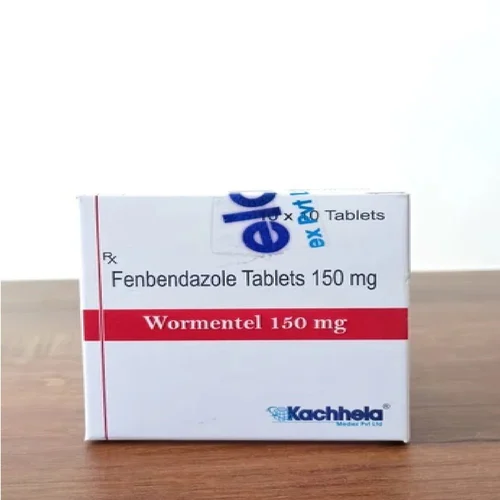
Fenbendazole is a veterinary dewormer. Vets use it in dogs, horses, cattle and other animals. The 150 mg capsules you can find online are not a veterinary strength we could trace to an approved animal label, and they are certainly not a human medicine. They are usually sold as “research” products or dietary supplements, which means nobody in a regulatory role has confirmed what each capsule holds.
That matters for your safety in three plain ways:
- The amount may not match the label. A capsule marked 150 mg could contain more, less, or something else entirely. No batch testing is required before sale.
- The other ingredients are unknown. Fillers, binders and contaminants are not declared to the standard a pharmacy medicine must meet.
- There is no leaflet written for you. A licensed medicine comes with tested warnings, interaction lists and side effect data. An unregulated capsule has none of that.
You will see other numbers online too. The 222 mg figure comes from dog dewormer granules, as our guide to reading the 222 mg pet label explains. The 444 mg capsules raise their own quality questions, covered in our look at what 444 mg products actually contain. And if you are following the science, our fenbendazole research tracker keeps an eye on new studies. Whatever the number on the bottle, the safety steps below are the same.
If you’re already taking fenbendazole 150mg: start with one honest conversation
The single most protective thing you can do is tell the people treating you. It is simply information they need to read your test results correctly and keep your treatment on track.
Who needs to know
- Your oncology team. This includes your oncologist, your specialist nurse and the pharmacist who checks your chemotherapy or immunotherapy orders. They are the ones most likely to see a change in your blood tests.
- Your GP or primary care doctor. They often see you between cancer appointments and may order tests for other reasons. They also hold your full medicine list.
- Your clinical trial team, if you are in a study. Trial nurses and coordinators need to record everything you take. We explain why further down.
- Anyone planning a procedure. Surgeons and anaesthetists ask about every product you use. Our page on preparing for surgery while on other medicines shows the kind of questions to expect.
What to bring with you
A rough picture helps far more than nothing. If you can, bring:
- The bottle or packet, or a clear photo of the label front and back.
- Where you bought it, such as a website, a pet shop or a friend.
- Roughly when you started and whether you have taken any breaks.
- Anything you take with it, such as vitamins, herbs, powders or other antiparasitics.
- Any symptoms you have noticed since starting, even small ones.
That last list of extras matters more than people expect. Many online regimens bundle several products together. Our explainer on checking vitamins and supplements against your other medicines walks through why a complete list protects you. The US National Cancer Institute gives the same advice: tell your care team about every complementary product you use, because some can interfere with cancer treatment.
The blood tests your team may order, and what each one shows
If you tell your doctor you have been taking fenbendazole 150mg capsules, the most likely next step is a set of blood tests called liver function tests, often shortened to LFTs. Many people with cancer already have these checked routinely, so your team may simply look more closely at your recent results.
Why the liver? The liver is where the body breaks down most swallowed medicines, including fenbendazole and many cancer drugs. It is also the organ most often harmed in published reports of people self-treating with fenbendazole. For a plain-English picture of this process, see our guide to how the liver processes medicines.
| Test | What it measures | Why your team might watch it |
|---|---|---|
| ALT (alanine aminotransferase) | An enzyme made mainly in liver cells | It leaks into the blood when liver cells are inflamed or damaged; it was sharply raised in the published fenbendazole cases |
| AST (aspartate aminotransferase) | Another enzyme found in the liver and other tissues | Read alongside ALT to judge how much liver cell injury there is |
| ALP (alkaline phosphatase) | An enzyme linked to the bile ducts (and bone) | Helps doctors tell whether injury affects liver cells, bile flow, or both |
| Bilirubin | A yellow waste product the liver clears from old red blood cells | A rise can cause yellow skin and eyes (jaundice) and signals the liver is struggling |
| Albumin and INR (clotting test) | A protein the liver makes, and how quickly blood clots | Show how well the liver is still doing its everyday work |
| Full blood count | Red cells, white cells and platelets | Related drugs in the same family can lower blood counts, and so can many cancer treatments |
MedlinePlus has a helpful patient page on what liver function tests measure, if you would like to read your own results with more confidence. Ask your team to talk you through your numbers.
One more point. A single raised result doesn’t automatically mean fenbendazole is to blame. Cancer itself, other medicines, alcohol and infections can all affect the liver. That is exactly why your team needs the full story. Without it, they may chase the wrong cause. If you already have a liver condition, our page on medicines and existing liver disease explains why doctors are extra careful.
What doctors have published about liver injury
There are no clinical trials of fenbendazole in people, so most of what we know about harm comes from case reports. These are short papers in which doctors describe one patient in detail. They can’t tell us how often a problem happens. But they show what a problem can look like, and they share some striking patterns.
Japan, 2021: an older woman on immunotherapy
Doctors at a cancer centre in Japan described an 80-year-old woman with advanced lung cancer who was receiving pembrolizumab, an immunotherapy drug. She began taking fenbendazole sold as a dog dewormer after reading cancer claims on social media. About a month later, her liver enzymes had climbed sharply, although they had been normal three weeks earlier. Her team first suspected the immunotherapy. Only after talking with her and her family did they learn about the fenbendazole. Once she stopped it, her liver tests returned to normal, and she could restart her cancer drug safely. The authors saw no sign that fenbendazole had shrunk her tumour. Their main message to other doctors: always ask patients about anything they take on their own.
United States, 2026: hepatitis that looked like an immunotherapy side effect
A team in the US reported a 47-year-old woman with metastatic colon cancer who was on combination immunotherapy. After several weeks of self-sourced fenbendazole, she was admitted to hospital with very high liver enzymes and raised bilirubin. Her doctors faced a hard question: was this immune-related hepatitis from her cancer drug, which is usually treated with steroids, or injury from fenbendazole? Using a structured scoring tool and the timing of events, they judged fenbendazole the probable cause and held off on steroids. Her liver recovered after she stopped it, and she went back on her immunotherapy about a month later without a repeat problem.
United States, 2026: a man combining two animal products
A third report described a 65-year-old man with prostate cancer under active surveillance who took veterinary fenbendazole and ivermectin for about three months, following advice from online support groups. He developed fatigue, nausea, yellow skin, dark urine and pale stools. His tests showed a severe, hepatocellular pattern of drug-induced liver injury, and other causes were ruled out. He spent a few days in hospital. His liver tests returned to normal over about six weeks after he stopped both products. The authors urged clinicians to ask about off-label use in a non-judgemental way so patients feel safe telling them.
What these stories have in common
- The cause was hidden at first. In each case, doctors initially looked elsewhere. Disclosure changed the picture.
- Injury showed up weeks in, not on day one. Normal tests early on do not rule out later problems.
- Stopping helped. In all three, liver tests improved after the product was stopped.
- Cancer care could continue. Once the cause was clear, two patients safely restarted their immunotherapy.
The American Cancer Society noted in a 2025 explainer that the few human case studies describe liver damage and inflammation, and that fenbendazole might interact with standard treatment. Those reports are the reason a quick blood test is worth having, even if you feel well.
Warning signs to watch for at home
Liver injury can be silent at first, which is why blood tests matter. But as it progresses, the body often sends signals. Keep this list somewhere easy to find, such as your phone or the fridge door.
- Yellowing of the skin or the whites of the eyes (jaundice). On darker skin, the eyes are often the easier place to see it. The NHS advises getting urgent medical advice for any new jaundice.
- Dark urine. Urine that looks like tea or cola, even when you are drinking well.
- Pale, grey or clay-coloured stools.
- Itching all over, often worse at night, without a rash. Itch has many causes, and our guide to why medicines can cause itch and when to worry helps you tell them apart.
- Pain or a heavy ache under the right ribs, in the upper right part of the tummy.
- Unusual tiredness or weakness that is new or worse than your usual treatment fatigue. Our page on medicine-related tiredness explains how doctors sort one kind from another.
- Nausea, vomiting or loss of appetite that is new or getting worse. See our tips on managing nausea from medicines for background.
Call your oncology team or GP the same day if you notice yellow skin or eyes, dark urine, pale stools, all-over itching or new pain under the right ribs. Use your cancer team’s 24-hour line if you have one.
Call 911 or go to the emergency department if the person is confused or very drowsy, is vomiting blood or passing black stools, has a swollen tummy with severe pain, bruises or bleeds easily, or is hard to wake.
If a child or pet swallowed capsules, or you are worried about too much, call Poison Help on 1-800-222-1222 (US, 24/7). If you are feeling hopeless or unsafe, call or text 988.
Two everyday habits help your liver while you sort this out. First, alcohol adds to the liver’s workload; our page on alcohol and medicine risks explains why. Second, check with your pharmacist before taking acetaminophen (paracetamol) for aches, because it is also processed by the liver. Our guide to acetaminophen limits and liver safety sets out the basics.
Fenbendazole 150mg alongside chemotherapy, immunotherapy or targeted therapy
This is the part people most often ask about, and the honest answer is that nobody knows the full picture. No study has tested fenbendazole 150mg or any other strength together with modern cancer drugs in people. What we can do is explain the concerns, so you understand why your team will want to know.
Shared processing in the liver
The liver uses a family of enzymes called cytochrome P450 (CYP) to break down medicines. A 2013 laboratory study using human liver tissue, published in Antimicrobial Agents and Chemotherapy, found that two of these enzymes, CYP2C19 and CYP2J2, did most of the work on one step of fenbendazole breakdown. Earlier research had linked another step to the CYP3A group, which handles a large share of cancer drugs.
That does not prove a harmful interaction. It means the two could, in theory, compete for the same machinery, which might raise or lower the level of either. Because people inherit different versions of CYP2C19, the effect may also vary from person to person. Our explainers on how liver enzymes break down medicines and why the same drug affects people differently make these ideas easier to picture. For a general look at how one drug can change another, see how drug interactions happen.
What related medicines tell us
Fenbendazole belongs to the benzimidazole family. Its human-approved cousin, albendazole, carries clear warnings in its US label. The albendazole prescribing information on DailyMed warns that it can suppress the bone marrow, sometimes fatally, and that it can raise liver enzymes. Prescribers are told to check blood counts and liver tests regularly during each course. You can read more about that approved medicine on our albendazole 400mg page.
We cannot assume fenbendazole behaves the same way in people, because it has never been properly studied. But many chemotherapy drugs also lower blood counts and strain the liver. If two products push in the same direction, the effects could add up. This is a theoretical, class-based concern, not a proven one. It is still a good reason for your team to look at your full blood count as well as your liver tests.
Mixed-up side effects
Immunotherapy can cause the immune system to attack the liver, a side effect called immune-related hepatitis. It is usually treated by pausing the drug and sometimes giving steroids. As the case reports show, fenbendazole injury can look almost identical. If your team doesn’t know about the capsules, they may stop an immunotherapy that is working, or give steroids you don’t need. If they do know, they can weigh both possibilities from the start.
Clinical trials and eligibility
Clinical trials have strict rules about who can join and what else participants may take. The National Cancer Institute explains that every trial has eligibility requirements, covering your health, treatment history and more. Many trials exclude unapproved or investigational products, and nearly all require normal or near-normal liver tests to enrol.
That gives you three reasons to tell a trial team early:
- Your safety. Trial drugs are still being studied. Researchers need to know about anything that might change how the drug acts in your body.
- Your place in the study. Undisclosed use, or raised liver tests, could affect whether you can join or stay in a trial. Raising it early gives the team time to plan with you, for example by rechecking tests after a break.
- The study’s results. Trial data help future patients. If side effects caused by another product are recorded as side effects of the trial drug, the results become less reliable for everyone.
How to talk to your doctor without feeling judged
Many people worry their oncologist will be angry or disappointed. In practice, most cancer teams hear about fenbendazole often and would much rather know. The doctors who wrote the case reports above all made the same plea: patients should feel safe telling us. Our general guide to talking openly with your doctor about medicines has more tips. Here are some words you can borrow.
To open the conversation
- “I want to be open with you about something I’ve been taking, because I want my treatment to be as safe as possible.”
- “I’ve started a product called fenbendazole after reading about it online. Could you check my liver tests and tell me if anything worries you?”
If you feel brushed off
- “I understand it isn’t proven. Can we still talk about whether it might be affecting my blood tests?”
- “What would you want me to watch for at home?”
- “Is there someone on the team, such as a pharmacist or specialist nurse, who could go through my full list with me?”
To talk about what drew you to it
- “I think I started this because I’m scared my treatment won’t be enough. Can we talk about my options?”
- “Are there any clinical trials, including ones testing older drugs for new uses, that I could be considered for?”
- “Could I be referred to integrative oncology or palliative care for help with symptoms and stress?”
If a conversation goes badly, you can ask to speak with someone else on the team.
For caregivers: what to notice and how to help
If you care for someone taking fenbendazole capsules, you may be the first to spot a change. You might also feel torn between respecting their choice and worrying about their safety. Both feelings are reasonable.
- Look at the eyes in daylight. A yellow tinge to the whites is often easier to see than skin changes.
- Notice toilet changes. Dark urine or pale stools are worth mentioning, even if the person feels embarrassed.
- Watch for confusion or unusual sleepiness. In someone with liver strain, new confusion is an emergency. Older adults can be especially vulnerable to medicine side effects, as our page on medicine safety in older adults explains.
- Keep a simple log. Note symptoms, dates and anything new they are taking. Bring it to appointments.
- Offer to go with them. Having someone present can make disclosure easier.
- Store products safely. Capsules and pet medicines should be out of reach of children and animals; our tips on storing medicines safely at home apply here too.
Caring is tiring. Our article on small self-care rituals for mental wellness may help you protect your own energy.
If you decide to stop
Fenbendazole is not known to cause withdrawal symptoms or physical dependence. It does not act on the brain in the way that opioids, sleeping tablets or anxiety medicines do. In the published case reports, people stopped abruptly and their liver tests improved afterwards.
Even so, it is worth talking to your doctor before or soon after you stop, for a few reasons:
- They may want blood tests now, to set a starting point, and again in a few weeks to check recovery.
- If you are about to start a new treatment or join a trial, they can plan the timing with you.
- You may be taking other products bought alongside it, and those deserve the same review.
Don’t flush leftover capsules or put them in household bins where children or pets could find them. Our page on disposing of unwanted medicines safely explains take-back options. For a broader routine, the home medicine safety checklist is a useful template for anyone managing several products.
Fenbendazole 150mg: frequently asked questions
Is fenbendazole 150mg approved for humans?
No. Fenbendazole is approved only in veterinary products, and no 150 mg human medicine exists. Capsules sold online at this strength are not checked by a medicines regulator for content, purity or safety.
Can fenbendazole damage your liver?
It can. Doctors have published several case reports of drug-induced liver injury in people with cancer who took fenbendazole on their own. In those reports, liver tests improved after it was stopped. We do not know how often this happens.
What are the signs of liver damage from fenbendazole?
Watch for yellow skin or eyes, dark urine, pale stools, all-over itching, pain under the right ribs, new tiredness and nausea. Early injury may cause no symptoms, so a blood test is the only reliable check.
Should I tell my oncologist I’m taking fenbendazole?
Yes. Your team needs to know so they can interpret blood tests correctly and avoid stopping a cancer drug that is working. Most oncologists hear this question often and will not judge you.
Can fenbendazole interact with immunotherapy or chemotherapy?
It might, but it has never been studied. It shares liver enzymes with many medicines, and related drugs can lower blood counts. Its liver injury can also look like an immunotherapy side effect, which makes diagnosis harder.
Will taking fenbendazole affect a clinical trial?
It could. Trials have rules about other products and usually need healthy liver tests to enrol. Tell the trial coordinator early so they can advise you and record it properly.
What blood tests check for liver damage?
Liver function tests usually include ALT, AST, ALP, bilirubin and albumin, often with a clotting test called INR. Your team may also check a full blood count.
Are there withdrawal symptoms when you stop fenbendazole?
None are known. It is not habit-forming. Still, tell your doctor when you stop so they can plan follow-up blood tests and review anything else you take.
Is fenbendazole the same as albendazole or mebendazole?
No. They are related, but albendazole and mebendazole are prescription medicines tested and approved in people for certain worm infections. Fenbendazole has not been through human testing, and none of the three is approved for cancer.
Key takeaways
- Fenbendazole 150mg capsules are unregulated. There is no approved human fenbendazole product and no tested human dose.
- If you have already started, tell your oncology team, GP and any trial team. Bring the bottle or a photo, and a list of everything else you take.
- Expect liver function tests and possibly a full blood count. Published case reports describe liver injury that improved after stopping.
- Know the warning signs: jaundice, dark urine, pale stools, itching, right-sided upper tummy pain and new fatigue. Call the same day; call 911 for confusion, bleeding or severe pain.
- Interactions with cancer drugs are untested but plausible, and liver injury can be mistaken for an immunotherapy side effect.
- Stopping does not cause withdrawal, but talk to your doctor so follow-up tests and treatment plans can be arranged.
This description is for information only and does not replace advice from your doctor or pharmacist. Use only as prescribed.
Medically reviewed by: [Reviewer name, credentials] · Last reviewed: [date]
Reviews
There are no reviews yet.