
Description
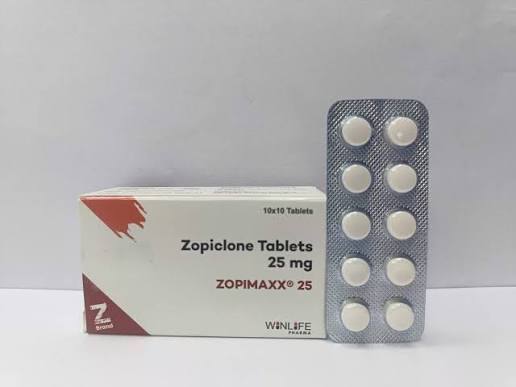
Zopiclone 25 mg is the standard adult strength of zopiclone, a short-acting sleeping tablet sold under brand names such as Imovane and Zimovane. It belongs to a group often called “Z-drugs,” alongside zolpidem and zaleplon. Zopiclone is licensed for the short-term treatment of insomnia that is severe, disabling or causing serious distress. It is not designed for nightly use over months. This guide is organised around the actual night you take it: what to do before bed, what happens while you sleep, what the morning after looks like, and how to stop safely at the end of a short course.
Zopiclone 25 mg: The Spec Sheet
| Active ingredient | Zopiclone |
|---|---|
| Strength | 25 mg per tablet (a 12.5 mg strength also exists) |
| Common brand names | Imovane, Zimovane (availability varies by country) |
| Drug class | Non-benzodiazepine hypnotic (cyclopyrrolone, “Z-drug”) |
| Licensed use | Short-term treatment of severe insomnia in adults |
| How often | Once, at bedtime; never a second dose the same night |
| Starts working | About 30–60 minutes |
| Peak blood level | 1.5–2 hours after the dose |
| Half-life | About 5 hours (about 7 hours in older adults) |
| Usual course | A few days to 2 weeks; no longer than 4 weeks including the taper |
| U.S. status | Not FDA-approved; federal Schedule IV |
Tablet colour, shape and score line vary by manufacturer. Many 25 mg tablets are scored so they can be split into equal halves of 12.5 mg, but check your patient leaflet before splitting.
Is Zopiclone Right for Your Kind of Sleep Problem?
Zopiclone helps people fall asleep and stay asleep during a rough patch. It does not fix the reason sleep went wrong. The table below sorts common situations into where a short zopiclone course may help and where something else should come first.
| Situation | Where zopiclone fits |
|---|---|
| Short-lived insomnia after bereavement, a hospital stay or a major life event | Possible fit for a few nights to two weeks, alongside sleep habit changes |
| Insomnia lasting three months or more | Cognitive behavioural therapy for insomnia (CBT-I) is the recommended first treatment; pills are a short bridge at most |
| Loud snoring, gasping or pauses in breathing at night | Do not use until sleep apnea is ruled out; zopiclone is contraindicated in sleep apnea |
| Poor sleep caused by pain, reflux, needing to urinate, or caffeine | Treat the cause first; a hypnotic only hides it |
| Sleep problems with low mood, worry or racing thoughts | Address the anxiety or depression; zopiclone is not an antidepressant and can mask symptoms |
| Jet lag or shift work | Usually better managed with light exposure and scheduling; ask a clinician before using any sleeping pill |
If worry is what keeps you awake, our guide to common anti-anxiety medications and our article on self-care rituals for mental wellness cover approaches that target the cause rather than the symptom.
How Zopiclone Turns Down the Brain’s Volume
Your brain has a natural braking system built around a chemical messenger called GABA. When GABA locks onto its receptors, nerve cells become less excitable, and that is part of how you drift into sleep. Zopiclone binds to the GABA-A receptor complex and makes GABA’s braking signal stronger, a bit like turning up a dimmer switch on calm. The result is faster sleep onset, fewer awakenings and longer total sleep.
Chemically, zopiclone is not a benzodiazepine, but it acts on the same receptor family. That is why it shares many benzodiazepine risks: drowsiness the next day, memory gaps, tolerance, dependence and withdrawal. Readers comparing these medicines will find background in our Xanax vs Ativan and Halcion vs Ativan comparisons.
The Dose Ladder: Where 25 mg Fits
Zopiclone has a low ceiling. The maximum is 25 mg in one night, so the 7.5 mg tablet is already the top dose. Licensed labels follow this pattern:
| Who | Usual starting dose | Maximum per night |
|---|---|---|
| Healthy adults under 65 | 25 mg (some newer labels start at 5 mg) | 25 mg |
| Adults 65 and over | 12.5 mg | 25 mg, only if needed and tolerated |
| Mild to moderate liver problems | 12.5 mg | 25 mg with caution |
| Kidney impairment | 12.5 mg | 25 mg with caution |
| Chronic breathing problems (not severe) | 12.5 mg | 25 mg with caution |
| Under 18 | Not recommended; safety not established | |
Doses above 25 mg do not bring extra benefit. They raise the risk of next-day impairment, memory loss and breathing problems. The UK product information notes that doses of 22.5–50 mg have caused intoxication in adults, which is why taking extra tablets on a bad night is never safe.
One Night on Zopiclone 25 mg: An Hour-by-Hour Guide
| When | What to do | Why |
|---|---|---|
| Evening | No alcohol. Check you have no other sedatives due tonight. | Alcohol and other sedatives stack with zopiclone and can depress breathing. |
| Before the dose | Be sure you can stay in bed for 7–8 hours. | Waking early while the drug is active raises the risk of memory gaps and grogginess. |
| Bedtime | Swallow one tablet whole with water, sitting or standing upright, then go straight to bed. | Taking it lying down can delay absorption; taking it and staying up raises fall and amnesia risk. |
| 30–60 minutes | Sleepiness sets in. | The drug is reaching the brain. |
| 1.5–2 hours | Peak blood level. | This is when confusion or unsteadiness is most likely if you get up. |
| Night-time waking | Get up slowly; use a night light. Never take a second dose. | Falls and repeat dosing are two of the main night-time dangers. |
| About 5 hours | Half the dose has cleared (about 7 hours if you are older). | Older adults carry more drug into the morning. |
| Morning | Expect a bitter or metallic taste; you may feel heavy-headed. | Taste change is one of the most common side effects. |
| Next 12 hours | Do not drive, cycle, use machinery or work at heights until at least 12 hours after the dose, and longer if you still feel slow. | Reaction time can be impaired even when you feel awake. |
The 12-hour rule is stricter than many people expect. Our guide to driving after sedating medicines explains why feeling alert is not the same as being safe behind the wheel.
The Four-Week Calendar
Zopiclone works best as a short course with a planned end date. Tolerance can begin within a couple of weeks, which means the same dose helps less and the urge to take more grows. A typical course looks like this:
- Week 1: Use only on the nights prescribed. Start sleep-habit changes now, not after the tablets run out.
- Week 2: Review with your prescriber. Many courses end here.
- Weeks 3–4: If treatment continues, this is when tapering usually begins. The licensed maximum is four weeks including the taper.
- Beyond 4 weeks: Only after a fresh assessment. If insomnia keeps returning, ask about CBT-I.
Side Effects of Zopiclone 25 mg, by How Often They Happen
The UK product information groups side effects by frequency. “Common” means between 1 in 10 and 1 in 100 people; “rare” means between 1 in 1,000 and 1 in 10,000.
| Frequency | Side effects |
|---|---|
| Common | Bitter or metallic taste, drowsiness, dry mouth |
| Uncommon | Agitation, nightmares, reduced alertness, headache, dizziness, nausea, tiredness, stomach pain, difficulty getting up in the morning |
| Rare | Confusion, irritability, aggression, hallucinations, low mood, memory loss for events after the dose, shortness of breath, skin reactions, falls |
| Very rare | Severe allergic reactions including swelling of the face or throat; changes in liver blood tests |
| Frequency not known | Complex sleep behaviours, dependence, withdrawal, slowed breathing, unsteadiness, double vision |
That bitter taste
The metallic, bitter taste is the side effect people mention most. It usually appears the next morning and can linger. It is harmless, but it can put people off breakfast. Rinsing with water, brushing your teeth, chewing sugar-free gum or a sharp-tasting food like citrus can help. The taste is a known effect of zopiclone and its breakdown products and is not a sign of an allergy. Dry mouth often comes with it; our dry mouth relief guide has practical tips that work for any medicine-related dryness.
Memory gaps
Zopiclone can cause anterograde amnesia, meaning you may not remember things that happened in the hours after the dose. This is more likely if you are woken up or stay awake after taking it. Getting a full 7–8 hours in bed is the best protection. If memory is already a concern, our article on medication-related memory problems explains how sedating drugs affect recall.
Mood changes
Rarely, zopiclone causes the opposite of calm: restlessness, aggression, nightmares or hallucinations. These “paradoxical reactions” are more common in older adults and mean the medicine should be stopped. Zopiclone can also unmask or worsen depression. If you notice low mood or thoughts of self-harm, call or text 988 in the U.S., or contact your local crisis line. Background reading is in our article on medicines and depression.
Complex Sleep Behaviours: The Most Serious Warning
People taking Z-drugs have walked, cooked, eaten, made phone calls and even driven while not fully awake, with no memory of it afterwards. Some of these episodes have caused serious injuries and deaths. In April 2019 the FDA added a boxed warning to eszopiclone, zolpidem and zaleplon for this reason, and the zopiclone product information carries a matching warning.
Stop zopiclone and contact your prescriber if you or someone in your home notices any activity you do not remember. Anyone who has had a complex sleep behaviour on zopiclone should not take it again.
Practical safeguards: keep car keys out of the bedroom, never take zopiclone with alcohol or other sedatives, and do not take it if you cannot stay in bed for a full night.
Who Should Not Take Zopiclone
The product information lists these as reasons not to use zopiclone at all:
- Allergy to zopiclone or any tablet ingredient
- Severe liver failure
- Sleep apnea syndrome
- Myasthenia gravis (a condition causing muscle weakness)
- Severe breathing failure
- A previous complex sleep behaviour after taking zopiclone
Untreated sleep apnea deserves special mention, because many people with it do not know they have it. Sedating medicines relax the airway and dull the brain’s wake-up response to low oxygen. Our article on sedating medicines and sleep apnea explains the warning signs, and our guide to sedating medicines and COPD covers chronic lung disease.
Interaction Map: What Changes Zopiclone’s Effect
Zopiclone is broken down in the liver, mainly by an enzyme called CYP3A4. Medicines that block this enzyme raise zopiclone levels; medicines that speed it up lower them. Separately, any sedating substance adds to zopiclone’s effect on the brain.
| Combined with | Effect | What to know |
|---|---|---|
| Alcohol | Stronger sedation, breathing problems, hard to wake | Avoid completely. See our alcohol and sedatives risk guide. |
| Opioid painkillers | Deep sedation, slowed breathing, coma or death | Only if there is no alternative, at the lowest dose, for the shortest time. Read opioids and sleep medications. |
| Benzodiazepines and other sleeping pills | Stacked sedation and memory loss | Do not combine hypnotics. Compare options in Klonopin vs Valium. |
| Sedating antihistamines (diphenhydramine, doxylamine) | More next-day grogginess | Check “PM” and night-time cold remedies; see Benadryl with sedating drugs. |
| Erythromycin and similar macrolide antibiotics | Zopiclone exposure rose by about 80% with erythromycin | Your prescriber may lower the dose. Our article on antibiotics and sedating medicines lists the macrolides. |
| Azole antifungals (itraconazole, ketoconazole, fluconazole) | Itraconazole raised zopiclone levels by about 70% | Tell your pharmacist; see how fluconazole affects liver enzymes. |
| HIV protease inhibitors (e.g., ritonavir) | Higher zopiclone levels | Dose review needed. |
| Grapefruit juice | May raise zopiclone levels | Avoid near bedtime; our food interaction guide explains the grapefruit effect. |
| Rifampicin, carbamazepine, phenytoin, phenobarbital, St John’s wort | Lower zopiclone levels; rifampicin cut them by about 80% | Zopiclone may stop working; do not raise the dose yourself. |
| Antidepressants, antipsychotics, antiepileptics, muscle relaxers | Added drowsiness | Use with caution and only as prescribed. |
If you take melatonin or other sleep supplements, mention them too; our article on melatonin with sedating medicines explains why “natural” does not mean free of interactions.
Special Groups
Adults over 65
Older adults clear zopiclone more slowly, with a half-life closer to 7 hours, and are more prone to night-time falls, confusion and paradoxical agitation. That is why the starting dose is 12.5 mg. The fall-prevention checklist in our guide to sedating medicines in older adults applies directly: night lights, clear walkways and a bedside urinal or commode if getting up is risky.
Liver disease
In people with cirrhosis, zopiclone clearance fell by about 40%, so the dose must be reduced. In severe liver failure zopiclone is contraindicated because sedatives can trigger hepatic encephalopathy. See our liver disease medication guide for how liver stage changes medicine choices.
Kidney disease
Very little zopiclone leaves the body unchanged through the kidneys, and it does not build up in kidney impairment, but labels still advise starting at 12.5 mg.
Pregnancy
Zopiclone crosses the placenta and is not recommended in pregnancy. Use late in pregnancy or during labour can cause low body temperature, floppiness, feeding problems and breathing problems in the newborn, and babies exposed regularly may show withdrawal. If you become pregnant, contact your prescriber rather than stopping suddenly. Our pregnancy and medicines guide covers how to raise this with your care team.
Breastfeeding
Zopiclone passes into breast milk, and the product information says it should not be used while breastfeeding. For how to approach medicine decisions while nursing, see our article on breastfeeding and prescription medicines.
Dependence, Withdrawal and Stopping Safely
Dependence can develop even at normal doses and over short courses. The risk is higher with longer use, higher doses, a history of alcohol or drug misuse, or a mental health condition. Signs that a sleeping pill is becoming a problem include needing it every night, feeling unable to sleep without it, or wanting to increase the dose.
When zopiclone is stopped suddenly, two things can happen:
- Rebound insomnia: a few nights of worse sleep than before treatment. It usually passes, but it convinces many people they still need the tablet.
- Withdrawal: anxiety, restlessness, irritability, headache, muscle pain and sweating. Severe withdrawal can include feeling detached from reality, sensitivity to light and noise and, very rarely, seizures.
The solution is a planned taper agreed with your prescriber, stepping down in small amounts. After longer use, tapering can take weeks or months. If withdrawal symptoms appear, the usual advice is to pause or return to the previous step rather than push through. Our guides on sleeping through medicine withdrawal and natural remedies for deeper sleep offer coping strategies for the transition.
Zopiclone vs Eszopiclone vs Zolpidem
Zopiclone is a mixture of two mirror-image forms of the same molecule. Eszopiclone is just one of those forms, the active one, which is why it is given at much smaller milligram doses.
| Feature | Zopiclone | Eszopiclone (Lunesta) | Zolpidem (Ambien) |
|---|---|---|---|
| U.S. status | Not FDA-approved; Schedule IV | FDA-approved; Schedule IV | FDA-approved; Schedule IV |
| Typical adult tablet | 25 mg | 1–3 mg | 5–10 mg (immediate release) |
| Half-life | About 5 hours | About 6 hours | About 2.5 hours |
| Best suited to | Falling and staying asleep | Falling and staying asleep | Mainly falling asleep |
| Bitter taste | Common | Common | Uncommon |
| Complex sleep behaviour warning | Yes | Yes (FDA boxed warning) | Yes (FDA boxed warning) |
For deeper comparisons, read Zopiclone vs Ambien, Ambien vs Lunesta and Ambien vs Sonata. U.S. patients can find a plain-language eszopiclone summary on MedlinePlus.
Why Zopiclone Is Not Sold in U.S. Pharmacies
Zopiclone has been used in Europe, Canada and many other countries for decades, but it was never approved by the FDA. Instead, its single active form, eszopiclone, was developed and approved in the U.S. as Lunesta. Zopiclone itself remains on the federal list of Schedule IV controlled substances, the same schedule as eszopiclone and zolpidem.
For U.S. readers, that has practical consequences:
- A U.S. prescriber who wants a medicine from this family will normally prescribe eszopiclone or another FDA-approved option.
- Unapproved medicines have not gone through FDA review of their manufacturing and labelling for the U.S. market. The FDA’s BeSafeRx program explains the risks of buying medicines online and how to recognise a licensed pharmacy.
- Controlled substances should only be obtained with a valid prescription through lawful channels in your country.
Readers outside the U.S. can check their country’s licensed product information. In the UK, the official summary is on the electronic medicines compendium, and the NHS publishes a patient guide to zopiclone. You can also read more about how NewLifeMedix operates.
Better Sleep Without Tablets: What Works Long Term
Sleeping pills are a short-term bridge. For insomnia that keeps coming back, CBT-I has the strongest evidence and its benefits last after treatment ends. Core elements include:
- A fixed wake-up time every day, including weekends.
- Bed for sleep only: if you are awake for more than about 20 minutes, get up and do something calm in dim light.
- Sleep restriction: a temporary, structured shortening of time in bed to rebuild sleep drive, ideally guided by a therapist.
- Caffeine cut-off in the early afternoon and no alcohol as a “nightcap”.
- Wind-down routine: screens off, lights low, and a set routine for the last hour.
The CDC’s sleep resources outline healthy sleep targets by age. For gentler aids, see our pieces on essential oil blends for relaxation and homeopathic approaches to anxiety, keeping in mind that the evidence for these is weaker than for CBT-I.
Storage, Safety at Home and Disposal
- Keep tablets in their original pack at room temperature, away from moisture, and follow the storage line on your pack.
- Store them where children and visitors cannot reach them. A lockable storage routine works for any controlled medicine.
- Do not keep the pack on the bedside table, where a half-asleep second dose is easy to take.
- If someone takes more than prescribed, or a child swallows a tablet, call Poison Help at 1-800-222-1222 (poisonhelp.hrsa.gov) in the U.S., or your local emergency number. Call 911 if breathing is slow or the person cannot be woken.
- Return unused tablets to a take-back site or follow the FDA’s disposal guidance; our medicine disposal guide ranks the options.
Frequently Asked Questions About Zopiclone 25 mg
How long does zopiclone 25 mg take to work?
Most people feel sleepy within 30 to 60 minutes, which is why it should be taken right before getting into bed.
Can I take two zopiclone 25 mg tablets?
No. 25 mg is the maximum dose in one night. Taking a second tablet, even after waking at 3 a.m., increases the risk of next-day impairment, memory loss and dangerous sedation. If one tablet no longer works, speak to your prescriber.
What is the difference between zopiclone 12.5 mg and 25 mg?
Only the dose. The 12.5 mg strength is used for older adults, people with liver, kidney or breathing problems, and anyone sensitive to side effects. Many 25 mg tablets are scored to split into 12.5 mg halves.
Why does zopiclone leave a bitter taste?
The drug and its breakdown products are secreted into saliva, giving a metallic or bitter taste, usually the next morning. It is common and harmless.
How long does zopiclone stay in your system?
With a half-life of about 5 hours, most of a dose is cleared within a day in healthy adults, longer in older adults and people with liver disease. Sedating effects can last into the morning, which is why driving should wait at least 12 hours.
Can I drink alcohol on zopiclone?
No. Alcohol strengthens the sedation, can slow breathing and makes it harder to wake. It also increases the risk of complex sleep behaviours.
Is zopiclone the same as Lunesta?
Not exactly. Lunesta contains eszopiclone, the single active form within zopiclone. Eszopiclone is FDA-approved; zopiclone is not.
Is zopiclone addictive?
It can cause tolerance and dependence, even at prescribed doses. Keeping courses short, taking it only as directed and tapering at the end lower the risk.
Key Takeaways
- Zopiclone 25 mg is the standard adult strength and also the maximum dose for one night.
- It is meant for a few days to two weeks, and no longer than four weeks including the taper.
- Start at 12.5 mg if you are over 65 or have liver, kidney or breathing problems.
- Take it right before bed, only when you can stay in bed for 7–8 hours, and wait at least 12 hours before driving.
- Never combine it with alcohol, opioids or other sedatives.
- Stop and seek advice after any sleepwalking, sleep driving or other activity you cannot remember.
- In the U.S., zopiclone is not FDA-approved; eszopiclone is the approved medicine from the same family.
Important status note for U.S. readers. Zopiclone is not approved by the U.S. Food and Drug Administration and is listed as a Schedule IV controlled substance under federal law. In the United States, the approved medicine from the same family is eszopiclone (brand name Lunesta).
Zopiclone is a prescription-only sleep medicine in the countries where it is licensed. It should only ever be used with a valid prescription and under the supervision of a clinician who knows your health history. This page is product information, not medical advice.


Reviews
There are no reviews yet.