
Description
From micrograms per kilo to a tablet count
Most tablets come with a fixed dose: one tablet, twice a day. Ivermectin works differently. The US Stromectol label on DailyMed sets the dose as an amount of drug for each kilogram of body weight. That makes it a rate, a bit like a price per pound at a market.
The label gives two rates for its two approved uses:
- Strongyloidiasis (a threadworm infection of the gut): roughly 200 micrograms for every kilogram, normally taken once.
- Onchocerciasis (river blindness): about 150 micrograms per kilogram, with repeat doses months apart decided by the doctor.
First, a unit check, since this trips people up. A microgram (mcg) is one-thousandth of a milligram (mg). So 200 mcg is 0.2 mg. The whole calculation is just this:
body weight in kg × rate in mcg/kg ÷ 1,000 = total dose in mg
Try it with a round number. At 200 mcg/kg, a person weighing 100 kg gives 100 × 200 = 20,000 mcg. Divide by 1,000 and you get 20 mg. That single line of arithmetic is the honest origin of most searches for ivermectin 20mg. It is a total, not a tablet.
The label’s weight bands, worked through
A prescriber does not want to do long multiplication for every patient, and a pharmacist cannot hand out 17.4 mg. So the label sorts patients into weight bands, and each band is matched to a whole count of 3 mg tablets. The table below uses the strongyloidiasis bands printed on the label. We have added two columns of our own to show the maths behind each band. Read it as a teaching aid.
| Weight band on the label (strongyloidiasis) | 3 mg tablets the label lists | Total (our arithmetic) | What that works out to per kg (our arithmetic) |
|---|---|---|---|
| 15–24 kg | 1 | 3 mg | about 125–200 mcg/kg |
| 25–35 kg | 2 | 6 mg | about 171–240 mcg/kg |
| 36–50 kg | 3 | 9 mg | about 180–250 mcg/kg |
| 51–65 kg | 4 | 12 mg | about 185–235 mcg/kg |
| 66–79 kg | 5 | 15 mg | about 190–227 mcg/kg |
| 80 kg or more | No tablet count; the label says to dose at 200 mcg/kg | 16 mg at 80 kg; 20 mg at 100 kg | 200 mcg/kg by definition |
Illustrative only. Weight bands and tablet counts are from the US Stromectol label; the totals and per-kg columns are our own arithmetic to explain the logic. Your prescriber decides your dose.
Look at the last column. Each band lands on a range around the 200 mcg/kg target, not on the exact figure. Someone at the light end of a band gets a little more per kilogram. Someone at the heavy end gets a little less. That spread is the price of using whole tablets, and the label accepts it.
The river blindness table works the same way, with the bands shifted because the rate is lower. It ends at 85 kg and above, where the label again switches to a per-kilogram rule, this time 150 mcg/kg. At that rate, the arithmetic reaches 20 mg at roughly 133 kg.
The top band is where 20 mg appears
Notice what happens at the bottom of the table. The label stops printing tablet counts at 80 kg for strongyloidiasis. Above that, it hands the prescriber the rate and expects them to work it out. That is the only place in the label where a total of 20 mg can arise, and it only arises for heavier adults. How the prescriber rounds that total into whole tablets is a clinical choice. We are not going to set out a rounding rule, because the label does not print one and the right answer depends on the person.
If you already have a prescription and the number of tablets surprises you, that is normal for a weight-based drug. Ask the pharmacist to show you the weight and rate they used. Our guide to reading the dose line on a prescription label explains where that information sits on the bottle, and the layout applies to most medicines.
Why prescribers count tablets instead of writing one ivermectin 20mg tablet
If a 100 kg adult needs 20 mg, why not just make an ivermectin 20mg tablet? There are three good reasons, and they explain why licensed strengths stay small.
1. Small units give finer steps
Think of tablets as coins. If the only coin you have is a $20 bill, you cannot pay $17. Small coins let you get close to any amount. A 3 mg tablet lets a prescriber move in 3 mg steps across a wide range of body weights, from a child of 15 kg to an adult of 130 kg. A single 20 mg tablet would suit a narrow slice of people and overshoot everyone lighter. For someone at 70 kg, it would deliver close to 290 mcg/kg, well above the label’s rate.
2. Licensing follows evidence
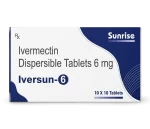
A strength gets licensed when a maker shows a regulator that each tablet holds what it claims, releases the drug properly and stays stable. In the US, every human ivermectin tablet on DailyMed is 3 mg. In India, pharmacy catalogues list 6 mg and 12 mg tablets on prescription, mostly used for scabies and worm infections. Each licensed strength has its own page: start with the US-standard 3 mg ivermectin tablet, then compare the Indian 6 mg ivermectin strength and the larger 12 mg ivermectin strength. We found no regulator listing for a 20 mg strength.
3. Pharmacies stock what is licensed
A prescriber can only write for what a pharmacy can legally supply. Since licensed strengths are 3, 6 and 12 mg, a prescriber reaches a large total by combining them. That is ordinary practice for many weight-based drugs. Splitting a tablet is a different matter. Some tablets are not made to be cut, and the dose in each half may not be even. Our explainer on when splitting a tablet is safe covers the general principles. For ivermectin, ask your pharmacist before cutting anything.
Where ivermectin 20mg turns up
The number 20 appears in three very different places. Only one of them is safe.
Place one: a prescriber’s total for a heavier adult
This is the legitimate case. A doctor weighs the patient, picks the rate for the infection, does the sum and prescribes a number of licensed tablets. The pharmacist checks the arithmetic. The patient takes a single dose, or the course the prescriber sets. Scabies is the most common reason in everyday practice, even though oral ivermectin is used off-label for it. CDC’s scabies treatment guidance uses the same 200 mcg/kg rate, given twice, 7 to 14 days apart. Doctors occasionally turn to the oral tablet for stubborn lice that have not cleared with lotions. For the non-drug side, our head lice home-care guide covers the combing and laundry steps that go alongside it.
Place two: online single-tablet listings
Search for ivermectin 20mg and you will find bulk-export and wholesale pages offering it as one tablet. Those listings are offers to make or ship a product. Nothing about them shows that a health authority ever assessed the product. A tablet sold this way could hold less than the label says, more than it says, or uneven amounts from tablet to tablet. It also skips the step that matters most: someone checking that 20 mg fits your weight. For a 60 kg person, a 20 mg tablet is roughly 330 mcg/kg, well above both label rates.
Place three: veterinary products
Ivermectin is widely used in animals, and that is where the arithmetic gets dangerous. Horse paste, cattle pour-ons, sheep drenches and injectables are sized for a horse or a steer, not a person. One example: a common horse paste is 1.87% ivermectin and its label says one syringe treats up to 1,250 lb of body weight. By our own calculation, a 6.08 g syringe at that strength holds about 114 mg. Cattle pour-ons are often 5 mg per millilitre. These products carry a plain warning that they are not for people.
Never measure out an animal product for a person. You cannot reliably divide a syringe of paste or a bottle of pour-on into a human dose. Animal products can also contain other ingredients that have never been tested in people. The CDC health advisory of August 2021 warned that highly concentrated livestock products were behind many of that year’s poisonings, and named drenches, injectables and pour-ons. The same caution applies to other animal dewormers: fenbendazole, a dog and livestock wormer, is another product that has no place in a human medicine cabinet.
What changes when body weight is high
The label’s rule is simple: weight times rate. Bodies are less simple. Three questions come up when the total for a heavier adult reaches the range of ivermectin 20mg.
Does a bigger body handle the drug the same way?
Not exactly, and this is where we have to be careful with what the evidence shows. Ivermectin dissolves well in fat. That means some of the dose can spread into fatty tissue, and the amount that stays in the blood may differ from what weight alone predicts. A 2021 study in Frontiers in Pharmacology tested this in dogs with diet-induced obesity. In the obese animals, the body cleared ivermectin more slowly relative to body weight. The authors suggested lean body weight might be a better guide than total weight for repeated dosing in people with obesity.
That is a hypothesis from an animal model, not a rule for patients. The US label still uses total body weight, and there is no official human dose cap for obesity on it. What it does mean is that “more kilograms” does not always equal “needs proportionally more drug”. It is one more reason the decision sits with a prescriber, who may also weigh the infection, other medicines and kidney and liver health. For a plain-language look at why the same dose behaves differently in different people, see why medicines affect people differently. Our overview of how weight changes interact with medicines covers the broader idea.
Food changes the numbers too
The label says to take ivermectin on an empty stomach with water. It also reports that a high-fat meal raised the amount absorbed about 2.5-fold in one study. That is a big swing from a meal. CDC’s scabies guidance notes that some experts advise taking it with food for scabies to improve absorption. These opposite instructions show why you should follow the exact directions on your prescription, not a general rule from the internet.
The liver and other medicines
According to the label, the liver clears ivermectin, mainly by an enzyme called CYP3A4. It has a plasma half-life of about 18 hours. Medicines that affect that enzyme, or that block the pump keeping ivermectin out of the brain, could raise exposure. Tell your prescriber about every medicine and supplement you take. Our guide to how the liver breaks down medicines explains enzymes like CYP3A4 in plain terms. Pharmacists run a formal check on every new prescription, and our overview of drug interaction checks walks through how that works. If you have liver disease, the questions in our liver disease medicine safety guide are worth bringing to your appointment.
Screening for Loa loa first
This check has nothing to do with weight, but it matters before any ivermectin dose. The label warns that people heavily infected with Loa loa, the African eye worm, can rarely develop a serious or fatal brain reaction after treatment. If you have lived in, or spent a long stay in, a Loa loa area of West or Central Africa, expect to be checked before treatment. CDC’s strongyloidiasis guidance lists suspected Loa loa infection, pregnancy, breastfeeding and a weight under 15 kg as relative reasons to avoid ivermectin. CDC names albendazole as the alternative; your prescriber can tell you whether it suits you.
Pregnancy and breastfeeding
Because no one has shown it to be safe for an unborn baby, the US label advises against ivermectin in pregnancy. CDC notes it passes into breast milk in low amounts. If you are pregnant, planning a pregnancy or nursing, tell your prescriber before any dose is worked out. Our general guides on medicine questions to raise during pregnancy and taking medicines while breastfeeding list useful questions.
Is ivermectin 20mg in one go safe? Signs a dose is too high
For a heavier adult whose prescriber has worked out the total, a dose in this range follows the label’s own rule. The risk comes from mismatches: a 20 mg tablet taken by a lighter person, repeat doses without advice, or an animal product. At ordinary doses, the brain is shielded: a protein pump lining its capillaries pushes most ivermectin back into the blood. Very high exposure can overwhelm it. The label reports neurotoxicity, including confusion, reduced consciousness and death, and supportive care is the only treatment. There is no antidote.
The CDC advisory grouped the warning signs like this:
- Stomach and gut: nausea, vomiting, stomach pain, diarrhoea.
- Head and eyes: headache, blurred vision and dizziness.
- Heart and circulation: a fast heartbeat and low blood pressure.
- Brain and nerves: confusion, hallucinations, loss of balance and coordination, tremor or shaking, unusual sleepiness, seizures and coma.
MedlinePlus adds rash, hives, tingling in the hands or feet, shortness of breath and swelling of the face or legs to its overdose list.
Who to call
- Call 911 if the person has had a seizure, has collapsed, is struggling to breathe or cannot be woken.
- Call Poison Help on 1-800-222-1222 if they are awake and breathing but took more than prescribed, took an online or animal product, or has any of the signs above. The call is free at any hour and routes you to your nearest poison center; HRSA’s Poison Help page explains the service.
- Have the pack in hand, plus the person’s weight, the time it was taken and a list of their other medicines. For a checklist of details worth noting before you dial, see our page on handling an accidental double dose.
Symptoms can start within hours of one large dose. They can also build slowly over days of repeated doses, which is easy to miss. If someone becomes confused or unsteady part-way through a course, call Poison Help rather than waiting.
What the evidence says about COVID-19 and cancer
Some people search for ivermectin 20mg because of claims about COVID-19 or cancer. Ivermectin is not approved for either. Here is a brief summary of what the strongest evidence shows.
- COVID-19: The ACTIV-6 trial, published in JAMA in 2023, randomised 1,432 outpatients to placebo or to ivermectin aimed at 600 mcg/kg daily, taken for six days. That is about three times the label’s single-dose rate, repeated. Recovery took a median of 11 days on the drug versus 12 on placebo, and the authors concluded it did not help. The NIH-convened COVID-19 treatment guidelines advised against using it except in research studies.
- Cancer: Lab studies show ivermectin can damage cancer cells in a dish, as many compounds do. The NCI announced a lab-only (preclinical) project in early 2026, but, as KFF Health News noted, nobody has shown it works or is safe as a cancer treatment in humans. Early results from a small breast cancer study that paired it with immunotherapy showed no meaningful gain.
There is also no evidence for “detox” or “parasite cleanse” uses. If you are curious about any of these claims, raise them with your doctor. If the topic feels awkward to bring up, our tips for honest medicine conversations with a doctor may help.
Buying ivermectin safely
The safe route is short. See a prescriber, get a diagnosis, and fill the prescription at a licensed pharmacy that sells licensed strengths. A trustworthy seller:
- asks for a valid prescription before dispensing;
- stocks strengths you can find on an official label, such as 3, 6 or 12 mg;
- names the maker, batch number and expiry date;
- does not promote ivermectin for COVID-19, cancer or “cleanses”;
- never sells animal products alongside human tablets.
A listing for a single ivermectin 20mg tablet fails the second test straight away. Our guide on how medicines travel from manufacturer to patient explains the regulated supply chain. To see how this site handles prescriptions, read whether NewLifeMedix is legitimate.
Store any tablets you have in the original pack, away from children, as set out in our safe medicine storage guide. If you have unlicensed or leftover tablets, do not take them. Take them to a pharmacy take-back point, or use the home method in our medicine disposal guide.
Strengths above 12 mg show up mainly on animal products and bulk-export listings. For the sister question about the next number up, see our post on whether a 24 mg ivermectin tablet exists.
Ivermectin 20mg: frequently asked questions
Is there a 20 mg ivermectin tablet?
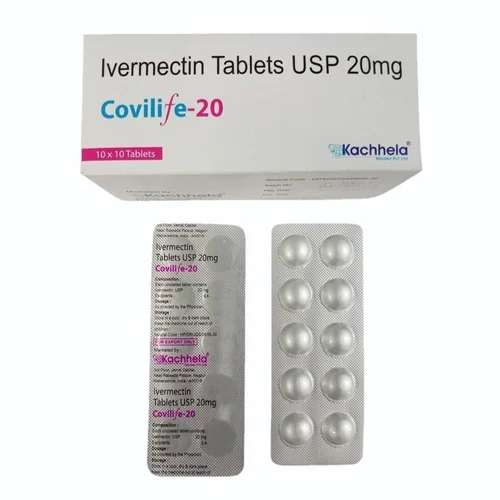
We could not find one. Every US human tablet is 3 mg, and Indian pharmacies dispense 6 mg and 12 mg on prescription. A one-piece 20 mg tablet shows up only on wholesale and export sites, with no regulator approval behind it.
How is ivermectin dosed by weight?
The US label sets a rate of about 200 mcg per kilogram for strongyloidiasis and about 150 mcg per kilogram for river blindness. A chart converts the rate into whole 3 mg tablets for each weight band, and asks the prescriber to calculate by weight above the top band. Your prescriber sets your actual dose.
How many 3 mg tablets make 20 mg?
Twenty does not divide evenly by three, which is part of the point. Six tablets give 18 mg and seven give 21 mg. Whether a heavier adult’s total rounds one way or the other is a prescriber’s decision, based on weight, the infection and other factors.
Is 20 mg of ivermectin safe?
It depends entirely on who takes it and why. For a heavier adult whose prescriber calculated it from the label, a total near 20 mg follows the label’s rule. For a lighter person, or anyone using an unlicensed tablet, it can be well above the label rate.
What happens if you take too much ivermectin?
Early signs include nausea, vomiting, diarrhoea, dizziness and headache. More serious signs include confusion, poor balance, tremor, hallucinations, seizures and coma. Dial 911 if there is a seizure, collapse or breathing difficulty, and Poison Help at 1-800-222-1222 for anything else.
Can humans use horse or cattle ivermectin?
No. Livestock formulas are dosed for animals many times your size, can be highly concentrated, may contain untested ingredients and carry warnings against human use. They caused many of the poisonings CDC warned about in 2021.
Does a higher body weight always mean a higher dose?
The label uses total body weight. Animal research suggests fat tissue may change how ivermectin spreads and clears, so the picture is less simple than the formula. Your prescriber weighs this with your other health factors.
Should ivermectin be taken with food?
The label says to take it on an empty stomach with water, and notes that a high-fat meal raised absorption a lot in one study. Some scabies guidance suggests taking it with food. Follow the directions on your own prescription.
Does ivermectin work for COVID-19 or cancer?
Large trials found no meaningful benefit for COVID-19, even at higher repeated doses. No human study has shown it treats cancer, and it holds no approval for either.
Key takeaways
- An ivermectin 20mg tablet is not on any regulator’s list we searched. The licensed options are 3 mg (US) and 6 or 12 mg (India).
- The label sets a rate per kilogram, not a fixed dose. Weight × rate ÷ 1,000 gives the total in milligrams.
- At 200 mcg/kg, a 100 kg adult’s total works out to 20 mg. A prescriber builds that from licensed tablets.
- Small tablets let doses fit many body weights. A single 20 mg tablet would overshoot for lighter people.
- Never use horse paste, pour-ons or other animal ivermectin. They are concentrated and not made for people.
- Body fat, food, liver enzymes, other medicines, Loa loa exposure and pregnancy can all change the plan.
- Seizure, collapse or laboured breathing means 911. Any other suspected overdose means Poison Help, 1-800-222-1222.
This description is for information only and does not replace advice from your doctor or pharmacist. Use only as prescribed.
Is ivermectin 20mg a real tablet? No regulator we checked lists one, but a 20 mg total dose can be legitimate, because ivermectin is dosed by body weight and a prescriber may build a large adult’s total from several standard tablets.
That two-part answer explains almost everything about this search. The rest of this page works through the arithmetic step by step, the way a maths teacher would set out a worked example. We start with the rule printed on the US label, turn it into tablet counts, and then look at where the number 20 turns up, both in safe places and in risky ones. Along the way we cover what changes for people with a higher body weight, the signs of taking too much, and how to buy safely.
Prescription only. Your prescriber does the sums, not you. Ivermectin tablets need a prescription in the US. Your prescriber chooses the medicine, the dose and how many doses you need, based on the infection you have and what you weigh. Never take tablets left over from an earlier course, tablets meant for a friend or relative, or anything sold for livestock or pets. The worked examples on this page are there to explain the label’s logic. They are not a dose for you.
Reviews
There are no reviews yet.