
Description
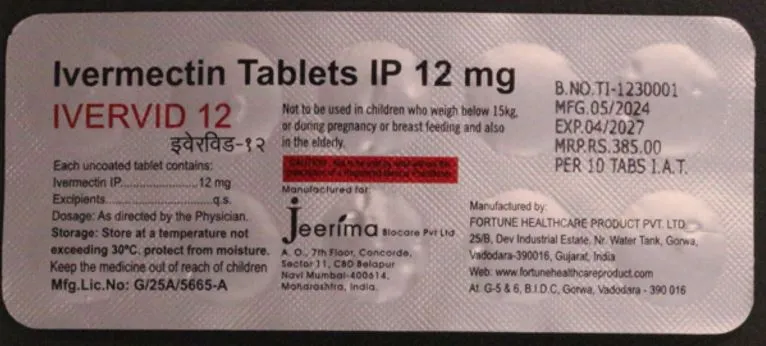
Ivermectin 12mg is a single tablet that holds four times the active ingredient of a US 3 mg tablet. It is mostly prescribed to adults when a weight-based dose works out at around 12 mg. In everyday practice, the condition behind most of those prescriptions is scabies. This page is laid out as a step-by-step manager’s guide. It covers who this strength suits, how doctors usually plan scabies treatment, how to run a household or care-home clean-up, what the itch afterwards means, and the safety points that matter most.
Step 1: When an ivermectin 12mg tablet makes sense
Oral ivermectin is dosed by body weight. For scabies and for intestinal strongyloidiasis, the usual target is about 200 micrograms (mcg) per kilogram for each dose. This comes from the US label for strongyloidiasis and from CDC scabies guidance. The 12 mg tablet is simply a convenient way to give that amount to some adults without counting out several small tablets.
The weight arithmetic (illustration only)
Here is how the maths works. It is not a dosing chart, and you should not use it to pick your own dose.
| Body weight (example) | About 200 mcg/kg works out to | How a prescriber might make that up |
|---|---|---|
| 50 kg (110 lb) | 10 mg | Often rounded using smaller tablets |
| 60 kg (132 lb) | 12 mg | One 12 mg tablet, or four 3 mg tablets |
| 75 kg (165 lb) | 15 mg | A 12 mg tablet plus a 3 mg tablet, or other combinations |
| 90 kg (198 lb) | 18 mg | A 12 mg tablet plus a 6 mg tablet, or similar |
The US label gives weight bands for the 3 mg tablet. For strongyloidiasis, people weighing 51 to 65 kg get four 3 mg tablets, which is 12 mg in total. Above 80 kg, the label says to dose at 200 mcg/kg. So a 12 mg tablet matches what many adults already receive. It just comes as one tablet instead of four.
Who is usually not a good fit for this strength
- Smaller adults and teenagers. A 12 mg tablet would overshoot their weight-based dose. The 6 mg ivermectin tablet or the 3 mg tablet allows finer steps.
- Children under 15 kg. Safety has not been established in this group, according to both the US label and CDC. Prescribers usually choose a cream instead.
- Anyone who is pregnant. See the safety section below.
- People whose dose needs fine adjustment. This includes frail older adults and people on several medicines. Smaller tablets give the prescriber more control.
Your pharmacist will check that the strength on the pack matches what your prescriber wrote. If you are unsure how to read the dose line on a pharmacy label, our guide to reading a prescription label explains each part. The layout is the same for any medicine.
Step 2: The scabies playbook with ivermectin 12mg
In the US, ivermectin is not FDA-approved for scabies. CDC says this plainly on its clinical care page for scabies. Even so, CDC lists oral ivermectin as a treatment option, and dermatologists use it widely. This is an established off-label use, not an experimental one. The key point for patients is that the plan comes from your prescriber. The steps below explain what that plan usually looks like and why.
Classic scabies: two doses, one to two weeks apart
For ordinary (classic) scabies, CDC describes two oral doses of 200 mcg/kg, given 7 to 14 days apart. The second dose matters. Ivermectin works well against living mites but less well against eggs. The second dose catches the mites that hatch after the first one. Skipping it is one of the commonest reasons scabies seems to “come back”.
There is one detail about food. The US label says to take ivermectin on an empty stomach with water. CDC notes that many scabies experts prefer giving it with food, because food increases absorption. These two pieces of advice differ, so follow whatever your prescriber tells you and do it the same way for both doses.
Crusted scabies: combination therapy and more doses
Crusted scabies (once called Norwegian scabies) is a different problem. One person can carry up to about two million mites and eggs, according to CDC’s clinical overview of crusted scabies. It often looks like thick, scaly, cracked plaques rather than the classic itchy rash. Itching may be mild or missing altogether. It is most common in:
- older adults, especially in residential care
- people with weakened immune systems
- people who cannot feel or scratch normally, for example after a spinal cord injury or with paralysis
- people with severe mental or behavioural health conditions
CDC recommends combining oral ivermectin with a topical treatment, usually permethrin 5% cream. A keratolytic cream may be added to soften the crusts. There is no agreed number of ivermectin doses. CDC describes schedules of three, five or seven doses spread over about one to four weeks, depending on severity. This needs close medical supervision, and often a dermatologist.
Why everyone in close contact is treated at the same time
This is the step households most often get wrong. Scabies spreads mainly through prolonged skin-to-skin contact. A person can pass it on before they itch at all. On a first infestation, CDC says symptoms usually take about 4 to 8 weeks to appear. So the partner or child who “seems fine” may already be carrying mites.
If one person is treated and the others are not, the treated person can be re-infested within days. The NHS scabies guidance says everyone in the household should be treated at the same time, even without symptoms. The American Academy of Dermatology gives the same advice in its scabies treatment guide, and adds recent sexual partners to the list.
Each person needs their own prescription. Some contacts may get ivermectin. Others may get permethrin cream instead, for example young children or anyone who is pregnant. One ivermectin 12mg pack should not be shared around the family.
The outbreak manager’s rule of three: treat everyone in close contact on the same day, wash and bag belongings on that same day, and give the second dose (or second cream application) on the same day for everyone. When people are treated on different days, the mites can keep passing between them.
Step 3: The outbreak checklist for homes and care homes
Mites do not live long away from skin. CDC says they generally survive no more than two to three days off the body. That is why the clean-up can be simple and does not need pesticide sprays. The table below brings together CDC guidance for households and for crusted scabies outbreaks in institutions.
| Task | Household | Care home or residential facility |
|---|---|---|
| Who is treated | The person with scabies plus all close and sexual contacts, on the same day | Affected residents, exposed staff and their household members together; CDC advises strongly considering treatment even when exposure is unclear |
| Bedding, clothing, towels | Machine wash hot and tumble dry hot on day one (CDC: above 50°C / 122°F for 10 minutes kills mites and eggs; the NHS advises 60°C or higher) | Bag linen at the bedside, load the bag straight into the washer, then wash and dry on high heat |
| Items you cannot wash | Seal in a plastic bag for at least 72 hours (CDC suggests up to a week), or dry-clean | Bag for several days to a week |
| Rooms and furniture | Vacuum carpets, sofas and car seats | Clean regularly; clean and vacuum thoroughly when a resident leaves or moves room |
| Sprays and fumigants | Not needed and not advised | Not needed; mattresses usually do not need to be thrown away |
| Close contact | Avoid skin-to-skin contact until treatment is under way (NHS: at least the first 24 hours) | Gowns and gloves for crusted scabies; isolate the resident until skin scrapings are negative |
| Return to work or school | Usually after treatment has started; check with your doctor or school | Staff can generally return the day after a dose of ivermectin or permethrin |
| Watching for new cases | Watch everyone for new itch or rash for about 2 months | Keep a log of cases, roommates and hands-on staff; tell the local health department and any transfer facilities |
Care-home specifics worth flagging
Older residents are at the highest risk of crusted scabies. They are also the most likely to be on many medicines and to have changes in liver function, memory or balance. Our article on medicines in older adults explains why doses and side effects work differently later in life, and the same points apply here. Residents with dementia may not be able to report itching. Staff should look for unexplained rashes, thickened skin on the hands or feet, and scratch marks. Our page on memory and confusion describes the kinds of changes that should prompt a medicine review.
Visitors should follow the same precautions as staff during a crusted scabies outbreak. Families can help by washing personal laundry on the right settings and by not bringing back unwashed items from home.
Lice are a separate problem
Households often deal with scabies and head lice at the same time, especially with school-age children. They are different parasites and need different plans. Some prescribers use oral ivermectin for hard-to-treat lice. For first steps and combing techniques, see our guide to getting rid of head lice at home. Do not assume a scabies prescription covers lice, or the other way round.
Step 4: The itch that outlasts the mites
Many people are surprised by this. After successful treatment, the itch often continues and can even get worse for a few days. It does not mean the ivermectin 12mg dose failed.
Why the itch lingers
The itch of scabies comes from an allergic reaction to the mites, their eggs and their waste in the skin. When the mites die, that material stays in the skin until it is cleared. On its patient treatment page, CDC says itching may last several weeks after the mites are dead. The AAD says the skin usually heals within about four weeks.
Ways to get through those weeks (ask your pharmacist or doctor which suit you):
- Moisturise generously. Treatments and scratching dry the skin, and dry skin itches more.
- Ask about antihistamines or a mild steroid cream. Sedating antihistamines can help at night but may make you drowsy the next day. Our page on combining allergy medicines with other drugs explains how to check for overlap. For the most common sedating option, see our page on diphenhydramine (Benadryl) safety.
- Do not re-treat on your own. The AAD warns that treating more often than prescribed can make the rash and itch worse.
- Protect your sleep. Itching is often worst at night. Keep the bedroom cool, wear light cotton, and try the habits in our guide to natural ways to sleep more deeply.
For a general explanation of how itch signals work and when itching is a warning sign, our article on why some medicines cause itching and when to worry covers the basics. It is written about a different drug, but the “when to worry” points apply to any itch.
When the itch means treatment failure
Contact your prescriber if any of these happen:
- itching still has not eased 2 to 4 weeks after the last dose (this is the CDC window for considering re-treatment)
- new burrows appear (short, wavy, thread-like lines, often between the fingers or on the wrists)
- new pimple-like spots keep appearing
- a household member was missed, or someone was treated on a different day
- the skin becomes crusted, weeping, hot or painful, or you develop a fever; these can be signs of a bacterial skin infection that needs separate treatment
Step 5: Strongyloidiasis, briefly
Ivermectin’s main FDA-approved use is intestinal strongyloidiasis. This is a roundworm infection caught from contaminated soil. It can persist for decades and can become dangerous in people who later take steroids or have a weakened immune system. The label usually calls for a single weight-based dose, followed by repeat stool tests. Some adults on that schedule receive 12 mg.
We keep this short on purpose. For the label details, including the weight bands, follow-up stool checks and the river blindness indication, see the ivermectin 3 mg label reference. Albendazole is sometimes used as an alternative. Our albendazole 400 mg page explains how it compares.
Step 6: Safety checks before and after ivermectin 12mg
At prescribed doses, most people have mild or no side effects. The checks below are the ones that matter most at a strength where one tablet is a full adult dose.
Nervous system effects at higher exposures
In US strongyloidiasis trials, the most common nervous system effects were dizziness, sleepiness, vertigo and tremor. The label also describes rare but serious neurotoxicity, including confusion, disorientation, reduced consciousness, coma and death. Seizures have been reported after marketing. The risk rises with higher exposure. That can happen with a dose error, an extra tablet, a veterinary product, or another drug that raises ivermectin levels.
If you feel dizzy, do not drive. Our guides to dizziness from medicines and tremor and shakiness explain what to watch for. Be careful when combining ivermectin with other sedating medicines. Our overview of mixing sleep medicines with other sedating drugs covers why stacking them is risky.
Loa loa: the travel history question
People with heavy Loa loa (African eye worm) infections can develop serious or fatal brain inflammation after ivermectin. The label links this to areas of West and Central Africa where the worm is common. Tell your prescriber if you have lived in or spent long periods in those regions. MedlinePlus advises calling a doctor straight away for headache or neck pain, seizures, trouble walking, or blurred vision after a dose in this situation.
Pregnancy and breastfeeding
The US label says ivermectin should not be used during pregnancy, because safety has not been established and animal studies at high doses showed harm. CDC also states that safety in pregnancy is not established. For scabies in pregnancy, prescribers usually choose a cream instead. Ivermectin passes into breast milk in low amounts. The label says to use it while breastfeeding only when the risk of delaying treatment outweighs the possible risk to the baby. For general principles, see our pages on medicine safety in pregnancy and breastfeeding while taking medicines.
Interactions: warfarin first
The label notes rare reports of a raised INR (a blood clotting test result) when ivermectin was taken with warfarin. If you take warfarin, your prescriber may want an extra INR check. Also tell them about every other medicine and supplement you take. Our drug interaction guide shows how to build a full medicine list for that conversation. If you have liver disease, mention that too. Ivermectin is broken down by the liver, and our article on liver disease and medicines explains why that matters.
If too much is taken
Overdose can cause vomiting, diarrhoea, rash, dizziness, confusion, unsteadiness, seizures and coma. If someone takes too much, or a child swallows a tablet, call Poison Help at 1-800-222-1222. Call 911 if the person collapses, has a seizure, has trouble breathing or cannot be woken. Keep tablets out of children’s reach. The steps in our family medicine-safety guide and our safe storage guide work for any medicine. Dispose of unused tablets properly rather than keeping them “for next time”. Our medicine disposal guide lists your options.
Step 7: Two firm boundaries
Never use veterinary ivermectin
Ivermectin pastes, pour-ons, drenches and injectables made for horses, cattle and other animals are not made for people. They are dosed for animals that can weigh hundreds of kilograms and may contain ingredients that have never been tested in humans. The US label describes accidental human exposure to veterinary products causing vomiting, diarrhoea, dizziness and, less often, seizures. MedlinePlus repeats FDA advice: take ivermectin only when a licensed prescriber has prescribed it and it comes from a legitimate source. If you have questions about how this site works, see our page on whether NewLifeMedix is legitimate.
COVID-19 and cancer: what the evidence actually says
COVID-19. Ivermectin is not an approved treatment for COVID-19. In 2022, a Cochrane review update found no evidence that it treats or prevents the infection. It found little or no effect on death or illness compared with placebo or usual care. Large randomised trials reached the same conclusion.
Cancer. Some laboratory studies show that ivermectin can affect cancer cells in a dish. In 2026, the US National Cancer Institute said it had begun preclinical (laboratory) research. There is still no good-quality evidence from human trials that ivermectin treats any cancer. Researchers also note that the levels used in the lab may be higher than people can safely reach. Do not use ivermectin 12mg in place of, or alongside, cancer treatment unless it is part of a clinical trial your oncologist supports. It is also not a “detox” or “parasite cleanse” product.
Before you start, raise these points with your prescriber: your current weight, any chance of pregnancy, breastfeeding, warfarin or other blood thinners, liver problems, time spent in West or Central Africa, and the names of everyone in your home who also needs treatment. Our guide to preparing for a medication conversation with your doctor has a simple template you can adapt.
Ivermectin 12mg: questions people ask
How many times do you take ivermectin 12mg for scabies?
For classic scabies, CDC describes two doses about 7 to 14 days apart. Crusted scabies may need three to seven doses together with a cream. Your prescriber sets the exact number and timing. Do not add extra doses yourself.
Can I take a second ivermectin 12mg dose early if I still itch?
No. Itching after treatment is expected and can last several weeks. Taking doses closer together or adding more does not clear that itch faster, and it increases the risk of side effects. If the itch has not eased 2 to 4 weeks after your last dose, contact your prescriber.
Is ivermectin 12mg available in the US?
Not as an FDA-approved product. The US brand comes only as a 3 mg tablet, and US prescriptions for higher doses are made up from several 3 mg tablets. 12 mg tablets are licensed and sold on prescription in India.
Does everyone in the house need treatment?
Yes. Everyone in close contact, including sexual partners, should be treated on the same day, even without symptoms, according to the NHS and the AAD. Each person needs a prescription suited to them. Children and anyone pregnant often get a cream instead of tablets.
Why am I still itchy two weeks after scabies treatment?
The itch comes from an allergic reaction to dead mites and their waste, which stays in the skin for a while. Moisturisers and anti-itch treatments can help. New burrows, new spots, or itch lasting longer than 2 to 4 weeks after treatment should be checked by a doctor.
Should ivermectin be taken with food?
The US label says to take it on an empty stomach with water. CDC notes that scabies experts often prefer giving it with food to improve absorption. Follow your prescriber’s instruction and keep it the same for each dose.
Is ivermectin safe in pregnancy?
Safety has not been established, and the US label advises against using it during pregnancy. Pregnant people with scabies are usually treated with a topical cream. Tell your prescriber if you are pregnant or could be.
Can I take ivermectin if I am on warfarin?
Possibly, but tell your prescriber first. There are rare reports of raised INR when the two are combined, so an extra blood test may be advised.
Does ivermectin work for COVID-19 or cancer?
No reliable evidence shows that it does. A 2022 Cochrane review found no benefit for COVID-19. For cancer, research is still at the laboratory stage, with no proven benefit in people.
Do I need to throw away my mattress or fumigate the house?
No. CDC says pesticide sprays and fumigation are not needed, and mattresses usually do not need to be discarded. Hot washing, hot drying, bagging items for at least 72 hours and vacuuming are enough.
Key takeaways
- Ivermectin 12mg is a prescription tablet that covers a full weight-based adult dose. It is licensed in India but is not an FDA-approved US strength.
- For classic scabies, CDC describes two doses about one to two weeks apart. Crusted scabies needs combination therapy and more doses under close supervision.
- Treat every close contact on the same day, wash and bag belongings on that day, and keep second doses in sync.
- Itching for a few weeks afterwards is normal. Itch lasting beyond 2 to 4 weeks, or new burrows or spots, needs a review.
- Tell your prescriber about pregnancy, warfarin, liver disease and any time spent in Loa loa areas. Never use veterinary ivermectin.
- Ivermectin is not a treatment for COVID-19 or cancer, and it is not a detox product.
This description is for information only and does not replace advice from your doctor or pharmacist. Use only as prescribed.
Prescription only, and a strength note up front. Ivermectin 12mg is a prescription medicine. Your prescriber chooses the drug, the dose and how many doses you need based on the infection, your weight and your health. Do not take leftover tablets or tablets meant for someone else in your home, even during a scabies outbreak.
The 12 mg tablet is not an FDA-approved US strength. The US brand (Stromectol) comes only as a 3 mg tablet, according to its DailyMed label. 12 mg tablets are licensed and sold on prescription in India under several brand names. Use them only on a valid prescription and under the rules of the country where you live.
Reviews
There are no reviews yet.