
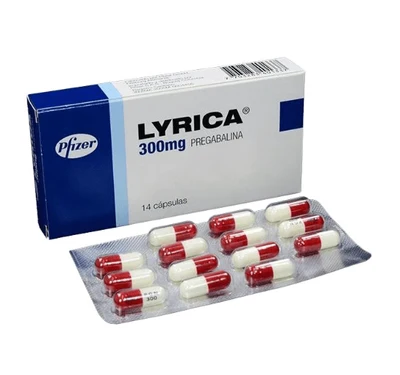
Description
Pregabalin 300 mg is the highest-strength immediate-release capsule of pregabalin, the active ingredient in the brand Lyrica. It belongs to a drug family called gabapentinoids and is prescribed for nerve pain from diabetes, shingles and spinal cord injury, for fibromyalgia, and as an add-on treatment for partial-onset seizures. Because 300 mg is the top capsule strength, it is not a starting dose. Most people reach it only after a week or more of step-up dosing, and some regimens never use it at all. Below: where a 300 mg capsule fits, what trial data show about side effects, and what to check before your first refill.
Product Snapshot: Pregabalin 300 mg at a Glance
| Generic name | Pregabalin |
|---|---|
| Reference brand | Lyrica (generic versions first approved in the U.S. in 2019) |
| Strength | 300 mg per capsule |
| Dosage form | Immediate-release hard capsule, taken by mouth |
| Drug class | Gabapentinoid (alpha-2-delta ligand); also grouped with anticonvulsants |
| U.S. legal status | Prescription only; DEA Schedule V (CV) |
| Usual dosing pattern | Two or three divided doses per day, with or without food |
| Peak blood level | Within about 1.5 hours on an empty stomach; about 3 hours with food |
| Half-life | About 6.3 hours with normal kidney function |
| How it leaves the body | About 90% unchanged in urine, so kidney function controls the dose |
| Storage | Room temperature, 20–25°C (68–77°F), in a tightly closed container |
Capsule colour and imprint differ between manufacturers; ask the pharmacist if a refill looks different from the last one.
What Pregabalin 300 mg Is Prescribed For
The U.S. prescribing information lists five approved uses. Pregabalin is not a general painkiller; it works on pain that comes from overactive or damaged nerves, and on a specific seizure type.
1. Diabetic peripheral neuropathy (DPN)
Burning, tingling or electric pain in the feet and hands caused by long-term high blood sugar. If you are also comparing other options for this kind of pain, our overview of the best medications for nerve pain sets pregabalin beside duloxetine, gabapentin and topical treatments.
2. Postherpetic neuralgia (PHN)
Pain that lingers in the skin after a shingles rash has healed. Some people are first given other drugs for shingles pain; see our answer on whether tramadol helps shingles pain for how those options differ.
3. Fibromyalgia
Widespread muscle pain with tenderness, fatigue and poor sleep. Pregabalin was the first medicine approved in the U.S. specifically for fibromyalgia.
4. Neuropathic pain after spinal cord injury
Central nerve pain below the level of a spinal injury, one of the indications where the label allows doses up to 600 mg a day.
5. Add-on treatment for partial-onset seizures
Used together with other antiseizure medicines in adults and in children from 1 month of age (children are dosed by body weight, not with 300 mg capsules).
A note on anxiety: in the UK and European Union, pregabalin is also licensed for generalised anxiety disorder. It does not carry that approval in the United States, where anxiety is usually treated with other medicines. Our guide to common anti-anxiety medications covers the U.S.-approved options.
How Pregabalin Calms Overactive Nerves
Damaged nerves can behave like a faulty doorbell that keeps ringing. Each “ring” depends on calcium flowing into nerve endings, which then release pain-signalling chemicals such as glutamate and substance P. Pregabalin attaches tightly to a part of the calcium channel called the alpha-2-delta subunit. That reduces how much signalling chemical is released, so fewer pain messages travel up the spinal cord.
Despite resembling the brain messenger GABA, pregabalin does not act on GABA or benzodiazepine receptors, and it is neither an opioid nor an anti-inflammatory.
Where the 300 mg Capsule Sits on the Dosing Ladder
This is the section most product pages skip. Every adult indication begins at 150 mg per day, split into two or three doses, and the dose is raised step by step based on relief and tolerability. The table below shows how a 300 mg capsule maps onto each approved regimen for adults with normal kidney function (creatinine clearance of 60 mL/min or more).
| Condition | Label starting dose | Usual target | Label ceiling | Does a 300 mg capsule fit? |
|---|---|---|---|---|
| Diabetic nerve pain | 50 mg three times daily | 100 mg three times daily (300 mg/day) | 300 mg/day | Rarely. The whole day’s total is 300 mg, split into three doses, so lower-strength capsules are used. |
| Postherpetic neuralgia | 75 mg twice or 50 mg three times daily | 150–300 mg/day | 600 mg/day | Yes, as 300 mg twice daily, but only after 2–4 weeks at 300 mg/day without enough relief. |
| Fibromyalgia | 75 mg twice daily | 300–450 mg/day | 450 mg/day | Not as a twice-daily dose (300 mg twice daily would exceed 450 mg/day). |
| Spinal cord injury nerve pain | 75 mg twice daily | 150–600 mg/day | 600 mg/day | Yes, as 300 mg twice daily after 2–3 weeks at 150 mg twice daily. |
| Partial-onset seizures (adults) | 150 mg/day | Raised about weekly | 600 mg/day | Yes, as 300 mg twice daily at the top of the range. |
In plain terms: one 300 mg capsule twice a day equals 600 mg per day, the maximum dose in the U.S. label. For diabetic nerve pain, the label states that 600 mg a day gave no extra benefit over 300 mg and was less well tolerated. Your prescriber may still build a regimen that uses a 300 mg capsule in another way, but if your bottle says 300 mg and your condition is diabetic nerve pain, it is reasonable to ask the pharmacist to confirm the directions.
Is 300 mg of pregabalin a lot?
As a single capsule, yes: it is the largest capsule made. As a total daily dose, 300 mg/day sits in the middle of the approved range and is a common long-term dose for nerve pain. A recent meta-analysis of diabetic neuropathy trials in Diabetes, Obesity and Metabolism concluded that 300 mg/day offered a better balance of benefit and side effects than either lower doses or 600 mg/day. The real question is not “is 300 mg high?” but “is 300 mg per dose or 300 mg per day?” Those are very different exposures.
A 24-Hour Timeline: What Happens After You Take a Capsule
| Time after dose | What is happening | What you may notice |
|---|---|---|
| 0–1.5 hours | Over 90% of the dose is absorbed from the gut. Taking it with food slows this, delaying the peak to about 3 hours and lowering it by roughly a quarter, but the total amount absorbed is the same. | Light-headedness or sleepiness, often strongest in the first week. |
| 1.5–3 hours | Peak blood level. The drug crosses into the brain and spinal cord. | Peak relief and peak dizziness. This is the riskiest window for driving. |
| About 6 hours | Half the drug has been cleared by healthy kidneys. | Effects begin to fade, which is why doses are split. |
| 8–12 hours | Next dose due on a twice- or three-times-daily schedule. | Pain may return if a dose is late. |
| 24–48 hours | Steady state is reached on regular dosing. | Side effects often settle as the body adapts, though not for everyone. |
Pregabalin is not processed by liver CYP enzymes, so chemical interactions are rare, but additive sedation with other drugs is a real risk (see below).
Your First Two Weeks: A Realistic Expectation Guide
- Days 1–3: Dizziness and drowsiness usually start shortly after the first doses. In the U.S. trials, they were the two most common reasons people stopped the medicine (about 4% each). Take your first doses when you do not need to drive.
- Days 3–7: If you tolerate the starting dose, your prescriber may raise it. In the diabetic nerve pain and shingles studies, some patients felt less pain as early as week 1.
- Week 2 onward: MedlinePlus notes that the full benefit can take several weeks. Keep a daily 0–10 pain score to share at follow-up.
- If you reach 300 mg per dose: expect a fresh round of dizziness or unsteadiness for a few days after each increase, and plan around it.
Side Effects at 300 mg: The Trial Numbers
The label reports side-effect rates by daily dose, which lets you see how risk rises when the dose goes from 300 mg/day to 600 mg/day (that is, to one 300 mg capsule twice a day). The figures below come from the postherpetic neuralgia trials, which tested both levels.
| Side effect | Placebo | 300 mg/day | 600 mg/day |
|---|---|---|---|
| Dizziness | 9% | 31% | 37% |
| Sleepiness (somnolence) | 5% | 18% | 25% |
| Swelling of feet, ankles or hands | 4% | 16% | 16% |
| Dry mouth | 3% | 6% | 15% |
| Blurred vision | 3% | 5% | 9% |
| Unsteady walking (ataxia) | 1% | 5% | 9% |
| Confusion | 0% | 3% | 7% |
| Weight gain | 0% | 5% | 7% |
Across all adult trials, 14% of people taking pregabalin stopped because of side effects, compared with 7% on placebo. Most reactions were rated mild or moderate.
Side effects worth tracking
- Dizziness and drowsiness. Among people who developed these, dizziness was still present at the end of the study in about 30% and sleepiness in about 42%, so they do not always fade. Our guide on why pain medicines cause dizziness has practical fall-prevention tips that apply here too.
- Weight gain. In trials of up to 14 weeks, 9% of patients gained 7% or more of their starting weight versus 2% on placebo. In diabetic patients treated for two years, average gain was 5.2 kg. Gain is linked to dose and duration, not just fluid. The principles in our article on telling real weight gain from water retention are useful for anyone watching the scale on a nerve-pain medicine.
- Swelling (peripheral edema). Seen in 6% of adults overall versus 2% on placebo, and much more often in people also taking pioglitazone or rosiglitazone (19% with both drugs). People with diabetes can read more in our guide to pain medicines and diabetes.
- Blurred or double vision. Reported by 7% versus 2% on placebo and usually resolved with continued dosing. Report any vision change that persists; our page on medication-related blurred vision explains when an eye check makes sense.
- Dry mouth and constipation. Both more common at higher doses. Constipation can become serious when pregabalin is combined with opioids; the label notes rare reports of bowel obstruction with that combination. Mouth-care tips are in our dry mouth relief guide.
- Thinking and memory. Poor concentration is a common side effect, and memory problems rise at higher doses.
Stop and Get Help: Red-Flag Reactions
Call 911 or go to the emergency room for swelling of the face, lips, tongue, gums or throat, trouble breathing, wheezing, hives or a blistering rash. Pregabalin can cause angioedema and allergic reactions, sometimes life-threatening. The risk is higher if you take an ACE inhibitor blood pressure medicine such as lisinopril or have had angioedema before.
Call 911 if someone taking pregabalin has slow, shallow or difficult breathing, blue-tinged lips, or cannot be woken. This is most likely when pregabalin is combined with opioids or other sedatives, or in someone with lung disease.
Call or text 988 (Suicide and Crisis Lifeline) for new or worsening depression, thoughts of self-harm, or sudden changes in mood or behaviour, including after stopping the medicine.
Contact your prescriber promptly for unexplained muscle pain, tenderness or weakness (especially with fever), new swelling, or vision changes.
This warning applies to all antiseizure medicines: in a pooled analysis of 199 trials, suicidal thoughts or behaviour occurred in 0.43% of treated patients versus 0.24% on placebo, about one extra case per 530 people treated.
The Breathing Warning: Why Combinations Matter
In December 2019 the FDA warned that gabapentin and pregabalin can cause serious breathing problems in people with respiratory risk factors. Among 49 cases reported to the agency between 2012 and 2017, 12 people died, and every one of them had at least one risk factor. The FDA identified these risk factors:
- Taking an opioid pain medicine at the same time
- Taking other central nervous system depressants, such as benzodiazepines, sleep medicines, sedating antihistamines or some antidepressants
- Lung conditions such as COPD or asthma, or sleep apnea
- Older age
If any of these apply to you, your prescriber may start pregabalin at a lower dose and step up more slowly. Background reading on how breathing-related conditions change the safety of sedating medicines is in our guides on pain medicines and COPD and pain medicines and sleep apnea.
Interaction Check: What Not to Stack With Pregabalin 300 mg
Pregabalin rarely changes the blood levels of other drugs. The danger comes from stacking sedation: when the label studied pregabalin with oxycodone, lorazepam or alcohol, blood levels did not change, but thinking and physical coordination got worse together.
| Combined with | Main concern | What to do |
|---|---|---|
| Opioids (oxycodone, hydrocodone, tramadol, morphine) | Slowed breathing, heavy sedation, severe constipation | Only under a prescriber who knows about both. See gabapentinoids with hydrocodone and whether opioids help nerve pain. |
| Alcohol | Added drowsiness, poor coordination, falls | MedlinePlus advises not drinking alcohol on pregabalin. The risks of mixing alcohol with sedating pain medicine are explained in our alcohol risk guide. |
| Benzodiazepines (alprazolam, lorazepam, diazepam) | Additive sedation and breathing risk | Tell every prescriber. Compare these drugs in Xanax vs Ativan. |
| Sleep medicines and sedating antihistamines | Next-day grogginess, falls | Review with your pharmacist; see pain medicine and sleep aids and diphenhydramine with sedating drugs. |
| Muscle relaxers (cyclobenzaprine, tizanidine, baclofen) | Stacked drowsiness and dizziness | Ask whether both are needed; read pain medicine and muscle relaxers. |
| Gabapentin | Two drugs with the same mechanism | Not normally combined; the label offers no dosing advice for using them together. |
| Pioglitazone or rosiglitazone | More swelling and weight gain | Watch ankles and weight; report shortness of breath. |
| ACE inhibitors (lisinopril, enalapril, ramipril) | Higher angioedema risk | Know the warning signs listed above. |
For a broader list of pain relievers people ask about alongside gabapentinoids, see what pain medication can be taken with gabapentin. Much of that guidance applies to pregabalin because both drugs share the same mechanism.
Kidney Function Decides the Dose
Because almost all pregabalin leaves the body unchanged through the kidneys, reduced kidney function means the drug builds up. The label adjusts the total daily dose by creatinine clearance (CLcr), an estimate of kidney filtering.
| Creatinine clearance (mL/min) | Total daily dose (mg/day) | Schedule | |||
|---|---|---|---|---|---|
| 60 or more | 150 | 300 | 450 | 600 | 2 or 3 doses |
| 30–60 | 75 | 150 | 225 | 300 | 2 or 3 doses |
| 15–30 | 25–50 | 75 | 100–150 | 150 | 1 or 2 doses |
| Under 15 | 25 | 25–50 | 50–75 | 75 | 1 dose |
What this means for the 300 mg capsule: below a CLcr of 60 mL/min, the maximum total daily dose is 300 mg or less, split into at least two doses or given once at a lower amount. In practice, a 300 mg-per-dose capsule belongs to people with normal kidney function. Hemodialysis removes about half the drug in four hours, so people on dialysis receive a supplemental dose afterwards as directed by their care team. Our article on pain medicines and kidney disease explains CKD stages and the questions to ask your nephrologist.
Special Groups: Who Needs Extra Care
Adults over 65
Kidney function falls with age, so many older adults need lower doses even with normal blood tests. In the fibromyalgia trials, dizziness, blurred vision, balance problems, tremor, confusion and lethargy were more common in people over 65. Falls are the biggest practical risk. Caregivers will find a useful watch-list in our guide to pain medicines in older adults.
Pregnancy
Observational studies suggest a possible small increase in overall major birth defects, with no consistent pattern of specific defects. Newborns exposed to gabapentinoids for a long time in the womb, together with opioids near delivery, have shown withdrawal signs. Do not stop pregabalin on your own if you become pregnant; contact your prescriber, especially if you take it for seizures. Patients can join the North American Antiepileptic Drug Pregnancy Registry (1-888-233-2334), which helps build better safety data. Our pregnancy and pain-relief guide covers safer pain options by trimester.
Breastfeeding
In a study of nursing mothers taking 300 mg a day, breast milk levels were about 76% of blood levels, giving the baby an estimated 7% of the mother’s weight-adjusted dose. Because of a cancer signal seen in mouse studies, the U.S. label does not recommend breastfeeding during treatment. Discuss feeding plans before delivery. For the broader decision process, see our article on breastfeeding while taking pain medication.
Men planning a family
In a 13-week study of men taking up to 600 mg a day, 9% had sperm counts fall by half or more (3% on placebo); counts recovered after stopping in all but one man.
Driving, Work and Daily Life
The label warns that pregabalin can impair driving and the use of machinery. Do not drive until you know how a new dose affects you, and be especially careful after each increase. The same “wait and see” approach described in our driving safety guide for sedating medicines applies here. Other practical tips:
- Take doses at the same times every day; MedlinePlus advises consistency.
- Tell your surgeon or dentist you take pregabalin before any procedure.
- If you have diabetes, check your feet regularly; the drug caused skin sores in animal studies, and swelling can hide early foot problems.
- Build in non-drug sleep support; our natural remedies for deeper sleep may help you avoid adding a sedating sleep aid.
Missed Doses and Stopping Safely
If you miss a dose, take it when you remember unless the next one is close, then skip the missed dose. Never double up with a 300 mg capsule; a double dose is 600 mg at once.
Do not stop suddenly. After abrupt or rapid discontinuation, patients have reported trouble sleeping, nausea, headache, anxiety, heavy sweating and diarrhea, and in people with epilepsy, seizures can increase. Post-marketing reports also include confusion, agitation, depression and suicidal thoughts after stopping. The label requires a taper over at least one week; at 600 mg a day, prescribers often step down more gradually. Ask for a written taper schedule.
Controlled-Substance Status and Misuse Risk
Pregabalin is Schedule V because it can produce euphoria and dependence. In clinical trials of over 5,500 patients, 4% on pregabalin reported euphoria versus 1% on placebo, and in a study of people with a history of sedative misuse, a single 450 mg dose was “liked” about as much as 30 mg of diazepam. Misuse risk rises sharply when pregabalin is combined with opioids. Practical safeguards:
- Take exactly the prescribed amount. If your current dose stops working, talk to your prescriber rather than adjusting it yourself.
- Keep capsules out of sight and reach of children and visitors. A simple lockable medication storage routine works for any controlled medicine, and our family safety checklist covers children and pets.
- If a child or anyone else swallows pregabalin, call Poison Help at 1-800-222-1222 (poisonhelp.hrsa.gov). Overdose can cause reduced consciousness, confusion, agitation and, rarely, seizures or heart block. Call 911 if breathing is affected.
Pregabalin 300 mg vs Gabapentin: How They Compare
The two share a mechanism but absorb very differently, so doses do not convert one-to-one.
| Feature | Pregabalin | Gabapentin |
|---|---|---|
| Absorption | 90% or more, regardless of dose | Falls from about 60% to 33% as daily dose rises from 900 to 3,600 mg |
| Dose response | Linear and predictable | Less predictable at higher doses |
| Time to peak | About 1–1.5 hours | Slower |
| Usual doses per day | 2 or 3 | Usually 3 |
| U.S. controlled status | Schedule V | Not federally scheduled (some states control it) |
| Fibromyalgia approval (U.S.) | Yes | No |
A pharmacokinetic review in Clinical Pharmacokinetics (Bockbrader et al., 2010) summarises these differences. For a fuller side-by-side, read Gabapentin vs Lyrica, and if neither drug suits you, see prescription and natural gabapentin alternatives. Some people with nerve pain plus low mood are offered duloxetine instead; our Cymbalta vs tramadol comparison explains how duloxetine works for pain.
Storage and Disposal
- Store at 20–25°C (68–77°F) in the original, tightly closed container, away from bathroom humidity.
- Dispose of unused capsules through a drug take-back site or follow the FDA’s guidance on disposing of unused medicines. Our step-by-step medicine disposal guide ranks the options.
Before You Order: A Pharmacy Checklist
- Have a current prescription for pregabalin that specifies the 300 mg strength and directions. As a Schedule V medicine, refills follow federal and state limits.
- Confirm your kidney function has been checked recently, especially if you are over 65 or have diabetes.
- List every sedating medicine you take, including opioids, sleep aids, antihistamines and muscle relaxers, so the pharmacist can screen for stacking.
- Know your regimen in mg per day, not just per capsule, and check it against the condition table above.
- Read the Medication Guide that comes with every fill. The full prescribing information is also on DailyMed, and a plain-language summary is on MedlinePlus.
- Buy only from a pharmacy that requires a prescription and has a licensed pharmacist available. The FDA’s BeSafeRx program explains how to recognise a legitimate online pharmacy, and you can read more about how NewLifeMedix operates.
Frequently Asked Questions About Pregabalin 300 mg
Can I take pregabalin 300 mg once a day?
The immediate-release capsule is labelled for two or three doses per day because of its roughly six-hour half-life. Once-daily dosing appears only at low doses for people with severe kidney impairment. An extended-release tablet exists for once-daily use, but it is a different product. Follow the schedule on your prescription.
How long does pregabalin take to work for nerve pain?
Some patients in the trials noticed less pain within the first week, but MedlinePlus notes that full benefit can take several weeks. Your prescriber will usually judge a dose after two to four weeks.
Is pregabalin 300 mg twice a day the maximum?
Yes. 300 mg twice a day equals 600 mg a day, the highest dose in the U.S. label, and it is approved only for postherpetic neuralgia, spinal cord injury pain and add-on seizure treatment. The maximum for fibromyalgia is 450 mg a day and for diabetic nerve pain 300 mg a day.
Is pregabalin an opioid or a muscle relaxant?
Neither. It is a gabapentinoid that calms overactive nerve signals. If muscle tightness is part of your pain, our article on what causes muscle spasms explains other causes worth discussing with your doctor.
Can pregabalin help arthritis pain?
Pregabalin is not approved for arthritis. It may be considered when nerve pain overlaps with joint disease, but ordinary joint pain is usually treated differently. See our rheumatoid arthritis pain relief guide for options.
Key Takeaways
- Pregabalin 300 mg is the highest capsule strength. One capsule twice daily equals 600 mg/day, the label maximum.
- It suits postherpetic neuralgia, spinal cord injury pain and seizures at the top of the range; it is not the right per-dose strength for diabetic nerve pain or fibromyalgia under the U.S. label.
- Dizziness and sleepiness are common and dose-related; weight gain and swelling deserve monitoring.
- Kidney function sets the ceiling. Below a CLcr of 60 mL/min, the total daily dose is 300 mg or less.
- Combining it with opioids, alcohol or other sedatives raises the risk of dangerous breathing problems.
- Never stop suddenly; taper over at least a week with your prescriber.
Report side effects to your prescriber and to the FDA’s MedWatch program (1-800-FDA-1088).
Prescription required. Pregabalin is a Schedule V controlled medicine in the United States. Every order of Pregabalin 300 mg is dispensed only against a valid prescription from a licensed prescriber, and our pharmacy team verifies each one before anything ships. This page is product information, not a substitute for advice from the clinician who knows your history.


Reviews
There are no reviews yet.