
Description
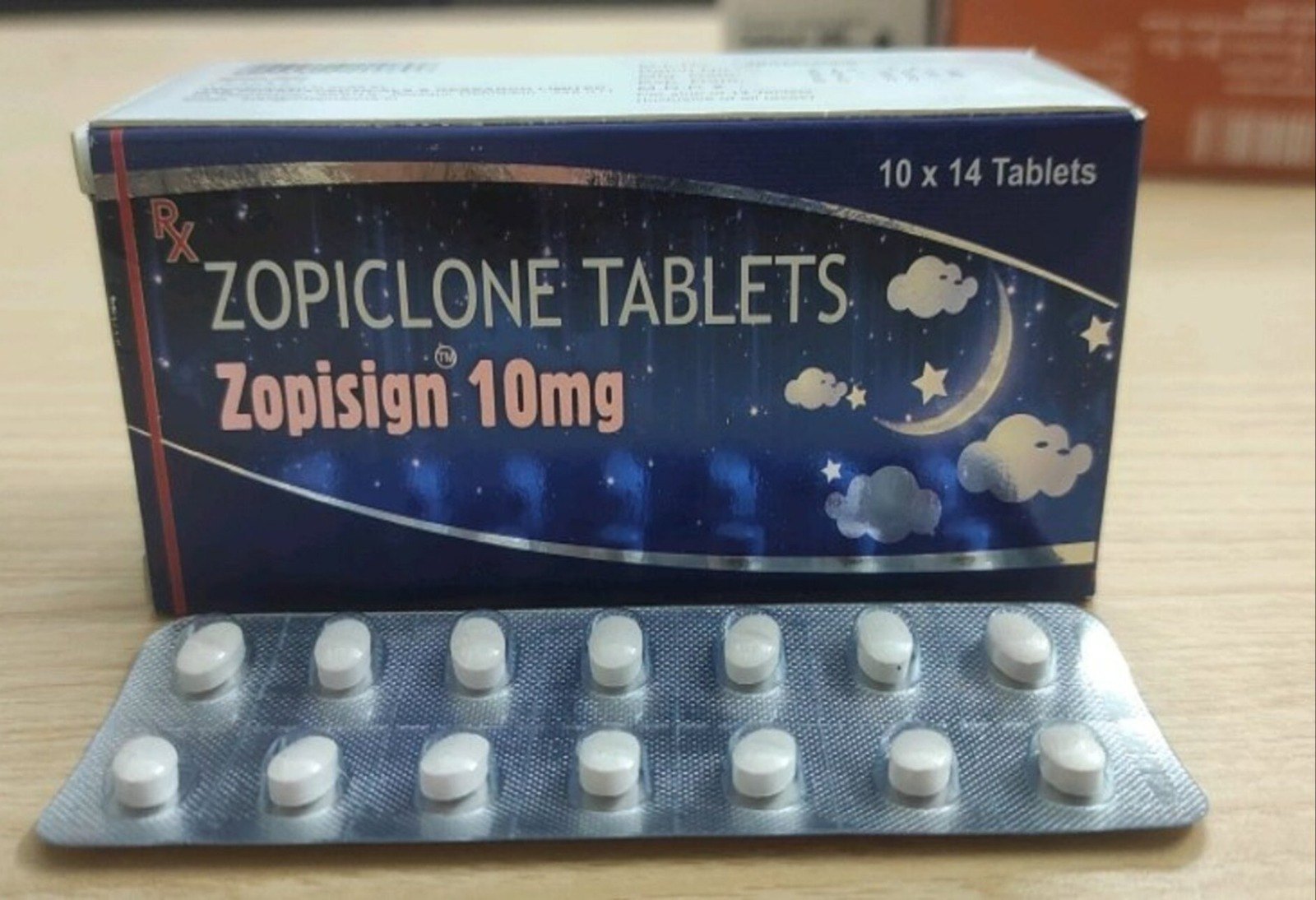
Zopiclone 10mg is a short-term treatment for severe insomnia in adults. It sits at the very top of zopiclone’s dosing range, so it is not a starting dose and it is not the right strength for most people. This page explains where 10 mg fits, how it differs from 7.5 mg, who should avoid it, and what to watch for if your doctor has prescribed it.
Strength passport: where zopiclone 10 mg is licensed
Zopiclone is sold in different strengths in different countries. Before anything else, it helps to know which rules apply where you live.
| Country / region | Licensed strengths | Highest single dose on the label | Is 10 mg licensed? |
|---|---|---|---|
| Japan (Amoban and generics) | 7.5 mg, 10 mg | 10 mg | Yes |
| United Kingdom | 3.75 mg, 7.5 mg | 7.5 mg | No |
| Canada | 3.75 mg, 5 mg, 7.5 mg | 7.5 mg (start at 3.75 mg) | No |
| United States | Not approved | Not applicable | No; Schedule IV, not FDA-approved |
The Japanese label for Amoban, published by the country’s regulator, sets the adult dose at 7.5 to 10 mg taken once at bedtime and states that 10 mg must not be exceeded. You can read it on the PMDA Amoban prescribing information (in Japanese). By contrast, the UK Summary of Product Characteristics sets 7.5 mg as the adult dose and 3.75 mg as the starting point for older adults and people with liver, kidney or breathing problems.
Because of that gap, a 10 mg tablet is a specialist choice. It belongs in the hands of a prescriber who has decided that a lower dose is not enough and that the extra risk is acceptable for you.
Product snapshot
| Active ingredient | Zopiclone 10 mg |
|---|---|
| Drug class | Cyclopyrrolone hypnotic (“Z-drug”) |
| Form | Film-coated tablet, swallowed whole with water |
| Licensed uses (Japan) | Insomnia; sedation before surgery or anaesthesia |
| How often | Once, at bedtime; never more than one dose a night |
| Onset | Usually within 30 to 60 minutes |
| Half-life | About 4 hours in healthy adults; longer in older people and liver disease |
| Usual treatment length | Days to a few weeks |
| Controlled status | Schedule IV (US); controlled in many other countries |
| Prescription | Required, for the 10 mg strength specifically |
Five checks before 10 mg is the right strength
Most people who take zopiclone never need more than 7.5 mg, and many do well on 3.75 mg. A prescriber who chooses 10 mg will usually have worked through questions like these. If you cannot answer “yes” to each one, a lower strength or a different approach is likely to be safer.
Check 1: Is 10 mg licensed where you are being treated?
The 10 mg strength is part of the Japanese label. In the UK, Europe and Canada, the official maximum is 7.5 mg, so a 10 mg dose there would be outside the licence. In the US, zopiclone itself is not approved; eszopiclone (Lunesta) is the US equivalent, with a maximum of 3 mg. Our comparison of Ambien and Lunesta explains the US options.
Check 2: Have lower doses been tried first?
Every label starts low. Older adults start at 3.75 mg in Japan and the UK, and since 2014 all Canadian adults start at 3.75 mg. Jumping straight to 10 mg skips the step that tells you whether a lower dose would have worked with fewer side effects.
Check 3: Is the insomnia severe and short-term?
Zopiclone is designed for a short course while the cause of poor sleep is addressed. If insomnia has lasted months, a higher dose usually is not the answer; cognitive behavioural therapy for insomnia (CBT-I) and treating the underlying cause are. Our guide to natural remedies for deeper sleep covers the habits that support any treatment.
Check 4: Are there no risk factors that call for a lower dose?
Age over 65, liver disease, sleep apnoea, chronic lung disease, myasthenia gravis and a history of substance dependence all argue for a lower dose or a different medicine. These are covered in the special groups table.
Check 5: Are you free of other sedatives and alcohol?
The higher the zopiclone dose, the more dangerous any combination becomes. If you take opioids, benzodiazepines, gabapentinoids or sedating antihistamines, or you drink regularly, 10 mg carries extra risk. See the interaction pairs below.
How zopiclone works, in plain terms
Your brain has a built-in “slow down” signal carried by a chemical called GABA. When GABA binds to its receptor, nerve cells become less active, which is part of how you drift into sleep. Zopiclone binds next to the GABA site and makes that signal stronger, a bit like turning up the volume on a quiet voice telling the brain to rest.
This is the same receptor family that benzodiazepines act on, which is why zopiclone shares many of their effects and risks: sleepiness, muscle relaxation, memory gaps, and dependence with regular use. Our articles on Klonopin vs Valium and Xanax vs Ativan explain how benzodiazepines differ from each other; zopiclone is chemically distinct but works through a related pathway.
Moving from 7.5 mg to 10 mg turns the volume up further. You may fall asleep a little faster, but you also get more of the unwanted effects, and they last later into the morning.
10 mg vs 7.5 mg: what actually changes
| Feature | 7.5 mg | 10 mg |
|---|---|---|
| Amount of drug | Standard adult dose in most countries | One-third more drug |
| Half-life (Japanese label, healthy adults) | About 3.7 hours | About 3.9 hours |
| Time to fall asleep | Shortened | Similar or slightly shorter |
| Next-morning grogginess | Common | More likely and may last longer |
| Bitter or metallic taste | Common | Common, often stronger |
| Memory gaps and unsteadiness | Possible | More likely |
| Licensed in UK, EU, Canada | Yes (maximum) | No |
The half-life barely changes between the two strengths. What changes is the starting level of drug in your blood. Because the body clears a fixed share each hour, a higher starting level means more drug is still present at the same morning hour. That is why next-day impairment is the main trade-off with 10 mg.
One night on zopiclone 10 mg: the morning matters most
Most problems with sleeping tablets show up after waking, not during sleep. This timeline is a general guide for a healthy adult who takes a single 10 mg tablet at bedtime.
| Time after the dose | What is happening | What to do |
|---|---|---|
| 0–30 minutes | Tablet dissolves; drowsiness begins | Be in bed. Do not start chores, calls or messages. |
| 30 minutes–2 hours | Blood level near its peak; strongest sedation | Sleep. Any activity now may not be remembered. |
| 2–6 hours | Level falling, sleep continues | If you wake, do not take another tablet. |
| 6–8 hours | Natural waking window | Get up slowly; sit on the bed edge first. |
| 8–12 hours | Drug still measurable; reactions may be slower | No driving, cycling or machinery yet. |
| 12 hours + | Most people are clear | Drive only if you feel fully alert. |
Next-morning readiness checklist
Before you drive or do anything that needs full attention, ask yourself:
- Have at least 12 hours passed since the dose? The NHS advises waiting this long even after a normal dose.
- Do I feel clear-headed, with no dizziness or heavy eyelids?
- Did I drink any alcohol or take any other sedating medicine last night?
- Is today different from my usual routine, for example an early start after a late dose?
If any answer worries you, do not drive. Health Canada lowered zopiclone doses in 2014 because impairment can last up to 11 hours after an evening dose, even in people who feel awake (summarised in this BC PharmaCare bulletin). Our guides to driving on sedating medicines and working while taking sedating medicines explain why “feeling fine” is not a reliable test.
Side effects: a signal board by when they appear
Grouping side effects by timing makes them easier to recognise and act on.
| When | Signal | How common | What to do |
|---|---|---|---|
| Within minutes | Bitter or metallic taste | Common | Harmless; drink water, brush teeth in the morning |
| During the night | Sleepwalking, sleep-eating, sleep-driving | Rare | Stop the medicine and contact your prescriber the same day |
| During the night | Confusion, hallucinations | Uncommon to rare | Contact your prescriber; more likely in older adults |
| Morning | Grogginess, dizziness, slowed reactions | Common | No driving; ask about a lower dose if it persists |
| Morning | Dry mouth | Common | Sip water; see our tips on managing dry mouth |
| Morning | Memory gaps for the night before | Uncommon | Tell your prescriber; a sign the dose may be too high |
| Over weeks | Tolerance (weaker effect) | Common with regular use | Do not raise the dose; plan a step-down |
| Over weeks | Low mood, irritability, anxiety | Uncommon | Talk to your prescriber promptly |
| Any time | Swelling of face or throat, trouble breathing | Rare | Call 911 or your local emergency number |
If you notice a memory gap, unusual behaviour or a fall, that is a reason to review the dose. Our article on medicines and memory problems describes how sedatives affect memory formation, and dizziness on sedating medicines covers fall prevention.
Complex sleep behaviours. Doing things while not fully awake, such as driving, cooking or making phone calls, has led to serious injuries and deaths across the Z-drug class. The FDA added a boxed warning for eszopiclone, zaleplon and zolpidem in 2019 (FDA safety communication). If this happens to you even once, stop zopiclone and contact your prescriber.
Interaction pairs: what not to combine with 10 mg
At the top dose, combinations matter more. Each pair below shows the risk and a safer approach.
- Zopiclone + alcohol. Deeper sedation and slowed breathing. Do not drink on nights you take it. See how alcohol stacks with sedatives.
- Zopiclone + opioid painkillers. One of the most dangerous combinations because both slow breathing. Your prescriber needs to know about every opioid you take. Read opioids and sleep medications.
- Zopiclone + benzodiazepines. Same receptor family, so effects add up. Our overview of anti-anxiety medicines lists the common ones; Ativan vs Valium compares two of them.
- Zopiclone + gabapentin or pregabalin. More sedation and breathing risk. See gabapentin vs Lyrica.
- Zopiclone + sedating antihistamines. Diphenhydramine and promethazine add drowsiness. Read why Benadryl adds sedation and which allergy medicines are less sedating.
- Zopiclone + muscle relaxants. Extra unsteadiness and falls. See muscle relaxers and sedation.
- Zopiclone + CYP3A4 blockers. Clarithromycin, erythromycin, itraconazole, ketoconazole and some HIV medicines slow zopiclone’s breakdown, so levels rise. On 10 mg, this can push exposure well above normal. Read about antibiotic interactions and antifungal interactions.
- Zopiclone + CYP3A4 speeders. Rifampicin, carbamazepine, phenytoin and St John’s wort lower levels, which can make zopiclone seem not to work. Report this rather than adding more tablets.
- Zopiclone + melatonin or herbal sleep aids. Usually milder, but still additive. See melatonin with other sedatives.
Special groups: who should not use 10 mg
| Group | Why 10 mg is a concern | Usual approach |
|---|---|---|
| Adults over 65 | Slower clearance, more falls and confusion | Start at 3.75 mg; 10 mg rarely appropriate. See medicines in older adults. |
| Liver disease | The liver breaks down zopiclone; levels build up | 3.75 mg or avoid; severe liver failure is a contraindication. See liver disease and drug handling. |
| Kidney disease | Less effect than liver disease, but caution advised | UK label starts at 3.75 mg. See kidney disease and medicines. |
| Sleep apnoea | Sedatives relax the airway and blunt breathing drive | Usually avoid. See sedatives and sleep apnoea. |
| COPD or chronic lung disease | Little reserve for slowed breathing | Start at 3.75 mg or avoid. See sedatives and COPD. |
| Myasthenia gravis | Can worsen muscle weakness | Contraindicated |
| Pregnancy | Possible effects on the newborn near delivery | Not usually used. See our pregnancy and medicines guide. |
| Breastfeeding | Passes into milk in small amounts | Short use only, with advice; never co-sleep after a dose. See breastfeeding and medicines. |
| History of substance dependence | Higher risk of misuse and dependence | Usually avoid |
| Under 18 | Not studied or licensed | Not used |
Dependence and stepping down from 10 mg
Any Z-drug can cause tolerance and dependence, and the risk grows with higher doses and longer courses. Signs to watch for include needing the tablet to sleep at all, feeling anxious as bedtime approaches without it, or wanting to take more than prescribed.
If you have been taking 10 mg regularly for more than a couple of weeks, do not stop suddenly. Rebound insomnia, restlessness and anxiety are common after abrupt stopping, and the NHS advises that your doctor reduce the dose gradually. A typical plan steps down through the lower strengths over several weeks, at a pace your prescriber sets. Rough nights during a step-down are normal and usually pass; our article on sleeping through withdrawal has practical coping tips.
If low mood appears during or after stopping, take it seriously. Our guide to medicines and depression lists warning signs. If you have thoughts of harming yourself, call or text 988 in the US.
Missed dose and too much
- Missed dose: skip it. Take your next dose at bedtime the following night. Never take a dose in the middle of the night or double up.
- Too much: 10 mg is already the label maximum, so any extra tablet is an overdose risk. Overdose can cause deep sleepiness, confusion, unsteadiness, low blood pressure, slowed breathing and coma, and it can be fatal with alcohol or other depressants. Call 911 if the person is hard to wake or breathing slowly; otherwise call Poison Help at 1-800-222-1222. Our page on why there is no zopiclone 20 mg explains what happens after an overdose call.
Legal status and buying safely
| Where | Status | What it means for you |
|---|---|---|
| United States | Not FDA-approved; federal Schedule IV (see the DEA controlled substances list) | Not stocked by US pharmacies; importing it carries legal risk. Eszopiclone is the approved US option (MedlinePlus eszopiclone). |
| United Kingdom | Prescription-only, controlled | Licensed up to 7.5 mg; 10 mg would be off-label |
| Canada | Prescription-only, controlled | Licensed up to 7.5 mg |
| Japan | Prescription-only, psychotropic | 10 mg licensed as the top dose |
Counterfeit sleeping pills are common online. Only buy from a pharmacy that requires a valid prescription, names a licensed pharmacist you can speak to, and has a physical address. The FDA’s BeSafeRx guide shows how to check a pharmacy. If you travel with zopiclone, carry it in the original pack with your prescription and check the rules at your destination first; our guide to travelling with controlled medicines covers the basics.
Storage and disposal
- Keep tablets in the original blister pack, at room temperature, away from moisture.
- Store them in a locked box out of reach of children, teenagers, visitors and pets. Our safe storage guide compares lockbox options.
- Count tablets when you collect them and keep the count up to date.
- Return leftover tablets to a pharmacy or take-back point. The FDA disposal page and our disposal guide explain the options.
Questions to ask your prescriber or pharmacist
- Why is 10 mg right for me rather than 7.5 mg or 3.75 mg?
- How many nights should I take it, and when will we review it?
- Do any of my current medicines, supplements or drinks interact with it?
- How long should I wait before driving the next day?
- What is the plan for stepping down when the course ends?
- What non-drug treatments, such as CBT-I, can I start now?
How zopiclone 10 mg compares with other sleep medicines
| Medicine | Top usual dose | Half-life | US status |
|---|---|---|---|
| Zopiclone 10 mg | 10 mg (Japan) | About 4 hours | Not approved |
| Zopiclone 7.5 mg | 7.5 mg (UK, EU, Canada) | About 4–5 hours | Not approved |
| Eszopiclone (Lunesta) | 3 mg | About 6 hours | Approved |
| Zolpidem (Ambien) | 10 mg (5 mg for women) | About 2.5 hours | Approved |
| Zaleplon (Sonata) | 20 mg | About 1 hour | Approved |
Numbers in milligrams are not comparable between different drugs; 10 mg of zolpidem is not “the same” as 10 mg of zopiclone. For deeper comparisons, see zopiclone vs Ambien, Ambien vs Sonata and Halcion vs Ativan. If the usual adult strength is enough for you, our zopiclone 7.5 mg page covers that dose in detail.
Frequently asked questions
Is 10 mg of zopiclone a lot?
Yes. It is the highest licensed strength anywhere, approved in Japan, and it is one-third more than the 7.5 mg maximum used in the UK, Europe and Canada. It is not a starting dose.
Is zopiclone 10 mg stronger than 7.5 mg?
It contains more drug, so its effects are stronger and last later into the morning. It does not usually give much more sleep, and side effects rise with the dose.
What is the maximum dose of zopiclone?
10 mg once a night under the Japanese label; 7.5 mg in the UK, Europe and Canada. Older adults and people with liver or breathing problems usually start at 3.75 mg.
How long does zopiclone 10 mg last?
Sleepiness peaks within about two hours. The half-life is about four hours in healthy adults, but next-day impairment can last up to 11 to 12 hours, longer in older adults.
Can I split a 10 mg tablet?
Only if your prescriber and pharmacist say the product you have can be split. Many film-coated tablets are not scored. If you need a lower dose, a lower-strength tablet is more accurate.
Why does zopiclone leave a bitter taste?
The drug and its breakdown products are released into saliva. The taste is common and harmless, and it often lasts into the next morning.
Can I drink alcohol with zopiclone 10 mg?
No. Alcohol increases sedation and can slow breathing to a dangerous level, especially at the top dose.
Is zopiclone legal in the US?
It is not FDA-approved and is a federal Schedule IV controlled substance, so US pharmacies do not dispense it. Eszopiclone (Lunesta) is the approved alternative.
How long can I take zopiclone 10 mg?
Usually days to a few weeks. Longer use raises the risk of tolerance and dependence; your prescriber should review the need regularly.
Key takeaways
- Zopiclone 10 mg is the top licensed strength, approved in Japan; elsewhere the maximum is 7.5 mg.
- It is for short-term, severe insomnia in adults after lower doses have been considered.
- The main trade-off versus 7.5 mg is longer next-morning impairment, so wait at least 12 hours before driving.
- Avoid alcohol, opioids and other sedatives; tell your prescriber about every medicine you take.
- Do not stop suddenly after regular use; step down with your prescriber.
- A valid prescription for the 10 mg strength is required.
This description is for information only and does not replace advice from your doctor or pharmacist. Use only as prescribed.
Prescription required. Zopiclone 10 mg is a prescription-only sleeping tablet. It is the highest licensed strength of zopiclone and is approved in Japan; in the UK, Europe and Canada the maximum single dose is 7.5 mg. In the United States, zopiclone is not FDA-approved and is a federal Schedule IV controlled substance. A valid prescription written for the 10 mg strength is required and checked before any order is dispensed. A 7.5 mg prescription cannot be filled as 10 mg.



Reviews
There are no reviews yet.