
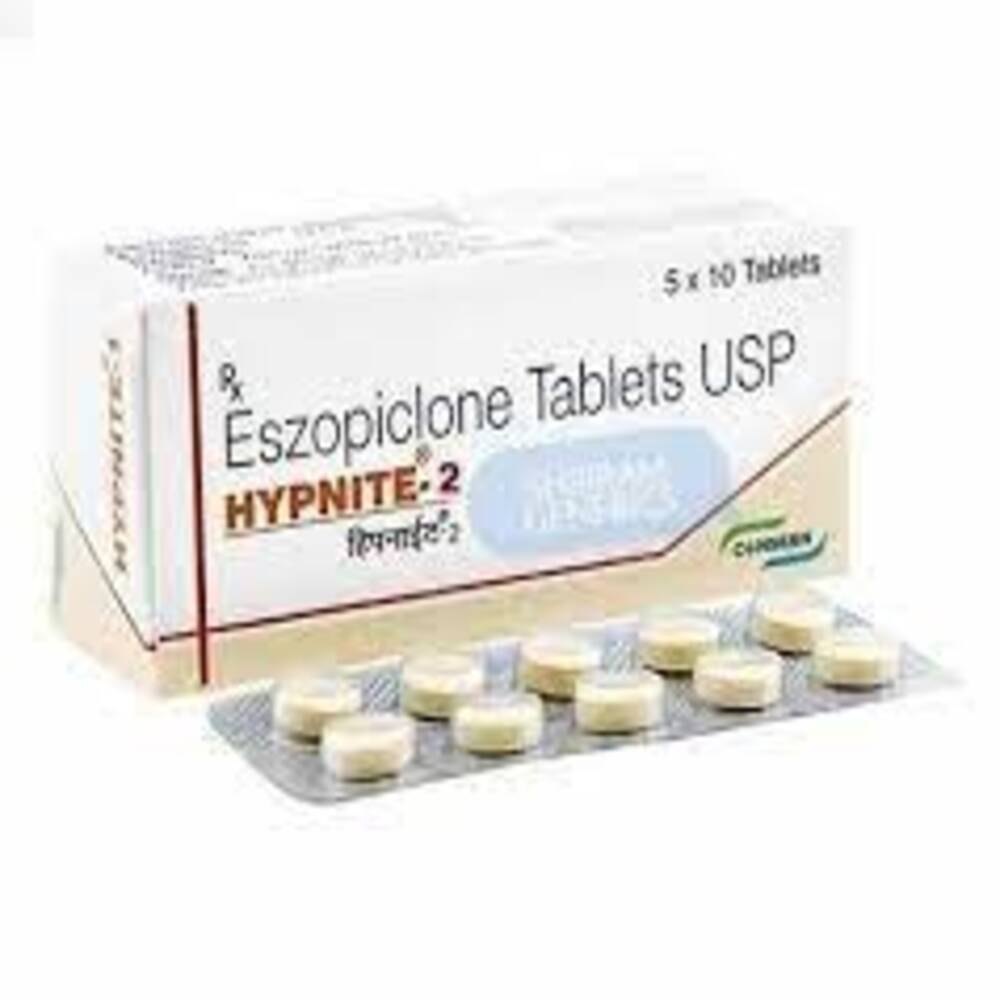
Description
The middle rung: where eszopiclone 2mg sits
Eszopiclone 2mg is the middle of three tablet strengths (1 mg, 2 mg and 3 mg) sold in the US as Lunesta and as generics. It is a prescription sleep medicine for adults with insomnia, whether the trouble is getting to sleep or staying asleep. According to the current Lunesta prescribing information on DailyMed, treatment starts at 1 mg taken right before bed. The prescriber may raise the dose to 2 mg or 3 mg if there is a clinical reason. The total nightly dose never goes above 3 mg.
So the 2 mg tablet plays two roles. For most adults it is the next step up when 1 mg is not enough. For some groups it is the top of the ladder. This page is built like an adjustment clinic. It looks at who stops at 2 mg, what usually goes wrong at this dose, and which questions to take back to your prescriber. If you are just starting out, our guide to the 1 mg starting dose covers the first week in more detail.
Each white, round, film-coated 2 mg tablet is taken once, immediately before getting into bed. Take it only on nights when you can stay in bed for a full 7 to 8 hours.
Three groups whose label ceiling is eszopiclone 2mg
For most adults, 3 mg is the maximum. The label lowers that ceiling to 2 mg in three situations. In each one, the body is exposed to more eszopiclone than usual from the same tablet.
1. Older or debilitated adults
People aged 65 and over clear eszopiclone more slowly. In label data, their total exposure was about 41% higher than in younger adults. Their half-life stretched from about 6 hours to about 9 hours. That leaves more drug in the blood at breakfast time, so the label says the dose should not exceed 2 mg in elderly or debilitated patients. For a wider view of how ageing changes the way medicines act, see our page on medication safety in older adults.
2. Severe liver impairment
The liver breaks eszopiclone down. Mild or moderate liver disease does not call for a dose change under the label. In severe impairment, though, exposure roughly doubles, so the cap drops to 2 mg and the label urges caution. Our overview of how liver disease affects medicine dosing explains why the liver matters so much here.
3. People taking a strong CYP3A4 inhibitor
CYP3A4 is the main liver enzyme that clears eszopiclone. When a strong blocker of this enzyme is on board, eszopiclone builds up. In a study with ketoconazole, exposure rose 2.2-fold. The label says the dose should not go above 2 mg alongside a potent CYP3A4 inhibitor. It names ketoconazole, itraconazole, clarithromycin, nefazodone, troleandomycin, ritonavir and nelfinavir as examples. There is a full interaction table further down.
If you belong to one of these groups, 2 mg is not a stepping stone to 3 mg. It is the ceiling. Your prescriber may also keep you at 1 mg if that works.
Troubleshooting matrix: common problems on eszopiclone 2mg
Most people who reach 2 mg have already tried 1 mg. That means they bring specific complaints with them. The table below links the usual problems to likely causes and to talking points for your next appointment. It is not a self-treatment chart. Every change goes through the prescriber.
| What you notice | Common likely cause | What to raise with your prescriber |
|---|---|---|
| Still lying awake 45+ minutes after the dose | Tablet taken with or soon after a heavy, fatty dinner; taken too early in the evening; caffeine late in the day; an enzyme inducer such as rifampin | Your meal and dose timing, all current medicines and supplements, and whether a sleep diary would help |
| Falling asleep fine but waking at 3 a.m. | Sleep maintenance problem, alcohol earlier in the evening, untreated sleep apnea, pain, reflux or low mood | Whether another condition is driving the waking, and whether a sleep study or CBT for insomnia fits |
| Groggy, slow or unsteady the next morning | Less than 7 to 8 hours in bed, older age, a CYP3A4 inhibitor, other sedating medicines | Whether 1 mg would be enough, and whether any new medicine is raising eszopiclone levels |
| Bitter or metallic taste | A known, dose-related effect of the drug itself | How much it bothers you; whether a lower dose is worth trying |
| No real benefit after 7 to 10 nights | Insomnia that comes from another medical or mental health condition | Further assessment; the label says poor response after 7 to 10 days calls for a look at other causes |
| Sleepwalking, sleep-eating, sleep-driving or no memory of night-time actions | Complex sleep behaviour (boxed warning) | Stop the medicine and contact your prescriber right away. Eszopiclone should not be prescribed again after such an episode |
Why the taste problem deserves a mention
An unpleasant taste is one of the most common side effects of eszopiclone, and it rises with dose. In a 6-week trial in non-elderly adults, 17% of people on 2 mg reported it, compared with 3% on placebo and 34% on 3 mg. In older adults, the rate at 2 mg was 12%. Many people find it fades or is easy to live with. If it is putting you off your breakfast, tell your prescriber rather than skipping doses. Some people also notice a dry mouth; our tips on managing dry mouth from medicines apply here too.
When “not working” means “something else is going on”
Insomnia is often a symptom rather than the whole story. Depression, anxiety, chronic pain, restless legs and breathing problems at night can all keep sleep shallow. The label warns that sedative-hypnotics can worsen depression in some people. Abnormal thinking or behaviour changes also need prompt review. If you are having thoughts of suicide, call or text 988 in the US at any hour. Our page on how medicines can affect mood covers warning signs to watch for.
Moving between 1, 2 and 3 mg
Changing strength is a prescriber decision, not a bedside one. The label tells patients not to raise the dose on their own. Here is how the three strengths usually relate to each other.
- 1 mg to 2 mg. This is the most common step. It may follow a trial at 1 mg in which sleep onset or sleep maintenance did not improve enough.
- 2 mg to 3 mg. This is only an option for adults outside the three capped groups above. The 3 mg dose comes with a specific warning. People taking it should avoid driving and other tasks that need full alertness the next day. Our eszopiclone 3 mg clinical data sheet covers that strength.
- 2 mg back to 1 mg. This is often sensible. Next-day grogginess, a new interacting medicine, a birthday that tips you past 65, or simply sleeping better can all justify stepping down. The label asks for the lowest effective dose.
Why are changes made gradually? Each tablet strength changes two things at once: how fast you fall asleep and how much drug is still active in the morning. One change at a time, with a few nights to judge it, makes it clear what helped and what caused problems. It also keeps rebound insomnia from being mistaken for “the new dose isn’t working”.
The FDA itself moved the recommended starting dose from 2 mg down to 1 mg in 2014. A FDA safety communication from May 2014 reported that 3 mg impaired driving skills, memory and coordination the next morning. People were often unaware of it. The agency noted that 2 mg and 3 mg carry a higher risk of this than 1 mg. If you want to compare it with a better-known sleep aid, see our Ambien vs Lunesta comparison.
CYP3A4: the interaction most likely to change your dose
Because CYP3A4 handles most of eszopiclone’s breakdown, any medicine that blocks or speeds up that enzyme can shift your effective dose without you changing a tablet. Blockers (inhibitors) raise levels, which means more next-day sedation. Speeders (inducers) lower levels, which means less sleep effect. Always give your prescriber and pharmacist a full list, including over-the-counter and herbal products.
| Medicine or product | Type of effect | What it means at 2 mg |
|---|---|---|
| Ketoconazole, itraconazole (antifungals) | Strong CYP3A4 inhibitor (named on label) | Eszopiclone exposure can roughly double; 2 mg is the label maximum |
| Clarithromycin, troleandomycin (antibiotics) | Strong CYP3A4 inhibitor (named on label) | A short antibiotic course can still raise levels; tell the prescriber before starting |
| Ritonavir, nelfinavir (HIV medicines) | Strong CYP3A4 inhibitor (named on label) | 2 mg cap applies; long-term combinations need specialist review |
| Nefazodone (antidepressant) | Strong CYP3A4 inhibitor (named on label) | 2 mg cap applies |
| Fluconazole, erythromycin, diltiazem, verapamil, grapefruit juice | Moderate CYP3A4 inhibitors (general pharmacology) | May raise levels to a lesser degree; ask whether any change is needed |
| Rifampin (rifampicin) | Strong CYP3A4 inducer (named on label) | The label reports an 80% drop in exposure to the related drug zopiclone; eszopiclone may work much less well |
| Carbamazepine, phenytoin, St John’s wort | CYP3A4 inducers (general pharmacology) | May reduce effect; do not raise the dose yourself to compensate |
Antibiotics and antifungals are where this catches people out, because they are often prescribed by a different clinician for a few days. Our guides to how antibiotics interact with other prescriptions and to antifungal interactions such as fluconazole walk through the same enzyme logic for another medicine. MedlinePlus advice on eszopiclone also suggests asking your doctor before having grapefruit or grapefruit juice.
Food timing: why a big dinner can blunt the dose
The label says not to take eszopiclone with or right after a heavy, high-fat meal. The data explain why. When 3 mg was taken after a high-fat meal, total exposure stayed the same. But the peak level dropped by 21%, and the time to reach that peak was delayed by about an hour. Eszopiclone normally peaks about 1 hour after a dose. A one-hour delay can easily make a sleep-onset dose feel as if it has failed.
Practical points to discuss with your prescriber or pharmacist:
- Leave a gap between a rich evening meal and your bedtime dose.
- Do not take a second tablet because the first seems slow. One dose per night is the label rule.
- Do not take the tablet earlier in the evening to “get ahead” of a meal. Taking it while still up and about can cause memory gaps, poor coordination and hallucinations.
- If your sleep is still poor, look at the full picture before blaming the drug. That includes caffeine, screens and an irregular wake time. Our ideas for non-drug ways to deepen sleep can sit alongside treatment.
Eszopiclone 2mg in older adults: the falls question
For people over 65, eszopiclone 2mg is the label maximum, not a middle step. Older age raises exposure and lengthens the half-life. That makes next-day drowsiness, poor balance and slowed reactions more likely. The label specifically flags a higher risk of falls in older patients.
Falls are not a minor issue at this age. The CDC’s older adult falls page reports that falls are the leading cause of injury death in adults 65 and over. A night-time trip to the bathroom on a sedating medicine is a classic setting for one. Our pages on medicine-related dizziness and medicines and memory problems cover symptoms worth reporting.
The American Geriatrics Society’s 2023 update of the Beers Criteria is a widely used list of medicines that may be inappropriate for older adults. It includes the “Z-drugs” (eszopiclone, zolpidem and zaleplon) among medicines to avoid. The concerns are similar to those for benzodiazepines: delirium, falls, fractures, emergency visits and car crashes, with only small gains in sleep. This does not mean an older person can never be prescribed eszopiclone. It means the prescriber should weigh benefit against risk, consider non-drug treatment first, and review the need regularly.
Simple steps that families often discuss with the care team:
- A night light and a clear path to the bathroom.
- Sitting on the edge of the bed for a moment before standing.
- No other sedating products (such as diphenhydramine sleep aids) without checking first. See our note on sedating antihistamines like diphenhydramine.
- A regular review of whether eszopiclone is still needed, and at what dose.
Next-day impairment can be silent. The FDA has reported that people on eszopiclone can be impaired the next morning without feeling sleepy. Higher doses, short nights, older age, alcohol and interacting drugs all raise the risk. Until you know how 2 mg affects you, treat driving the next morning with caution. Our guide to driving after a sedating medicine covers the general rules.
Tolerance, dependence and rebound insomnia
Eszopiclone is Schedule IV because it can be misused and can cause physical dependence. Here is what the label data show.
- Tolerance to the sleep benefit. In trials lasting up to six months, there was no sign of tolerance to the sleep effects. Some tolerance to the drug’s depressant side effects may develop.
- Misuse potential. At two to four times the maximum dose, people reported euphoria similar to that from high-dose diazepam. That is one reason the dose ceilings exist. A history of substance misuse needs to be discussed openly before treatment.
- Withdrawal. Stopping suddenly or cutting the dose fast can cause withdrawal-like symptoms. These include anxiety, unusual dreams, nausea and an upset stomach. Clinical trials found no serious withdrawal syndrome.
- Rebound insomnia. After stopping 2 mg in one study, people woke more and slept less efficiently on the first night off. The effect was mild and had cleared by the second night.
That last point matters for anyone at 2 mg. One rough night after stopping does not prove you still need the medicine. If you and your prescriber decide to stop, ask about a step-down plan. Moving from 2 mg to 1 mg for a while before stopping is a common approach. Pair it with sleep habits that support the change. Our guide to preparing for a medication conversation with your doctor has questions you can adapt.
Alcohol, opioids and other depressants
Eszopiclone slows the brain. So do alcohol, opioids, benzodiazepines, some antidepressants, antipsychotics, gabapentinoids and sedating antihistamines. Combined, the effects add up. The result can be deeper sedation, worse coordination, memory gaps and, with some combinations, slowed breathing.
- Alcohol. The label says not to take eszopiclone on an evening when you have been drinking. Our explainer on alcohol and sedating medicines covers the general risks.
- Opioid painkillers. The label lists opioids among medicines with additive effects. Read more about combining opioids with sleep medications.
- Benzodiazepines and other anxiety medicines. These add to the sedation. See our overview of anti-anxiety medicines.
- Melatonin and herbal sleep aids. Ask before stacking them. Our page on melatonin combinations explains the thinking.
- Breathing problems. The label urges caution in people with weakened breathing. If you snore heavily or stop breathing in your sleep, read about sleep apnea and sedating drugs and raise it with your prescriber.
If someone is very hard to wake, is breathing slowly or has taken more than prescribed, call 911. For advice on an accidental extra dose, Poison Help is free and open 24/7 on 1-800-222-1222.
Eszopiclone 2mg vs zolpidem 5–10 mg vs zaleplon
All three are “Z-drugs” that act on the same brain receptor. All three share the 2019 FDA boxed warning on complex sleep behaviours. They differ mostly in how long they last. The figures below come from each product’s US label.
| Feature | Eszopiclone 2 mg (Lunesta) | Zolpidem 5–10 mg (Ambien) | Zaleplon 5–10 mg (Sonata) |
|---|---|---|---|
| Time to peak level | About 1 hour | About 1.6 hours | About 1 hour |
| Half-life (adults) | About 6 hours (about 9 hours age 65+) | About 2.5 hours | About 1 hour |
| Main target | Falling asleep and staying asleep | Falling asleep (immediate-release) | Falling asleep |
| Older-adult dose on label | Maximum 2 mg | 5 mg | 5 mg |
| Heavy meal effect | Slower onset | Slower onset | Slower onset |
| Schedule (US) | IV | IV | IV |
Sources: Ambien US label and Sonata US label.
The longer half-life is why eszopiclone is often chosen when waking during the night is the main complaint. It is also why next-day effects need more attention than with zaleplon. Our comparisons of Ambien and Sonata and of zopiclone and Ambien add more context. Zopiclone is the parent compound sold in the UK and elsewhere; see our zopiclone 7.5 mg product page. There is no 6 mg eszopiclone tablet. Our eszopiclone 6 mg myth-buster explains where that idea comes from.
Storing and disposing of eszopiclone 2mg
Keep tablets in the original, tightly closed container at room temperature, about 77°F (25°C). Short spells between 59°F and 86°F (15–30°C) are fine. Keep them away from heat and damp, so not in the bathroom cabinet. As a controlled medicine, it should be out of sight and reach of children and visitors. A lockable box is a sensible choice. Our tips on storing controlled medicines safely apply equally here.
Do not flush unused tablets. Use a pharmacy drop-off kiosk, a mail-back envelope or a DEA Take Back Day. The FDA’s guide to drug take-back locations shows how to find one. See also our page on disposing of unused controlled medicines. Never share tablets. Passing on a Schedule IV medicine is illegal, and a dose that suits you may be unsafe for someone else.
Eszopiclone 2mg FAQ
Is 2 mg of eszopiclone a lot?
It is a middle dose. For most adults the range on the label is 1 to 3 mg, so 2 mg sits in the centre. For adults over 65, people with severe liver impairment and those on strong CYP3A4 inhibitors, 2 mg is the highest dose the label allows.
What is the maximum eszopiclone dose for elderly patients?
The label says the total dose should not exceed 2 mg in elderly or debilitated patients. Older adults clear the drug more slowly, with a half-life of about 9 hours. Many prescribers keep older patients at 1 mg if it works.
Can I take eszopiclone after eating?
You can take it after a light snack. The label advises against taking it with or right after a heavy, high-fat meal. Such a meal delayed the peak level by about an hour and reduced it by about a fifth, which can slow sleep onset.
Why does eszopiclone leave a bitter taste?
An unpleasant taste is a known side effect of the drug and becomes more common at higher doses. In one trial it affected 17% of adults at 2 mg. Tell your prescriber if it is severe or does not ease.
Is eszopiclone a controlled substance?
Yes. In the US it is a Schedule IV controlled substance, like zolpidem and zaleplon. It needs a valid prescription, and refills are limited by federal rules.
How long does eszopiclone stay in your system?
Its half-life is about 6 hours in healthy adults and about 9 hours in people over 65. Most of a dose is cleared within a day or so, but next-day effects on alertness can last into the late morning at higher doses.
Can you stop eszopiclone suddenly?
Stopping suddenly can cause rebound insomnia and mild withdrawal-like symptoms such as anxiety or unusual dreams. In label data, rebound after 2 mg was mild and settled by the second night. Ask your prescriber about a step-down plan before stopping.
Is eszopiclone stronger than zolpidem?
Strength is hard to compare across drugs. Eszopiclone lasts longer (half-life about 6 hours vs about 2.5 hours for zolpidem). That makes it more suited to night-time waking, but it also carries more risk of next-day drowsiness.
What should I do if I took two tablets by mistake?
Do not drive or use machinery. Call Poison Help on 1-800-222-1222 for advice. If the person is hard to wake or breathing slowly, call 911.
Key takeaways
- Eszopiclone 2mg is the middle of three strengths. It is the step up from the 1 mg starting dose for most adults.
- For older adults, severe liver impairment and strong CYP3A4 inhibitors, 2 mg is the label maximum.
- Most problems at 2 mg (slow onset, early waking, grogginess, bitter taste) have specific causes. Bring them to your prescriber rather than adjusting the dose yourself.
- Avoid taking it after a heavy, fatty meal. That delays the effect by about an hour.
- Antibiotics, antifungals and HIV medicines can raise levels. Rifampin can sharply lower them.
- Avoid alcohol and other depressants. Take it only when you can spend 7 to 8 hours in bed.
- Stop and call your prescriber after any sleepwalking or sleep-driving episode.
This description is for information only and does not replace advice from your doctor or pharmacist. Use only as prescribed.
Prescription only. Schedule IV controlled substance. Eszopiclone 2mg is dispensed only against a valid prescription from a licensed prescriber, and US pharmacies must follow DEA rules for Schedule IV medicines. The label carries a boxed warning: complex sleep behaviours such as sleepwalking and sleep-driving can happen on this medicine and have caused serious injury and death. If you ever do something while not fully awake after a dose, stop taking it and contact your prescriber.


Reviews
There are no reviews yet.