
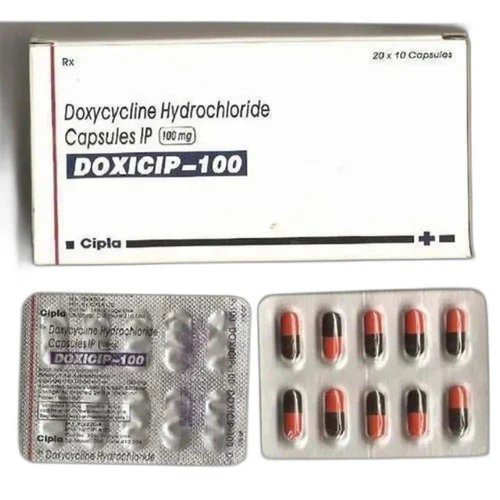
Description
Doxycycline 100mg is one of the most versatile antibiotics a doctor can write. The same small tablet or capsule turns up in a dermatologist’s acne plan, a travel clinic’s malaria kit, a sexual health clinic’s chlamydia treatment and a family doctor’s response to a tick bite rash. That range is useful, but it also means people often take it while living normal lives: at work, outdoors, at the breakfast table and on holiday. This page is a practical rulebook for those days. It covers what doxycycline 100mg is used for, the four habits that make it work and keep you comfortable, who should not take it, and what to tell your prescriber before you start.
One Drug, Many Jobs: Where Doxycycline 100mg Fits
Doxycycline belongs to the tetracycline family. It stops bacteria from making the proteins they need to grow, which gives your immune system the upper hand. It also calms some kinds of inflammation, which is why it is used for skin conditions as well as infections. Below are the jobs you are most likely to meet. The exact plan for each one is your prescriber’s call.
Acne and rosacea
For moderate to severe inflammatory acne, doxycycline lowers the number of acne bacteria and reduces redness and swelling. The American Academy of Dermatology advises using an antibiotic for acne for the shortest time that works, often around three to four months, and pairing it with a topical treatment such as benzoyl peroxide or adapalene so resistance is less likely (AAD guidance on acne antibiotics). Do not expect overnight change. Most people see steady improvement over several weeks. In the meantime, gentle skin care helps, and our guide to calming a sudden pimple flare covers what you can safely do at home. Lower-dose doxycycline products are also used for rosacea, but those are different products from the standard 100 mg strength.
Chest, sinus and other bacterial infections
The US label lists a long range of bacterial infections, including some respiratory tract infections caused by susceptible organisms and Mycoplasma pneumoniae (“walking pneumonia”). Your prescriber may pick doxycycline when you are allergic to penicillin or when the likely germ is one it covers well. If a chest cold is mostly cough without signs of bacterial infection, an antibiotic will not help, and simple measures for easing a sore chest from coughing may be the better plan.
Lyme disease and other tick-borne infections
Doxycycline is a first-choice treatment for many tick-borne infections. For the expanding “bull’s-eye” rash of early Lyme disease, the CDC lists doxycycline as one option, usually for 10 to 14 days in adults (CDC erythema migrans treatment). For Rocky Mountain spotted fever and related rickettsial infections, it is the drug CDC recommends for patients of every age, because these infections can turn serious quickly. Some clinicians also offer a single preventive dose after a high-risk tick bite. Whether that applies to you depends on the tick, how long it was attached and where you live.
Chlamydia
The CDC 2021 STI Treatment Guidelines name doxycycline 100 mg twice a day for seven days as the recommended treatment for chlamydia in adults and adolescents who are not pregnant. Azithromycin is listed as an alternative, and it is also the recommended choice in pregnancy (CDC chlamydia treatment guidelines). Partners also need testing or treatment, and you should avoid sex until you and your partners have finished treatment and symptoms have cleared.
Malaria prevention when you travel
Doxycycline is one of several drugs used to prevent malaria. The CDC Yellow Book says adults take 100 mg once a day, starting one to two days before arriving in a malaria area, every day while there, and for four weeks after leaving (CDC Yellow Book: malaria). That four-week tail is the part travellers most often skip, and it matters because the drug works on parasites in the blood, not in the liver. No pill is 100% protective, so repellent, long sleeves and bed nets still count.
Doxy-PEP: preventing some STIs after sex
In June 2024 the CDC published its first guideline on doxycycline post-exposure prophylaxis, or “doxy-PEP.” It recommends that clinicians discuss doxy-PEP with gay, bisexual and other men who have sex with men, and with transgender women, who have had syphilis, chlamydia or gonorrhea in the past 12 months. The regimen is a single 200 mg dose taken ideally within 24 hours and no later than 72 hours after sex, with no more than 200 mg in any 24 hours (CDC MMWR doxy-PEP recommendations). The only trial in cisgender women did not show a benefit, and CDC made no recommendation for cisgender heterosexual men. Doxy-PEP is a prescription decision with regular testing, not something to improvise with spare tablets.
The Four Rules for Taking Doxycycline 100mg Every Day
Most problems people have with doxycycline are not rare reactions. They come from everyday habits: a dose swallowed dry at bedtime, a capsule chased with a latte, a day at the beach without sunscreen, or a course dropped once the spots or the cough fade. These four rules cover nearly all of them.
Rule 1: A full glass of water, then stay upright for 30 minutes
A doxycycline tablet or capsule that sticks in the gullet can dissolve against the lining and cause a painful burn or ulcer. The US label notes that most people who developed these ulcers took their dose just before going to bed. The fix is simple:
- Swallow each dose whole with a full glass of water. Do not crush or chew it unless your pharmacist says your product allows it.
- Sit or stand for at least 30 minutes afterwards. The NHS gives the same 30-minute advice (NHS doxycycline guide).
- If your schedule includes an evening dose, take it with dinner or at least an hour before bed, not as you turn the light off.
Pain behind the breastbone when swallowing, or a feeling that food is catching, is a reason to call your prescriber. It is easy to mistake for ordinary heartburn, and our page on how acid reflux and medicines interact explains why the two can overlap. If you already live with reflux, the upright rule is even more important, as described in our guide to managing GERD alongside other medicines.
Rule 2: Space it away from minerals and antacids
Doxycycline binds to calcium, iron, magnesium, aluminium, zinc and bismuth in the gut. Once bound, less of the drug gets into your blood. Doxycycline is less fussy about food than older tetracyclines, and the label says you can take it with food or milk if it upsets your stomach. The real problem is concentrated minerals: antacids, supplements and some stomach remedies. MedlinePlus gives practical spacing windows (MedlinePlus doxycycline). Use the table below as a planning guide, and confirm the timing for your exact products with your pharmacist.
| Product | Why it matters | Practical spacing |
|---|---|---|
| Antacids (calcium, magnesium or aluminium based) | Bind doxycycline in the stomach | Take them 1 to 2 hours before or after your dose |
| Calcium supplements | Same binding effect | 1 to 2 hours apart |
| Magnesium laxatives or supplements | Same binding effect | 1 to 2 hours apart |
| Iron tablets and multivitamins with iron | Strong binding, larger drop in absorption | Iron 3 hours before or 2 hours after doxycycline |
| Bismuth subsalicylate (pink stomach remedies) | Label lists it as reducing absorption | Ask your pharmacist; many advise avoiding it during the course |
| Zinc supplements | Can bind doxycycline | Space by a few hours; check with your pharmacist |
| Milk, yogurt, cheese with meals | Much smaller effect than with older tetracyclines | Usually fine; follow your label if it says otherwise |
A simple routine helps. Many people take doxycycline with breakfast and move their iron, calcium or multivitamin to lunch or dinner. If you take iron for low levels, our guide to raising iron levels safely explains why timing matters, and the article on boosting hemoglobin covers food sources you can lean on during a short course. For a broader view of supplement timing around prescriptions, see our page on taking vitamins with prescription medicines.
Rule 3: Treat the sun as a side effect risk
Doxycycline makes skin more sensitive to ultraviolet light. That can mean a sunburn far worse than you would expect for the time spent outside, and sometimes nail changes. The label advises limiting sun and UV exposure and stopping treatment at the first sign of skin redness, so call your prescriber if that happens. On brown or black skin, the reaction may look more like itching, darkening or a rash than redness. Practical steps:
- Use a broad-spectrum sunscreen and reapply after swimming or sweating.
- Wear a hat, sunglasses and light long sleeves, especially between late morning and mid-afternoon.
- Skip tanning beds for the whole course.
- Remember that reflected light from water, sand and snow adds up.
Pool days and beach holidays are where most people get caught out. Our article on swimming and outdoor safety while on medication has general tips that apply here too.
Rule 4: Finish the course the way it was prescribed
Feeling better is not the same as being cured. Stopping early can leave behind the hardiest bacteria, which is one way resistance develops. For malaria prevention, stopping before the four weeks after travel are over can leave you unprotected. If you miss a dose, take it when you remember unless the next dose is nearly due, and do not double up. The general approach in our guide on what to do after a missed dose is a useful reminder, but your doxycycline leaflet has the final word. If side effects make you want to stop, call your prescriber first rather than quietly dropping the tablets.
Who Should Not Take Doxycycline 100mg (or Needs a Closer Look)
Pregnancy and breastfeeding
Tetracyclines cross the placenta. Taken during the second half of pregnancy, they can permanently discolour a baby’s developing teeth and may slow bone growth. The CDC chlamydia guideline lists doxycycline as contraindicated in the second and third trimesters. The NHS notes that the risk appears lower in the first 13 weeks, but doxycycline is still not usually a first choice in pregnancy. If you could be pregnant, say so before you start, and call your prescriber straight away if you become pregnant during a course. Our article on thinking through medicines in pregnancy outlines questions worth asking. Doxycycline passes into breast milk in small amounts. Advice varies for short courses, so discuss it with your doctor, and see our guide to breastfeeding while on a prescription for general points.
Children under 8
The US label warns that tetracyclines given while teeth are forming, up to about age 8, can cause permanent yellow-grey-brown staining. For that reason, doxycycline is generally avoided in young children for routine infections. There is an important exception. For suspected Rocky Mountain spotted fever and other rickettsial diseases, the CDC recommends doxycycline for patients of all ages, including children under 8, and notes that short courses of 5 to 10 days have not been shown to stain permanent teeth (CDC RMSF clinical care). These infections can be fatal if treatment is delayed, so the benefit is clear. Children’s doses are based on weight and set by the prescriber.
Other reasons to pause
- Allergy to any tetracycline antibiotic (doxycycline, minocycline, tetracycline).
- A history of raised pressure around the brain (idiopathic intracranial hypertension).
- Liver disease, or a history of severe diarrhea after antibiotics.
- Myasthenia gravis or lupus, which tetracyclines can occasionally aggravate.
Doxycycline and Isotretinoin: A Pairing to Avoid
Do not combine doxycycline with isotretinoin unless a specialist has specifically decided to. Both drugs can raise the pressure of the fluid around the brain, a condition called intracranial hypertension (also known as pseudotumor cerebri). The US label says to avoid using them together. Warning signs include a persistent headache, blurred or double vision, ringing or whooshing in the ears and brief losses of vision. Stop and get urgent medical help if these appear.
This matters most in acne care, because a dermatologist may move someone from an antibiotic to isotretinoin when acne does not clear. The switch should be planned, with the antibiotic stopped first. If you are reading about isotretinoin 20 mg and its safety rules, check that your doxycycline course has ended before you start. Women of childbearing age who are overweight, or who have had intracranial hypertension before, are at higher risk even on doxycycline alone. A new headache that feels different from your usual pattern deserves a call; our article on when a headache from medication needs attention covers general red flags, and our page on blurred vision while on medicines explains which eye symptoms need urgent review.
Other Side Effects: What Is Common, What Is Urgent
Most people take doxycycline without serious trouble. The effects below are the ones to know about.
Common and usually manageable
- Nausea, stomach upset or vomiting. Taking the dose with a meal often helps. Our tips on settling medicine-related nausea apply here, and our guide to taking medicines with or without food explains why a meal can cushion the stomach.
- Loose stools. Mild diarrhea is common with antibiotics.
- Headache. Usually mild. A severe or persistent one, especially with vision changes, is a different matter (see above).
- Vaginal yeast infection. Antibiotics can disturb normal flora. Ask your pharmacist about treatment.
- Sun-related rash. Covered in Rule 3.
Call your prescriber promptly, or 911 in an emergency
- Watery or bloody diarrhea, stomach cramps or fever. This can be C. difficile infection, which can appear up to two months after an antibiotic.
- Painful swallowing or chest pain behind the breastbone.
- Hives, swelling of the face, lips or throat, or trouble breathing.
- A blistering or peeling rash, or one with fever and sore mouth.
- Severe headache, blurred or double vision.
- Yellow skin or eyes, dark urine or upper-right belly pain.
- Unusual bruising or bleeding.
On alcohol, the NHS suggests avoiding it during treatment. Heavy, regular drinking can also shorten how long doxycycline stays active. Our page on how alcohol interacts with prescription medicines covers the general risks of mixing the two.
Interactions to Flag Before You Start
Bring a full list of everything you take, including over-the-counter remedies and supplements. Our template for keeping a medicine interaction list is a handy way to organise it. These are the interactions the US label highlights:
| Medicine | What can happen | What usually happens next |
|---|---|---|
| Warfarin and other blood thinners | Doxycycline can strengthen the blood-thinning effect | Closer INR checks; dose may be adjusted |
| Carbamazepine, phenytoin, barbiturates | These speed up doxycycline breakdown, lowering levels | Prescriber may change the dose or choose another antibiotic |
| Isotretinoin and other oral retinoids | Added risk of intracranial hypertension | Avoid the combination |
| Penicillins | May interfere with penicillin’s bacteria-killing action | Generally not combined |
| Antacids, iron, calcium, magnesium, bismuth | Lower absorption of doxycycline | Space doses (see Rule 2) |
| Hormonal contraceptives | Label and MedlinePlus note possible reduced effect | Ask about backup contraception |
| Oral typhoid vaccine | Antibiotic can inactivate the live vaccine | Travel clinic will plan the timing |
If you already take other prescriptions, our article on combining antibiotics with other medicines walks through how pharmacists screen for clashes.
Hyclate or Monohydrate: Is There a Difference?
Doxycycline 100mg comes as two main salts: doxycycline hyclate and doxycycline monohydrate. Both deliver the same active drug and treat the same infections. The differences are practical:
- Hyclate dissolves more readily and is usually the cheaper generic. Some people find it a little harder on the stomach.
- Monohydrate dissolves more slowly. The CDC Yellow Book notes that monohydrate and enteric-coated hyclate products may cause less stomach upset but can cost more.
- Delayed-release hyclate tablets are designed to release past the stomach. The FDA label for one such product states that it is not interchangeable mg-for-mg with other oral doxycyclines, so do not swap products without your pharmacist.
You can check the official monohydrate label on DailyMed (doxycycline monohydrate capsules). If nausea is a problem, ask whether a different salt or a coated tablet would suit you better. Do not switch on your own mid-course.
Using Antibiotics Well: Stewardship in Real Life
Every course of an antibiotic, needed or not, gives bacteria a chance to adapt. The CDC’s antibiotic-use guidance is blunt: antibiotics do not work on viruses, and colds, flu, most sore throats and most chest colds are viral (CDC antibiotic do’s and don’ts). Taking doxycycline for those will not speed recovery and can still cause side effects. For a runny nose, our guide to cold medicines that ease symptoms is the more useful read.
Good stewardship habits:
- Use doxycycline only for the person and the purpose it was prescribed for.
- Do not save tablets “for next time.” Ask your pharmacist how to get rid of leftovers; the methods in our guide on disposing of unused medicines work for antibiotics too.
- Keep tablets in their original pack, away from heat and damp, as our article on storing medicines safely at home recommends. Old, degraded tetracyclines should never be used.
- Ask your prescriber why doxycycline is the right choice. Our tips on having a clear conversation with your doctor help you prepare questions.
Doxycycline is not the only option. For some infections, your prescriber may choose azithromycin 500 mg, for example in pregnancy. For many ear, throat and sinus infections, amoxicillin 500 mg is the usual first choice. Which antibiotic is right depends on the germ, your allergies and your health, not on what is in the cupboard.
Travel kit checklist
If doxycycline is part of your malaria plan, pack it in your hand luggage in its labelled pharmacy box, with enough to cover the four weeks after you return. Add sunscreen, a sun hat and a water bottle so you can follow Rules 1 and 3 on the road. Our guides on building a medication travel kit and flying with prescription medicines cover labels, carry-on rules and time-zone planning.
Doxycycline 100mg: Your Questions Answered
How long after taking doxycycline can I lie down?
Wait at least 30 minutes after a dose, and take it with a full glass of water. Lying down too soon raises the risk of the tablet sticking and causing an oesophageal ulcer. For evening doses, take it with dinner or at least an hour before bed.
Can I drink milk with doxycycline?
Milk with a meal is usually fine. Doxycycline is much less affected by dairy than older tetracyclines, and the label allows food or milk if your stomach is upset. The bigger issue is concentrated minerals: calcium and iron supplements, antacids and bismuth. Space those as shown in the table above.
What should you avoid while taking doxycycline?
Avoid taking it at bedtime, swallowing it with little water, taking it close to antacids or mineral supplements, strong sun or tanning beds, and isotretinoin. Avoid alcohol where you can. Tell your prescriber about blood thinners and anti-seizure medicines.
Can I go in the sun while on doxycycline?
You can go outside, but protect your skin. Use broad-spectrum sunscreen, cover up and avoid peak midday sun. If your skin turns red, itchy or blistered, stop exposure and call your prescriber.
Is doxycycline 100mg a strong antibiotic?
It is a broad-spectrum antibiotic that covers many unusual germs, including those behind tick-borne infections and chlamydia. “Strong” is less useful than “right for the infection.” Your prescriber chooses it when it matches the likely germ.
Can I drink alcohol while taking doxycycline?
The NHS advises avoiding alcohol during treatment. Regular heavy drinking may lower doxycycline levels, and alcohol can worsen stomach upset. If you do drink, keep it light and ask your pharmacist.
What is the difference between doxycycline hyclate and monohydrate?
Both are forms of the same drug. Hyclate is usually cheaper and dissolves faster. Monohydrate may be a little gentler on the stomach. Delayed-release tablets are not interchangeable mg-for-mg, so do not swap products yourself.
How long does doxycycline take to work for acne?
Expect gradual improvement over several weeks, with the full effect often taking two to three months. Dermatologists usually limit the course to the shortest time that works and combine it with a topical treatment.
Can children take doxycycline?
It is generally avoided in children under 8 because of tooth staining. The key exception is suspected Rocky Mountain spotted fever and similar infections, where the CDC recommends doxycycline at any age because the illness can be fatal. Doses for children are weight-based.
Does doxycycline stop birth control from working?
The label and MedlinePlus say tetracyclines may make hormonal contraceptives less effective. Ask your prescriber whether to use a backup method, such as condoms, during the course.
Key Takeaways
- Doxycycline 100mg is a prescription antibiotic used for acne, chest and other bacterial infections, tick-borne illness, chlamydia, malaria prevention and, for some people, doxy-PEP.
- Rule 1: a full glass of water and 30 minutes upright, never right before bed.
- Rule 2: space antacids, calcium, magnesium, iron and bismuth away from your dose.
- Rule 3: protect your skin from sun and UV for the whole course.
- Rule 4: finish the course as prescribed, including four weeks after malaria travel.
- It is generally avoided in later pregnancy and in children under 8, except for serious rickettsial infections.
- Do not combine it with isotretinoin. Report severe headache or vision changes urgently.
- Tell your prescriber about warfarin, anti-seizure drugs and contraceptives.
- Never use leftover or shared doxycycline. Antibiotics do not treat colds or flu.
This description is for information only and does not replace advice from your doctor or pharmacist. Use only as prescribed.
Prescription medicine. Doxycycline is a prescription-only antibiotic. Your prescriber chooses the drug, the dose and how long you take it, based on the infection or condition being treated. Do not use leftover tablets from an old course, and never share yours or take someone else’s. If you have a severe allergic reaction, chest pain on swallowing that does not settle, or sudden vision changes, call 911. For a suspected overdose, call Poison Help at 1-800-222-1222.
Reviews
There are no reviews yet.