
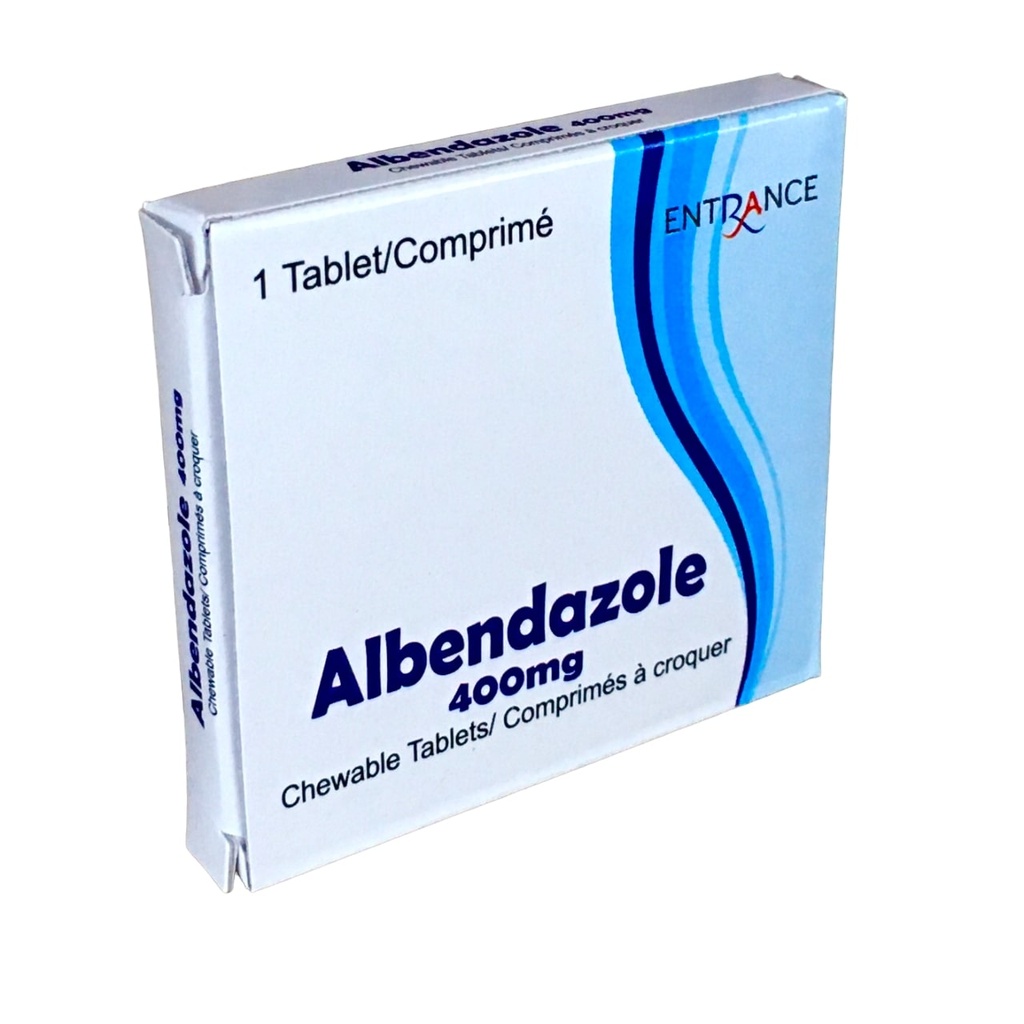
Description
Albendazole 400mg is a broad-spectrum worm medicine. The same small tablet is used in two very different ways. In a deworming programme it is often given once and the job is done. For a tapeworm cyst in the liver or brain, it becomes a course that lasts weeks or months, with blood tests along the way. This guide works through the parasites one at a time, the way a naturalist’s field guide would. For each worm you’ll find how people catch it, what it does, and what treatment usually looks like according to US labelling and CDC guidance.
Albendazole belongs to the benzimidazole family, the same group as mebendazole. It stops worms from building the internal scaffolding (microtubules) they need to absorb sugar. The worm slowly runs out of energy and dies. Very little of the drug is absorbed from the gut on an empty stomach. Much more is absorbed with a fatty meal. That is why some regimens say “with food” and others “empty stomach”.
Where albendazole 400mg fits: what the US label covers and what the rest of the world uses it for
It helps to separate two lists. One is what the US Food and Drug Administration has approved. The other is how doctors and public-health programmes actually use the drug around the world.
The US label: two tapeworm larvae diseases
The US prescribing information for Albenza (albendazole), available on DailyMed, lists just two approved uses:
- Parenchymal neurocysticercosis with active lesions, caused by the larval stage of the pork tapeworm, Taenia solium.
- Cystic hydatid disease of the liver, lung and peritoneum, caused by the larval stage of the dog tapeworm, Echinococcus granulosus.
Both are “tissue” infections. The parasite is not sitting in the bowel. It is living as a fluid-filled cyst inside an organ. That is why the label regimen is long and why it comes with lab monitoring.
Common uses elsewhere: single-dose deworming
Outside that label, albendazole is one of the most widely used medicines on earth. The World Health Organization’s fact sheet on soil-transmitted helminths estimates that about 1.5 billion people carry roundworm, whipworm or hookworm. WHO names albendazole 400 mg and mebendazole 500 mg as effective, inexpensive and safe enough for trained non-medical staff, such as teachers, to give during school deworming days. In those programmes people are treated on a schedule without an individual test first.
In the US, the CDC’s clinical care page for soil-transmitted helminths lists albendazole as a treatment option for roundworm, hookworm and whipworm. It also notes plainly that these uses are not FDA-approved. Doctors use it off-label, which is legal and common, but it is a decision your prescriber makes, not something to try on your own.
Is the 400 mg strength sold in the US?
US albendazole products listed on DailyMed are 200 mg tablets. The label’s adult dose for tissue infections is 400 mg, so patients typically take two 200 mg tablets at a time. A single 400 mg tablet is licensed in other countries. Examples include Eskazole 400 mg in Spain and Australia, and WHO-prequalified 400 mg chewable tablets made in India for deworming programmes. If your prescription or pack says “albendazole 400mg”, check with your pharmacist which product you have and how it should be taken.
The parasite profiles: a worm-by-worm field guide
Each card below covers one parasite. It looks at how people catch it, what it tends to do, and what treatment usually involves. The treatment notes describe what labels and the CDC say. They are not instructions to follow without a prescriber.
Roundworm (Ascaris lumbricoides)
How it’s caught: Roundworm eggs leave the body in stool. They need a few weeks in warm soil before they can infect anyone. People swallow mature eggs on unwashed produce, in contaminated water, or from soil on their hands. The CDC’s overview of soil-transmitted helminths explains these routes in more detail.
What it does: Light infections often cause nothing at all. Heavier loads can cause tummy pain, poor appetite and a bloated, uncomfortable abdomen. In children they can affect growth. Very heavy infections can rarely block the bowel.
Treatment pattern: CDC guidance lists albendazole 400 mg as a single dose, taken on an empty stomach. Mebendazole is an alternative.
Hookworm (Necator americanus, Ancylostoma duodenale)
How it’s caught: Hookworm eggs hatch in soil. The larvae then burrow through bare skin, usually the feet. One species can also be swallowed.
What it does: The larvae can leave an itchy rash where they enter. The adults attach to the gut wall and feed on blood. Over months, that slow blood loss can lead to iron-deficiency anaemia, with tiredness, pale skin and shortness of breath. If your doctor finds low iron, practical guides on raising iron levels and rebuilding haemoglobin can help you understand the recovery side. Clearing the worm comes first, though.
Treatment pattern: CDC lists a single 400 mg dose of albendazole, with mebendazole or pyrantel pamoate as alternatives. Iron replacement may be added.
Whipworm (Trichuris trichiura)
How it’s caught: Like roundworm, whipworm spreads by swallowing eggs that have matured in contaminated soil.
What it does: The worm threads its narrow front end into the lining of the large bowel. Heavy infections can cause bloody diarrhoea, abdominal pain and, in children, rectal prolapse. A stool test matters more than guesswork here. For example, persistent bowel changes are sometimes mistaken for irritable bowel-type symptoms.
Treatment pattern: Whipworm is harder to clear than roundworm. One dose is often not enough. CDC lists albendazole 400 mg once daily for three days.
Pinworm, also called threadworm (Enterobius vermicularis)
How it’s caught: Pinworm needs no soil. Female worms crawl out at night and lay eggs on the skin around the anus. Scratching transfers eggs to fingers, bedding, clothes and toys. Someone then swallows them. According to the CDC’s pinworm page, the eggs can survive on surfaces for two to three weeks.
What it does: The main sign is itching around the bottom, worse at night. Children may sleep badly and become restless. In girls the worms can wander and cause vaginal irritation.
Treatment pattern: Medicines kill the worms but not the eggs. So treatment is two doses, two weeks apart, and the whole household is usually treated at the same time. In the US, pyrantel pamoate is sold over the counter. Albendazole and mebendazole need a prescription. In the UK, mebendazole is the usual pharmacy choice (see the NHS threadworm guide).
Pork tapeworm larvae in the brain (neurocysticercosis)
How it’s caught: This is the most misunderstood worm in the guide. Eating undercooked pork gives you an intestinal tapeworm. It does not give you cysticercosis. Cysticercosis comes from swallowing tapeworm eggs passed in the stool of someone who carries the adult worm. The CDC’s cysticercosis page stresses this point. A tapeworm carrier can infect people they live with, or themselves, through poor hand hygiene.
What it does: The larvae form cysts in muscle, eyes or brain. Brain cysts can stay silent for years, then cause seizures, headaches or raised pressure inside the skull, often when the cyst begins to die.
Treatment pattern: Not every case needs antiparasitic drugs. Old, calcified cysts are usually not treated with them. When treatment is used, the US label regimen is 8 to 30 days of albendazole twice daily with meals, alongside steroids and seizure medicine. More on that below.
Dog tapeworm cysts (cystic hydatid disease)
How it’s caught: Dogs carry the adult tapeworm after eating infected sheep offal. People swallow eggs shed in dog faeces, often on hands, fur or food. It is most common in sheep-farming regions.
What it does: Slow-growing fluid-filled cysts form, most often in the liver, then the lungs. Many are found by chance on a scan. Large cysts can cause pain, a feeling of fullness, or cough. A cyst that ruptures can trigger a severe allergic reaction.
Treatment pattern: The CDC’s echinococcosis clinical guidance describes several options. These include surgery, a needle drainage procedure called PAIR, albendazole, or a watch-and-wait approach. The choice depends on the cyst’s type, size and location. Albendazole is often given before and after surgery to lower the risk of spread. The US label regimen is 28-day cycles with a 14-day break between them, repeated for three cycles.
A note on worms albendazole is not the usual answer for
Strongyloides (threadworm in US usage) is usually treated with ivermectin, not albendazole. If your doctor suspects it, you may see ivermectin 3 mg tablets on your prescription instead. Head lice, scabies and “worms” seen in pets are different problems with different treatments. For lice, the household laundry habits in our guide to getting rid of head lice overlap with the pinworm routine below.
Single dose vs long course: how albendazole 400mg regimens compare
The table summarises how the same medicine is used in very different ways. The details come from the US label (tissue infections) and CDC guidance (intestinal worms). Your prescriber may choose differently based on your weight, age, test results and where you caught the infection.
| Infection | Typical regimen (source) | Food | Lab monitoring |
|---|---|---|---|
| Roundworm | 400 mg once (CDC, off-label in US) | Empty stomach | Not usually needed |
| Hookworm | 400 mg once (CDC, off-label in US) | Empty stomach | Blood count if anaemic |
| Whipworm | 400 mg daily for 3 days (CDC, off-label in US) | Empty stomach | Not usually needed |
| Pinworm | Two doses, two weeks apart; household treated together (prescriber decides drug) | As directed | Not usually needed |
| Neurocysticercosis | Twice daily for 8 to 30 days (US label) | With meals, ideally fatty | Blood counts and liver tests; eye exam before starting |
| Hydatid disease | Twice daily in 28-day cycles, 14 days off, three cycles (US label) | With meals, ideally fatty | Blood counts and liver tests each cycle and about every 2 weeks |
Under the US label, adults weighing 60 kg or more take 400 mg twice a day for tissue infections. Lighter patients get a weight-based dose with a daily maximum. That calculation is your prescriber’s job. If you are unsure what your label means, our guide to reading a prescription label walks through the parts of a pharmacy sticker. If you forget a dose on a long course, general advice on handling a missed dose applies here too. In short, don’t double up, and ask your pharmacist when unsure.
Long courses: watching the blood and the liver
A single deworming tablet barely touches the body’s own tissues. A course lasting weeks is different. The label carries two main warnings.
Bone marrow suppression
Albendazole can lower white cells, and occasionally all blood cell lines. Deaths have been reported. The label asks for a blood count at the start of each 28-day cycle and about every two weeks during treatment. People with liver disease, including those whose hydatid cysts are in the liver, may need closer checks. Call your doctor promptly if you get:
- a sore throat, chills or a fever that could signal a medication problem
- unusual bruising or bleeding
- marked tiredness, pale skin or breathlessness
Hold off on giving blood while you are on a medication course like this until your doctor says your counts are back to normal.
Liver enzyme rises
In label trials for hydatid disease, about 16% of patients had mild to moderate rises in liver enzymes. These usually settled once treatment stopped. Rare cases of hepatitis and acute liver failure have been reported. Liver tests are checked on the same schedule as blood counts. Treatment may be paused or stopped if enzymes climb too high. If you already have liver disease and worry about medication safety, tell your prescriber before you start. It also helps to understand how the liver processes medicines. Albendazole is turned into its active form, albendazole sulfoxide, in the liver.
Other effects people notice
In the label’s trials the most common complaints were abdominal pain, nausea, vomiting, headache, dizziness and reversible hair thinning. For mild queasiness, some people look into gentle ways to settle nausea. Tell your doctor if it stops you eating or keeping tablets down. Our pages on medicine-related headaches and medication dizziness explain when those symptoms need a call. The MedlinePlus albendazole page has a plain-language list of side effects and warning signs.
Interactions to mention
The label notes that dexamethasone, praziquantel and cimetidine can raise levels of the active metabolite. It also says theophylline levels may need checking. Share your full medicine list, including supplements. Our general guide to checking for drug interactions explains why that matters. If you take daily supplements, read our guide to taking vitamins alongside prescription medicine.
Neurocysticercosis: why steroids and seizure medicine come along
When albendazole kills a cyst in the brain, the body reacts to the dead parasite. That inflammation can cause the very problems the cyst was causing, and sometimes makes them worse for a while. Seizures, headache and raised pressure inside the skull can all flare.
For this reason, the label advises:
- Corticosteroids (by mouth or drip) during the first week of treatment to calm the inflammatory response.
- Anticonvulsants as needed to prevent or control seizures.
- An eye examination before starting. Cysts can sit in the retina, and killing them there could damage vision. Your doctor will weigh the benefit against that risk.
The label also warns that someone treated for hydatid disease could have an undiagnosed brain cyst, which may “wake up” during treatment. People from areas where pork tapeworm is common may be checked first.
Get urgent help if someone on albendazole for neurocysticercosis has a seizure, a severe or worsening headache, repeated vomiting, confusion, extreme drowsiness or a change in behaviour. In the US, call 911. For a suspected overdose or accidental swallowing by a child, call Poison Help at 1-800-222-1222.
Taking albendazole 400mg with food: the fatty-meal rule and its exception
For tissue infections, the label says to take albendazole with meals. A fatty meal works best. In label studies, a high-fat meal raised blood levels of the active metabolite by up to about five times compared with fasting. For a cyst deep in the liver or brain, more drug in the blood is the goal. A meal with some fat, such as eggs, cheese, nuts or oily fish, is the usual advice.
For gut worms, the logic flips. The worms live in the bowel, so the drug needs to stay there. The CDC’s regimens for roundworm, hookworm and whipworm say to take albendazole on an empty stomach. This is the main reason your instructions may differ from a friend’s. It is also why our general guide to taking tablets before or after food stresses following your own label.
The label allows the tablets to be crushed or chewed and swallowed with water, which helps children. Some 400 mg products made outside the US are designed as chewable tablets.
Pregnancy, contraception and breastfeeding
The US label carries an embryo-fetal toxicity warning. In animal studies, albendazole harmed developing young. The label asks for:
- a pregnancy test before treatment in anyone who could become pregnant
- avoiding albendazole in pregnancy unless there is no suitable alternative
- effective contraception during treatment and for one month after the last dose
Public-health deworming is a special case. The CDC notes that WHO allows single-dose albendazole in the second and third trimesters during mass treatment campaigns, where the harm of heavy worm loads to mother and baby is well known. In an individual pregnancy, your doctor weighs the risk of the drug against the risk of the untreated infection. Our general overview of medicines during pregnancy explains how those decisions are made.
For breastfeeding, the label says there is no human data on albendazole in breast milk. CDC guidance notes it is minimally excreted and that WHO accepts a single dose in breastfeeding women. Longer courses need a conversation with your doctor. Our page on breastfeeding while taking medication covers the questions to ask.
Breaking the cycle: household hygiene and reinfection
A worm medicine treats the worms you have now. It does not stop you catching more. For many of the parasites in this guide, reinfection is the bigger problem.
For pinworm households
- Treat everyone in the home at the same time if your doctor or pharmacist advises it.
- Wash hands and scrub under nails after the toilet, after nappy changes and before food. Keep nails short.
- Shower in the morning to remove eggs laid overnight.
- Wash pyjamas, sheets and towels on a hot cycle. Don’t shake bedding, which spreads eggs.
- Don’t share towels or flannels. Discourage nail-biting and thumb-sucking.
- Keep this up for at least two weeks after treatment, as the NHS advises.
For soil-transmitted worms and travel
- Wear shoes where soil may be contaminated.
- Wash, peel or cook fruit and vegetables.
- Drink safe water.
- Pack medicines properly; see our tips on travelling with prescription medicines.
For tapeworm-related infections
- Cook pork thoroughly to avoid an intestinal pork tapeworm.
- If anyone in the home has a tapeworm, get them treated. That protects everyone from cysticercosis.
- Deworm dogs regularly with a vet. Don’t feed them raw offal. Wash hands after handling dogs.
Children with heavy or repeated worm infections can fall behind on growth. Ask your doctor whether diet support is needed. Our guide to nutrients that support healthy weight gain is a starting point for that conversation. At home, follow guidance on storing medicines safely and keeping tablets away from children, especially with chewable tablets that look like sweets.
Why albendazole is unusual to buy in the US
In much of the world, albendazole is cheap and often given free through deworming programmes. The US picture is different, for a few neutral reasons:
- Small market. Worm infections are uncommon in the US, so few companies make the drug.
- Narrow label. The FDA approval covers only two rare tissue infections. Common gut-worm uses are off-label, which can affect insurance coverage.
- Few suppliers. Researchers writing in Open Forum Infectious Diseases in 2025, found that US treatments for neglected tropical diseases have few manufacturers. That makes prices volatile and supply fragile, though they reported albendazole prices fell over 2019 to 2024 as more generics arrived.
If you are comparing sources, our guide to how medicine supply chains work may be useful. So may our page on checking that a pharmacy is legitimate. Whatever route you use, a valid prescription is required. For pinworm or a simple intestinal infection, ask your doctor whether mebendazole 500 mg or another option fits better.
What albendazole does not do
You may see albendazole promoted online as a “parasite cleanse”, a detox, or a cancer treatment. None of these uses is approved by the FDA, and none is supported by guidance from the CDC or WHO. Albendazole treats specific, diagnosed worm infections. Taking it “just in case” exposes you to blood and liver risks for no benefit.
Albendazole 400mg FAQ
What is albendazole 400 mg used for?
In the US it is approved for neurocysticercosis and cystic hydatid disease, both caused by tapeworm larvae. Doctors also use it off-label for roundworm, hookworm, whipworm and sometimes pinworm. Worldwide, it is a standard single-dose deworming tablet.
How long does albendazole take to work?
For gut worms, a single dose (or a three-day course for whipworm) usually clears the infection over the following days. Your doctor may repeat a stool test. For cysts in the liver or brain, treatment lasts weeks to months, and response is checked with scans.
Should albendazole be taken with food?
It depends on the target. For tissue infections, the label says to take it with meals, ideally fatty, to raise absorption. For gut worms, CDC regimens say to take it on an empty stomach. Follow the directions on your own prescription.
Can albendazole be taken during pregnancy?
The US label advises avoiding it in pregnancy unless there is no alternative. It also asks for a pregnancy test first and contraception during treatment and for one month after. WHO allows single doses after the first trimester in mass deworming. Your doctor makes the call for you.
Does the whole family need treatment for pinworms?
Usually yes. CDC and NHS guidance both recommend treating household members at the same time, with a second dose two weeks later, plus strict hygiene. Your doctor or pharmacist will advise which medicine each person should take.
Is albendazole the same as mebendazole?
They are close relatives in the benzimidazole family and work in a similar way. Albendazole is absorbed better, which is why it is used for tissue cysts. Mebendazole stays mostly in the gut and is a common choice for pinworm and other intestinal worms.
What are the most common side effects?
Abdominal pain, nausea, vomiting, headache, dizziness and temporary hair thinning. On long courses, liver enzyme rises are common. Low blood counts are rare but serious. Report fever, sore throat, bruising or yellowing skin promptly.
Why do I need blood tests on albendazole?
Long courses can suppress the bone marrow and irritate the liver. The label asks for blood counts and liver tests at the start of each cycle and about every two weeks, so problems are caught early.
Can albendazole be used as a parasite cleanse or for cancer?
No. It is not approved for either, and health authorities do not recommend it for these purposes. Use it only for a diagnosed infection under a prescriber’s care.
Key takeaways
- Albendazole 400mg is used as a single dose for some gut worms and as a weeks-long course for tapeworm cysts in the liver or brain.
- The US label covers neurocysticercosis and hydatid disease. Use for roundworm, hookworm and whipworm is off-label but supported by CDC guidance.
- Long courses need regular blood counts and liver tests. Neurocysticercosis treatment usually comes with steroids, seizure medicine and an eye check.
- Take it with a fatty meal for tissue infections. Gut-worm regimens from the CDC say empty stomach. Follow your own label.
- Avoid pregnancy during treatment and for one month after, per the US label.
- Hygiene and household treatment matter as much as the tablet for pinworm and reinfection.
- A prescription is required. Never use leftover or shared tablets, and ignore “cleanse” or cancer claims.
This description is for information only and does not replace advice from your doctor or pharmacist. Use only as prescribed.
Prescription medicine. Albendazole needs a valid prescription. Your prescriber picks the drug, the dose and how long you take it, based on which worm you have and where it lives in your body. Do not use leftover tablets or tablets meant for someone else. A single tablet that cleared one person’s roundworm can be the wrong choice for a cyst in the liver or the brain.
Reviews
There are no reviews yet.