
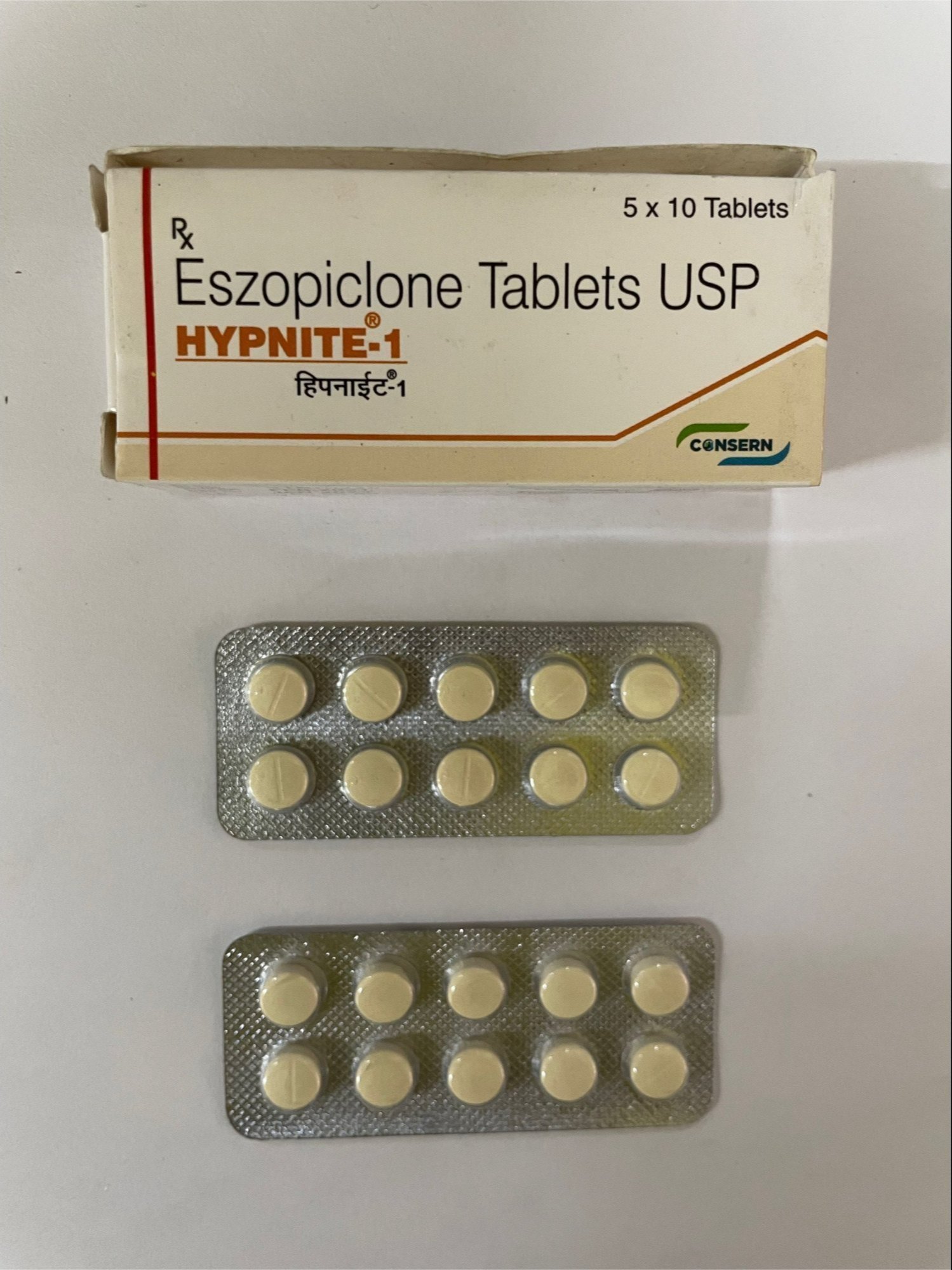
Description
Why every adult now starts on eszopiclone 1mg
When Lunesta first came to market, the label suggested 2 mg as the usual starting dose. That changed on 15 May 2014. The FDA announced that the recommended starting dose would drop to 1 mg for both men and women, because blood levels at higher doses could stay high enough the next morning to dull alertness and driving skills.
The evidence came partly from a study of 91 healthy adults aged 24 to 40. Compared with a placebo, a 3 mg dose caused marked memory and coordination problems 7.5 hours after people took it. The current label adds that impairment could still be meaningful at 11.5 hours. Many volunteers did not feel impaired, which is the worrying part. Feeling fine is not the same as being fine to drive.
So the logic of eszopiclone 1mg is simple. Start low, see whether it is enough, and only move up if your prescriber judges that you need more. A lower dose leaves less drug in your body when your alarm goes off.
The 2019 update added the boxed warning about complex sleep behaviours. On 30 April 2019 the FDA said this warning would apply to eszopiclone, zaleplon (Sonata) and zolpidem (Ambien and related brands). You can read the agency’s 2019 FDA safety notice on complex sleep behaviours for the full background. If you want a wider view of how these three medicines differ, our guide to how Ambien and Sonata compare is a useful companion.
What the tablet strengths look like on the label
The FDA label lists three strengths: 1 mg, 2 mg and 3 mg. The table below summarises the dose rules in plain English. Your prescriber chooses which applies to you.
| Situation | What the label says |
|---|---|
| Most adults, first prescription | Start at 1 mg, taken immediately before bed |
| If 1 mg is not enough | Prescriber may raise it to 2 mg or 3 mg if clinically indicated |
| Highest daily dose for most adults | 3 mg once a night |
| Older (elderly) or debilitated adults | Total dose should not go above 2 mg |
| Severe liver impairment | Total dose should not go above 2 mg |
| Taking a strong CYP3A4 inhibitor | Total dose should not go above 2 mg |
Source: the Lunesta prescribing information on the FDA website. A newer version of the same label is also on DailyMed’s Lunesta label page.
Who often stays on eszopiclone 1mg
For some people, the starting dose is also the long-term dose. Lower is not a sign that treatment is weak. It is often the right fit. Your prescriber may keep you on eszopiclone 1mg, or move up only cautiously, in these situations.
Older adults
The label caps the total dose at 2 mg for elderly or debilitated patients. Eszopiclone also stays in the body longer with age. The half-life is about 6 hours in younger adults and about 9 hours in people 65 and over. That extra time matters for balance, falls and morning grogginess. Our guide to medicine safety for older patients covers the wider fall-risk picture when sedating drugs are involved.
People with severe liver problems
The liver clears eszopiclone. With severe impairment, the drug can build up, so the label sets the same 2 mg ceiling. Mild or moderate liver problems do not carry the same cap in the label, but your prescriber will still weigh them. For background on how liver health shapes medicine choices, see our article on medicines and liver disease.
People taking strong CYP3A4 inhibitors
CYP3A4 is a liver enzyme that breaks eszopiclone down. Some drugs block it hard. In a label study, the antifungal ketoconazole raised eszopiclone levels about 2.2-fold. The label therefore limits the total dose to 2 mg with potent CYP3A4 inhibitors and says a dose reduction is needed. The label does not name a separate starting dose for this group, but because 1 mg is already the standard start, most people begin there anyway. Other azole antifungals, some HIV drugs and some antibiotics can act the same way. Our piece on how fluconazole changes the way other drugs are cleared explains the enzyme idea in more depth.
People already taking other sedating medicines
Opioids, benzodiazepines, some antidepressants and alcohol all add to the drowsiness. The label says a lower dose should be considered in that case. If you take a pain medicine at night, read our guide to combining pain medicines with sleep medications before your first dose, and tell your prescriber about every product you use.
Your first seven nights on eszopiclone 1mg
The first week is about learning how your body responds. It is not about pushing the dose. Use the diary below to note what happens, then bring it to your follow-up. MedlinePlus notes that sleep should start to improve within 7 to 10 days. If it does not, or it gets worse, contact your prescriber. Do not change the dose on your own.
| Night | Focus | What to write down |
|---|---|---|
| Night 1 | Baseline | Time you took the tablet, time lights went out, rough time you fell asleep, planned wake time. Pick a night with no early start the next day. |
| Night 2 | Taste check | Any bitter or metallic taste, and whether it lasted into the morning. |
| Night 3 | Waking pattern | How many times you woke and whether you got back to sleep. Note anything unusual a partner noticed. |
| Night 4 | Morning clarity | How alert you felt 30 and 90 minutes after waking. Any headache or dizziness. |
| Night 5 | Routine check | Whether you kept to the pre-bed checklist below (meal timing, no alcohol, full night in bed). |
| Night 6 | Daytime effect | Mood, focus and energy across the day. Any afternoon sleepiness. |
| Night 7 | Review | Overall: is sleep better, the same or worse than before you started? Questions for your prescriber. |
Keep the diary simple. A notes app or a sheet of paper by the bed is enough. Patterns are more useful than single bad nights. If you have trouble raising sleep concerns, our tips on preparing for a conversation with your doctor about a prescription apply just as well here.
The pre-bed checklist
How you take the tablet matters as much as the dose. The label and the Medication Guide set out a few clear rules. Run through this list every night of the first week until it is a habit.
- Take it immediately before bed. Swallow the tablet just before you get into bed, not earlier in the evening. It works quickly, with peak levels about an hour after a dose.
- Check you have 7 to 8 hours. Only take it if you can stay in bed for a full 7 to 8 hours before you must be active again. If you can’t, skip the dose that night.
- Keep food and the tablet apart. Do not take it with or just after a heavy, high-fat meal. In label data, a high-fat meal lowered the peak level by about 21% and delayed it by about an hour, which can slow sleep onset.
- No alcohol that evening. The label advises against taking eszopiclone after drinking alcohol that evening or before bed. The two together impair coordination more than either alone. Our guide to why alcohol and sedating medicines don’t mix explains the stacking effect.
- One tablet, one night. Never take a second dose in the same night, even if you wake early.
- Clear the path. Put keys away and keep the route to the bathroom free of clutter. These steps lower the risk if you get up while drowsy.
- Wind down. Dim lights, put your phone away and keep the bedroom cool. Medicine works best alongside good sleep habits. See our ideas for drug-free habits that support deeper sleep.
Missed your usual time? MedlinePlus says eszopiclone should only be taken at bedtime. If you went to bed without it and can’t sleep, you may take it only if you can still stay in bed for at least 7 to 8 hours. Never double up.
The morning-after self-check
Next-day impairment was the reason the starting dose changed. Even at 1 mg, take a minute each morning of week one to check yourself before you drive or do anything risky.
- Time check. Did you get a full 7 to 8 hours in bed after the dose? If not, treat yourself as impaired.
- Body check. Are you steady on your feet? Any dizziness when you stand up?
- Head check. Can you follow a conversation or the news without losing the thread? Any fogginess or headache?
- Memory check. Can you recall what you did between taking the tablet and falling asleep? Gaps are a warning sign (see the red-flag box below).
- Decision. If anything feels off, don’t drive. Remember the study finding: people can be impaired without feeling it.
The label is most cautious about driving the day after 3 mg, but it warns that next-day impairment is possible at any dose. For a general look at medicines and the road, our guide to driving safely while taking sedating medicines lays out the legal and practical side.
When a prescriber may consider 2 mg
The label lets the dose rise to 2 mg or 3 mg “if clinically indicated.” That is a decision for your prescriber, made after a review, not something to try at home. Doubling up on 1 mg tablets without instructions is not safe and breaks the terms of your prescription.
A prescriber might talk about a change if your diary shows a pattern like this over a fair trial:
- You follow the checklist every night, yet still take a long time to fall asleep.
- You keep waking and can’t get back to sleep, even with good habits in place.
- You have no morning grogginess on 1 mg, so there seems to be room to adjust.
Equally, they might keep you at 1 mg, review other causes of poor sleep, or suggest non-drug approaches. Sleep problems can be linked to pain, low mood, anxiety, breathing problems at night and other conditions. If anxiety is part of the picture, our overview of common anti-anxiety medicines may help you frame questions. Snoring or gasping at night deserves a check too; our article on sleep apnoea and sedating medicines explains why.
If you and your prescriber do move up, the eszopiclone 2 mg tablet page covers that stage. The eszopiclone 3 mg strength is the label maximum and carries the strongest next-day driving caution.
First-week side effects of eszopiclone 1mg and how to handle them
Most first-week side effects are mild. The label’s main side-effect table comes from a six-week study of 2 mg and 3 mg, so it does not give exact rates for 1 mg. What it does show is that the most common problems rise with dose. For example, an unpleasant taste affected about 3% on placebo, 17% on 2 mg and 34% on 3 mg. It is reasonable to expect fewer problems at the starting dose, but you can still get them.
| Side effect | What it feels like | Practical tips |
|---|---|---|
| Unpleasant taste | A bitter or metallic taste, sometimes still there in the morning | Brush teeth and rinse before the dose. Keep water by the bed. Sugar-free mints or gum in the morning can help. Tell your pharmacist if it bothers you. |
| Headache | Dull ache on waking | Note it in your diary. Ask your pharmacist which pain reliever is safe with your other medicines. |
| Dry mouth | Sticky or dry mouth overnight | Sip water, avoid alcohol-based mouthwash at night. See our tips on easing medicine-related dry mouth. |
| Dizziness | Light-headed when you stand | Sit on the edge of the bed for a moment before you get up. Use a night light. Our guide to managing dizziness from medicines has more ideas. |
| Daytime drowsiness | Heavy or slow in the morning | Don’t drive until you feel fully awake. Report it at your review, as it affects dose decisions. |
Also tell your prescriber about new anxiety, unusual dreams, or changes in memory. For wider context on medicines that affect recall, see our piece on memory problems linked to medication.
Allergic reactions
Rarely, eszopiclone can cause a serious allergic reaction, including swelling of the face, lips, tongue or throat, or trouble breathing or swallowing. This is an emergency. Call 911.
Red flags: stop and get help
- Complex sleep behaviours. Driving, cooking, eating, making calls, walking out of the house or other activities while not fully awake, often with no memory afterwards. Stop eszopiclone and call your prescriber right away. These can happen even after a single dose.
- Mood changes. New or worse depression, aggression, hallucinations, or thoughts of harming yourself. Call your prescriber promptly. If you are in crisis, call or text 988 (the 988 Suicide & Crisis Lifeline, open 24/7).
- Possible overdose. Extreme drowsiness or someone who can’t be woken. Call 911 if a person has collapsed, has trouble breathing, has a seizure or can’t be roused. For advice, call Poison Help on 1-800-222-1222.
Our article on recognising medicine-related depression describes early mood changes worth acting on.
Interactions to flag before your first dose
Give your pharmacist a full list of what you take, including over-the-counter sleep aids and supplements. The label highlights these groups:
- Alcohol. Adds to impairment. Avoid it on any night you take eszopiclone.
- Other central nervous system depressants. Opioid pain medicines, benzodiazepines, tricyclic antidepressants and other sleep medicines. Effects add up. For one familiar example, see our comparison of clonazepam and alprazolam.
- Strong CYP3A4 inhibitors. Ketoconazole and similar drugs raise eszopiclone levels. The dose should not exceed 2 mg.
- CYP3A4 inducers. Rifampicin (rifampin) is expected to lower levels sharply, so eszopiclone may work less well.
- Olanzapine. The two together reduced performance on a mental-speed test in a label study.
- Sedating antihistamines. Many night-time cold and allergy products contain diphenhydramine. Our guide to Benadryl and other sedating medicines explains why stacking them is risky.
- Melatonin and herbal sleep aids. Ask before adding these. Our piece on melatonin alongside prescription medicines covers the general questions to ask.
Eszopiclone 1mg vs Ambien 5 mg vs zopiclone 3.75 mg
All three are “Z-drugs”, a group of non-benzodiazepine sleep medicines. Each has a lower dose that plays a “gentle start” role. Eszopiclone is closely related to zopiclone; it is the active S-form of that molecule. Here is how the three low doses compare.
| Feature | Eszopiclone 1 mg | Ambien (zolpidem) 5 mg | Zopiclone 3.75 mg |
|---|---|---|---|
| Role of the low dose | FDA-recommended starting dose for all adults | FDA-recommended dose for women; prescribers should consider it for men | UK starting dose for older adults and people with liver, kidney or chronic breathing problems |
| Approx. half-life | About 6 hours (about 9 in over-65s) | Short (around 2–3 hours) | About 5 hours (about 7 in older people) |
| Main availability | US (Lunesta and generics) | US and many other countries | UK, Europe and elsewhere; not FDA-approved in the US |
| US controlled status | Schedule IV | Schedule IV | Not marketed in the US |
| Typical taste issue | Bitter or metallic taste is common | Not a standout complaint | Bitter or metallic taste is common |
| Boxed warning for complex sleep behaviours (US) | Yes | Yes | Not applicable in the US |
Sources: the FDA’s Q&A on lower zolpidem doses, the UK zopiclone 3.75 mg product information on the eMC, and the DEA’s drug scheduling overview.
The key difference for daily life is the half-life. Zolpidem leaves the body faster, so it mainly helps people fall asleep. Eszopiclone lasts longer and can also help people who wake through the night, at the cost of more potential carry-over into the morning. Zopiclone in the UK is meant for short courses, usually no longer than four weeks. For deeper head-to-heads, read our Ambien vs Lunesta comparison and our zopiclone vs Ambien guide. UK readers can also see the zopiclone 7.5 mg tablet page.
Storing and disposing of your tablets
The label says to store eszopiclone at room temperature, around 25°C (77°F), with short spells between 15°C and 30°C (59°F to 86°F) allowed. MedlinePlus adds a few practical points:
- Keep tablets in the original, tightly closed container.
- Store away from heat and moisture, so not in the bathroom.
- Keep them out of sight and reach of children, and away from visitors. A lockable box is sensible for any controlled medicine. Our tips on locking away controlled medicines at home apply here too.
- Count your tablets now and then. Missing tablets can be a sign someone else is taking them.
To get rid of unused tablets, a drug take-back site is the best choice. Many pharmacies have drop-off boxes. The FDA’s guide on where and how to dispose of unused medicines explains the household-trash method for when no take-back option exists. Don’t flush eszopiclone. Our article on safe disposal of controlled medicines walks through the same steps.
Eszopiclone 1mg: questions people ask in week one
Is 1 mg of eszopiclone enough to sleep?
For many adults, yes. The FDA chose 1 mg as the start because it lowers next-day risk while still helping a good share of people. If sleep has not improved after 7 to 10 days, talk to your prescriber. They may adjust the dose or look for other causes.
How long does eszopiclone 1mg take to work?
It acts quickly. Blood levels peak about one hour after a dose, which is why the label says to take it right before bed. A heavy, high-fat meal can delay this.
How long does eszopiclone stay in your system?
The half-life is about 6 hours in adults and about 9 hours in people 65 and over. That is why you need a full 7 to 8 hours in bed after each dose. Drug-test detection windows are a different question; ask your pharmacist if this matters for work.
Why does eszopiclone leave a bitter taste?
An unpleasant taste is one of the most common side effects, and it becomes more frequent at higher doses. Brushing before bed, keeping water nearby and using sugar-free mints in the morning can help. Report it if it stops you taking the medicine as prescribed.
Can I drive the morning after taking eszopiclone 1mg?
Only once you are fully awake and had 7 to 8 hours in bed. Next-day impairment is possible at any dose, and you may not notice it. Use the morning-after self-check above and skip driving if anything feels off.
Is eszopiclone a controlled substance?
Yes. In the US it is Schedule IV. You need a valid prescription, and refills are limited by federal and state rules.
Can I take eszopiclone 1mg every night?
Take it only as your prescriber directs. Don’t stop suddenly after regular use without advice, as withdrawal-type symptoms such as anxiety, unusual dreams, nausea or shakiness can occur. The label notes some rebound insomnia on the first night or two after stopping higher doses.
What should I avoid while taking eszopiclone?
Alcohol that evening, other sedating medicines unless your prescriber approves, heavy meals just before the dose, and any risky activity until you are fully awake. Never take more than prescribed.
Can I take it during pregnancy or while breastfeeding?
The label says there is not enough human data to judge the risk in pregnancy, and it is unknown whether eszopiclone passes into breast milk. Talk to your prescriber before using it if you are pregnant, planning a pregnancy or breastfeeding.
Is eszopiclone approved for children?
No. Safety and effectiveness have not been shown in children, and a study in children with ADHD-related insomnia did not show benefit.
Unsure whether an online pharmacy is legitimate? Our page on how we verify prescriptions and operate explains our process. A licensed pharmacy will always ask for a valid prescription for this medicine.
Key takeaways
- Eszopiclone 1mg has been the FDA-recommended starting dose for adults since May 2014, after studies showed next-day impairment at higher doses.
- Older adults, people with severe liver impairment and people on strong CYP3A4 inhibitors should not go above 2 mg in total.
- Take it immediately before bed, only with 7 to 8 hours to spare, away from a heavy or high-fat meal, and never with alcohol.
- Use your first seven nights to observe and record, not to adjust. Dose changes are your prescriber’s call.
- A bitter taste, headache, dry mouth and dizziness are the common early side effects.
- Stop and call your prescriber at once after any complex sleep behaviour. Call 911 for emergencies, 988 for a mental health crisis, and Poison Help on 1-800-222-1222 for overdose advice.
- Eszopiclone is a Schedule IV, prescription-only medicine. Store it securely and dispose of leftovers through a take-back site.
This description is for information only and does not replace advice from your doctor or pharmacist. Use only as prescribed.
Eszopiclone 1mg is where almost every adult now begins treatment with this prescription sleep medicine. It is the lowest tablet strength of eszopiclone (the generic name for Lunesta), and since 2014 it has been the dose the FDA label tells prescribers to start with. This page is a first-week coach: what the starting dose is for, who usually stays on it, how to set up your nights, what to notice in the mornings, and which warning signs mean you stop and call for help.
Prescription only · Schedule IV controlled substance · Boxed warning
Eszopiclone needs a valid prescription from a licensed prescriber. In the US it is a Schedule IV drug, which means federal rules limit refills and track how it is dispensed. The label carries a boxed warning: complex sleep behaviours such as sleepwalking and sleep-driving can happen while you are not fully awake, and some have led to serious injury or death. If one happens to you, stop the medicine and contact your prescriber. Do not take eszopiclone if you have ever had a complex sleep behaviour after taking it.


Reviews
There are no reviews yet.