
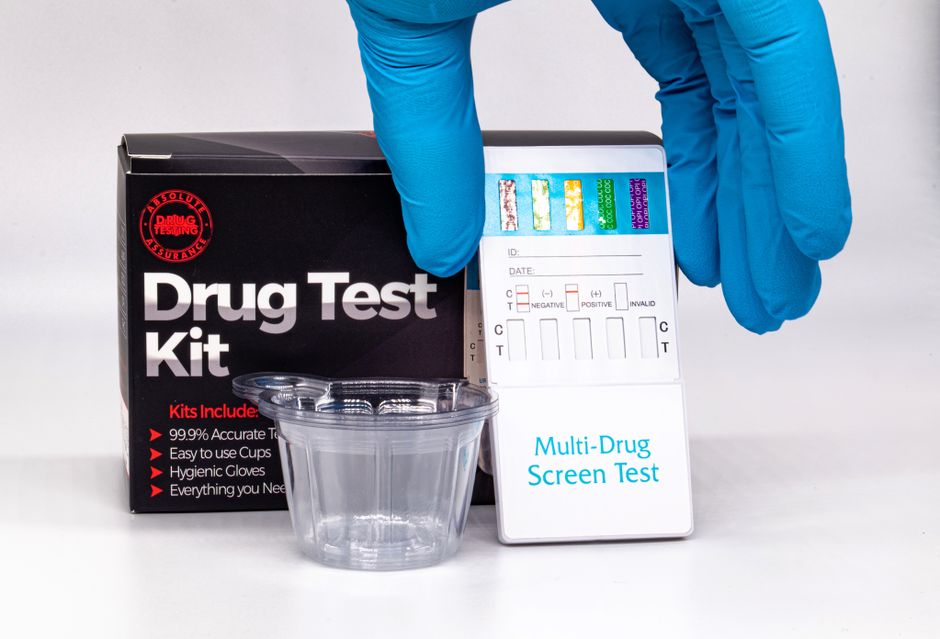
If you take oxycodone, whether by prescription or otherwise, and you know a saliva drug test is coming up, you’re probably wondering exactly how long the drug lingers in your oral fluid. Saliva testing has become one of the most popular screening methods for employers, probation officers, and even some clinics because it’s fast, noninvasive, and hard to cheat. In this guide, we’ll break down exactly how long oxycodone stays in saliva, what factors speed up or slow down clearance, and how saliva testing compares to urine, blood, and hair testing.
By the end, you’ll understand the science behind oral fluid drug testing, the average oxycodone saliva test detection window, and what you can realistically expect if you’re facing one.
How Long Does Oxycodone Stay in Saliva?
For most people, oxycodone shows up in saliva within 15 to 30 minutes of taking a dose, and it typically stays detectable for about 1 to 4 days after the last dose. This is shorter than the detection window for urine but comparable to, or sometimes slightly longer than, blood testing.
The exact number depends heavily on individual factors, which we’ll cover in detail below. But as a general rule of thumb:
- Single low dose (5-10 mg immediate-release): detectable for roughly 24 to 36 hours
- Moderate recurring use: detectable for about 2 to 3 days
- Heavy or long-term use, or extended-release formulations like OxyContin: detectable for up to 4 days, occasionally longer
These are averages, not guarantees. Some people clear oxycodone from their saliva faster, while others, especially those with slower metabolisms or liver issues, may test positive for a bit longer than the typical window.
Why Saliva Testing Works the Way It Does
Saliva, also called oral fluid, isn’t just a passive fluid sitting in your mouth. It’s produced by salivary glands that filter substances directly from your bloodstream. When oxycodone enters your blood after you swallow a pill, tiny amounts diffuse into your saliva glands and get secreted into your mouth.
This means saliva drug tests are essentially measuring what’s currently circulating in your blood, just through a more convenient collection method. That’s part of why saliva and blood detection windows are fairly similar, while urine, which reflects a longer accumulation of metabolites filtered by the kidneys, tends to show a longer detection window.
The Role of Oxycodone’s Half-Life
Oxycodone has an average elimination half-life of about 3.5 to 5.5 hours in healthy adults, though this can stretch longer in people with liver or kidney impairment. Half-life refers to the time it takes for your body to eliminate half of the drug from your bloodstream.
As a general pharmacological rule, it takes about 4 to 5 half-lives for a drug to be almost completely cleared from the blood. For oxycodone, that works out to roughly 18 to 30 hours for the drug itself to drop below detectable levels in blood and saliva under normal circumstances. However, drug testing labs are sensitive enough to detect trace amounts beyond that window, especially with sustained or repeated use, which is why the real-world detection window in saliva often extends to 3 or 4 days.
If you want to understand how oxycodone behaves in the body more broadly, including how it clears from blood and urine, our guide on how long oxycodone stays in your system covers the full picture.
Immediate-Release vs Extended-Release Oxycodone in Saliva
Not all oxycodone products behave the same way in the body, and this directly affects saliva detection times.
Immediate-Release Oxycodone (Roxicodone, generic oxycodone)
Immediate-release formulations hit peak blood concentration quickly, usually within 1 hour, and are metabolized relatively fast. Saliva concentrations tend to peak early and decline steadily, often becoming undetectable within 24 to 48 hours after a single dose.
Extended-Release Oxycodone (OxyContin)
Extended-release formulas are designed to release the drug slowly over 12 hours, which means the drug stays present in the bloodstream, and therefore in saliva, for a longer stretch of time. People taking OxyContin regularly may test positive in saliva for closer to 3 to 4 days after their last dose. For more detail on this specific formulation, see our article on how long OxyContin stays in your system.
Factors That Affect How Long Oxycodone Stays in Saliva
No two people clear oxycodone at exactly the same rate. Several variables influence how quickly the drug disappears from oral fluid.
1. Dosage and Frequency of Use
Higher doses and more frequent use lead to drug accumulation in the body’s tissues and bloodstream, which extends the time it takes for saliva concentrations to drop below a lab’s cutoff level. Someone who takes a single 5 mg dose will clear the drug from saliva much faster than someone taking 30 mg three times a day for weeks.
2. Metabolic Rate
Oxycodone is metabolized primarily in the liver by the CYP3A4 and CYP2D6 enzyme pathways. People with naturally fast metabolisms, often younger individuals with higher activity levels, tend to clear the drug more quickly. Slower metabolisms, common in older adults, lead to longer detection windows.
3. Liver and Kidney Function
Since the liver processes oxycodone into metabolites like noroxycodone and oxymorphone, any impairment in liver function can dramatically slow clearance. Kidney function also matters because metabolites are eventually excreted through urine; if kidney function is reduced, drug byproducts can recirculate and linger longer in the bloodstream and saliva.
4. Body Composition and Hydration
Oxycodone is not heavily fat-soluble compared to some other drugs, but hydration status still affects blood concentration and, by extension, saliva concentration. Dehydration can temporarily concentrate the drug in bodily fluids, while proper hydration supports normal kidney filtration. That said, drinking excessive water won’t flush oxycodone out of your saliva instantly; our article on whether water helps clear oxycodone from your system explains why this common myth doesn’t hold up scientifically.
5. Oral pH and Saliva Production
Interestingly, the pH of your saliva can slightly influence how much oxycodone diffuses into oral fluid. More acidic saliva can trap slightly more of certain basic compounds like oxycodone. Additionally, people who produce less saliva, due to dehydration, certain medications, or dry mouth conditions, may show more concentrated drug levels because there’s less fluid diluting the sample.
6. Method of Administration
Oral ingestion is the most common route for oxycodone, but when pills are crushed and snorted or otherwise misused, absorption patterns change. Non-oral routes often produce quicker peak concentrations followed by a faster decline in saliva, though this varies by individual and formulation.
7. Recent Food Intake and Oral Hygiene
Eating, drinking, and brushing your teeth right before a saliva test can sometimes reduce detectable drug residue in the mouth, particularly if the test is administered very soon after the last dose. However, this doesn’t eliminate the drug that has diffused into saliva from the bloodstream through the salivary glands, so it’s not a reliable way to beat a test.
Saliva Drug Test Cutoff Levels for Oxycodone
Drug tests don’t detect any trace amount of a substance; they use cutoff levels, which are minimum concentration thresholds a sample must meet before it’s reported as positive. This prevents false positives from incidental exposure or trace residue.
For oxycodone specifically, saliva test cutoff levels commonly used by labs range from 10 to 30 ng/mL, depending on the testing panel and manufacturer. If a saliva sample’s oxycodone concentration falls below that threshold, the test will report a negative result even though a small amount of the drug may technically still be present.
This is one reason detection windows are described as ranges rather than exact numbers. Two people who took the same dose at the same time could get different results if one metabolizes the drug slightly faster and drops below the cutoff sooner. For a deeper look at how these thresholds work across different testing types, check out our full breakdown of oxycodone drug test cutoff levels.
How Saliva Testing Compares to Other Drug Testing Methods
Saliva isn’t the only fluid or tissue used to test for oxycodone. Each method has its own detection window, invasiveness, and typical use case.
Saliva vs Urine Testing
Urine testing remains the most common method for workplace and legal drug screening because it offers a longer detection window and is relatively cheap to administer. Oxycodone and its metabolites can be detected in urine for roughly 2 to 4 days after last use, sometimes longer in chronic users. That’s noticeably longer than the average saliva detection window. For a full comparison of these two methods, our guide on urine testing vs blood testing for oxycodone explains which method typically detects more and why. You can also read our dedicated article on how long oxycodone stays in urine for a more detailed timeline.
Saliva vs Blood Testing
Blood tests offer the shortest detection window of the common methods, typically 12 to 24 hours, because blood concentration drops quickly as the drug is metabolized and distributed to tissues. Saliva testing tracks closely with blood levels since both reflect current systemic drug presence, but saliva can sometimes detect the drug slightly longer due to residual accumulation in the salivary glands. Our article on blood test detection times for oxycodone goes into more detail on this shorter window.
Saliva vs Hair Testing
Hair testing is in a completely different category. Because drugs become embedded in the hair shaft as it grows, hair tests can detect oxycodone use going back as far as 90 days. This makes hair testing far more useful for identifying long-term patterns of use rather than recent, single-instance use, which is what saliva testing is best suited for.
Quick Comparison Table
- Saliva: 1 to 4 days
- Blood: 12 to 24 hours
- Urine: 2 to 4 days (longer with chronic use)
- Hair: up to 90 days
Why Employers and Agencies Use Saliva Testing
Saliva drug testing has grown in popularity for several practical reasons:
- Non-invasive collection: No need for a bathroom, private stall, or trained phlebotomist.
- Direct observation: Since the sample is collected right from the mouth under supervision, there’s minimal opportunity for tampering or substitution.
- Faster turnaround: Many saliva tests provide results on-site within minutes for a preliminary screen.
- Detects recent use: Employers concerned about someone being impaired on the job right now, rather than days ago, often prefer saliva tests because they more closely reflect current impairment than urine tests do.
If you’re prescribed oxycodone and facing a workplace drug screening, it’s worth understanding your rights and how to handle disclosure properly. Our guide on prescription oxycodone and workplace drug tests walks through what employees need to know before testing day.
How Accurate Are Saliva Tests for Oxycodone?
Saliva tests are generally reliable when administered and processed correctly, but accuracy depends on several factors including the quality of the collection device, timing relative to the last dose, and whether a confirmatory lab test is used.
Initial Screening vs Confirmatory Testing
Most saliva drug tests use a two-step process. The first step is an immunoassay screening test, which gives a rapid preliminary result but can occasionally produce false positives due to cross-reactivity with other substances. If the initial screen is positive, a confirmatory test using gas chromatography-mass spectrometry (GC-MS) or liquid chromatography-tandem mass spectrometry (LC-MS/MS) is typically performed. These confirmatory methods are highly specific and rarely produce false positives.
Window of Detection Accuracy
Because saliva reflects current blood drug levels so closely, it’s considered one of the more accurate methods for detecting very recent use, generally within the past few hours to a couple of days. However, it’s not ideal for detecting use from several days prior, which is where urine or hair testing become more useful.
Can Oxycodone Cause a False Positive on a Saliva Test?
False positives are possible but uncommon with saliva testing, especially when confirmatory testing is used. Certain other opioids or medications can occasionally trigger cross-reactivity on an initial immunoassay screen. According to the Mayo Clinic, cross-reactivity between structurally similar opioid compounds is a recognized limitation of rapid immunoassay drug screens, which is exactly why confirmatory testing exists.
If you’ve taken oxycodone as prescribed and are worried about test results being misinterpreted, it helps to have documentation from your prescribing doctor on hand. Our detailed article on whether oxycodone can cause a false positive drug test covers this topic in depth, including what substances are most likely to cause cross-reactivity.
Can a Saliva Test Miss Oxycodone Use?
Yes, false negatives can happen, particularly if the test is administered too long after the last dose, if the dose was very low, or if the collection technique wasn’t performed correctly. Standard opiate immunoassay panels are also sometimes not sensitive enough to detect semisynthetic opioids like oxycodone unless the panel is specifically designed to include it.
This is a surprisingly common issue. Many basic opiate panels are calibrated to detect morphine and codeine but miss oxycodone entirely unless an expanded opioid panel is used. If you’ve had a negative result despite recent use, our article on why a drug test might not detect oxycodone outlines nine possible explanations, including panel type, timing, and dosage.
Can You Speed Up Oxycodone Clearance From Saliva?
There’s no scientifically proven shortcut to clear oxycodone from your saliva faster than your body’s natural metabolism allows. Detox drinks, excessive water consumption, and home remedies marketed online don’t change how quickly your liver processes the drug or how quickly it clears from your bloodstream and saliva glands.
That said, a few evidence-based habits support normal metabolic function:
- Staying adequately hydrated supports healthy kidney and liver function, though it won’t dramatically speed clearance.
- Eating regular, balanced meals helps support liver enzyme activity involved in drug metabolism.
- Avoiding additional doses prevents the drug from re-accumulating in your system.
- Getting adequate sleep and rest supports overall organ function, including the liver’s metabolic processes.
If you’re curious why water specifically doesn’t work as a flushing agent the way many people assume, our article on does water help clear oxycodone from your system breaks down the physiology behind that myth.
What Happens If You’re Dependent on Oxycodone and Facing a Test
If you’re taking oxycodone regularly, whether prescribed or not, and you’re concerned about an upcoming drug test, it’s worth considering the bigger picture. Regular opioid use that leads to physical dependence is a medical issue, not simply a testing inconvenience. If you’ve noticed you need oxycodone just to feel normal, or you experience withdrawal symptoms between doses, that’s worth discussing with a healthcare provider.
Withdrawal from oxycodone can be uncomfortable and, in some cases, medically significant. If you’re thinking about reducing or stopping use, understanding what to expect can make the process safer and more manageable. Our guides on the oxycodone withdrawal timeline day by day and early signs of oxycodone withdrawal walk through what the first days and weeks typically look like.
Saliva Testing in Medical and Treatment Settings
Beyond employment screening, saliva tests are increasingly used in addiction treatment programs, pain management clinics, and probation monitoring. In pain management, doctors sometimes use saliva testing (alongside urine testing) to confirm patients are taking their prescribed opioid medication as directed and not diverting it or combining it with other substances.
According to Healthline, oral fluid testing has grown in clinical popularity because it’s harder to adulterate than urine and provides a closer real-time picture of drug use, which is particularly useful for monitoring compliance in chronic pain patients on long-term opioid therapy.
Tips If You Have a Saliva Test Coming Up
If you’re prescribed oxycodone and know you have a saliva test scheduled, here’s what actually matters:
- Disclose your prescription in advance to whoever is administering the test, along with documentation if required.
- Avoid taking extra or unscheduled doses before the test, since this only raises drug concentration and extends detectability.
- Don’t rely on mouthwash or gum to mask results. These don’t remove oxycodone that has already diffused into your saliva from your bloodstream.
- Be honest about timing if asked when you last took a dose, since this can help explain results in context, especially in medical or legal settings.
Frequently Asked Questions
How long after taking oxycodone will it show up in saliva?
Oxycodone typically appears in saliva within 15 to 30 minutes of ingestion, since it diffuses into oral fluid directly from the bloodstream as the drug is absorbed.
Does a saliva test detect oxycodone the same as other opioids?
Not always. Basic opiate saliva panels are sometimes calibrated for morphine and codeine and may miss oxycodone unless the panel specifically screens for semisynthetic opioids. Make sure the testing panel used is designed to detect oxycodone specifically.
Can secondhand exposure cause a positive oxycodone saliva test?
This is extremely unlikely. Unlike some environmental exposure concerns with other substances, oxycodone requires direct ingestion or absorption to reach detectable levels in blood and saliva, so casual contact won’t trigger a positive result.
Is saliva testing more accurate than urine testing for oxycodone?
Accuracy depends on what you’re measuring for. Saliva testing is generally better for detecting very recent use (within the past 1 to 2 days), while urine testing offers a longer detection window and is more established for broader screening purposes.
How long does OxyContin specifically stay detectable in saliva?
Because OxyContin is an extended-release formulation, it tends to stay detectable in saliva slightly longer than immediate-release oxycodone, often up to 3 to 4 days with regular use, compared to roughly 1 to 2 days for a single immediate-release dose.
Final Thoughts
Oxycodone typically stays detectable in saliva for 1 to 4 days, depending on dosage, frequency of use, formulation type, and individual metabolic factors. Saliva testing offers a convenient, hard-to-tamper-with way to detect recent opioid use, making it a popular choice for workplaces, treatment programs, and legal monitoring situations.
If you’re prescribed oxycodone, understanding these detection windows can help you navigate testing situations with confidence and avoid unnecessary confusion. And if you’re concerned about dependency or considering stopping use, reaching out to a healthcare provider is always the safest first step toward managing your medication use responsibly.