
Description
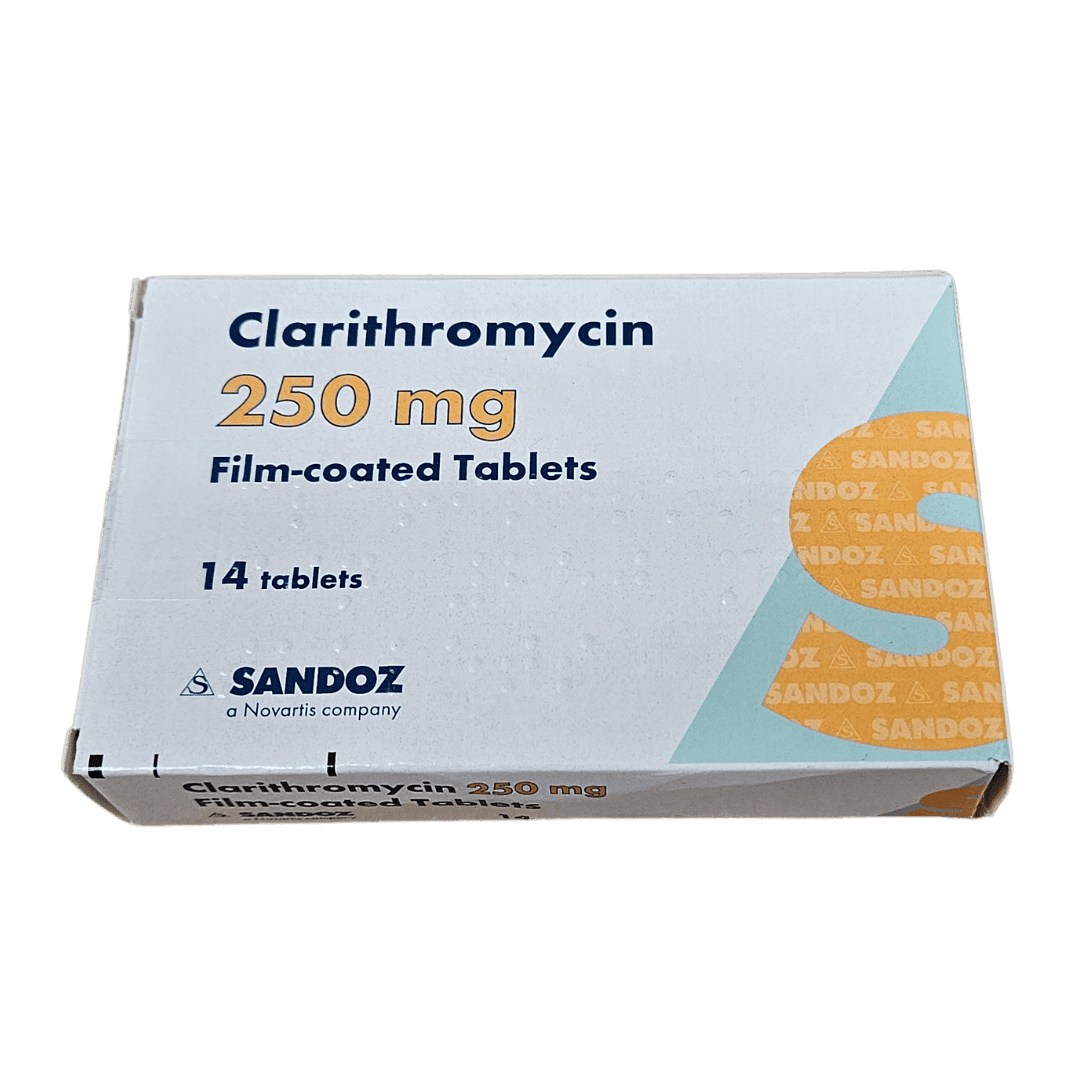
Clarithromycin 250mg is a film-coated macrolide antibiotic tablet. It treats certain bacterial infections of the chest, sinuses, throat and skin, and it forms part of some regimens for H. pylori and Mycobacterium avium complex (MAC). The medicine itself is well studied and usually well tolerated. What makes it different from many antibiotics is what it does to other medicines. It strongly blocks the liver enzyme CYP3A4, so a routine statin, gout tablet or sleeping pill can build up to unsafe levels. This page is written like a pharmacist’s briefing: what the label covers, which medicines in your cabinet need a second look, and what to ask before the first dose.
Where clarithromycin 250mg fits on the label
US labels for immediate-release clarithromycin list two tablet strengths, 250 mg and 500 mg. The FDA-approved prescribing information on DailyMed lists these adult uses for mild to moderate infections caused by susceptible bacteria:
- Chest infections: acute bacterial flare-ups of chronic bronchitis and community-acquired pneumonia.
- Sinus infection: acute maxillary sinusitis.
- Throat infection: strep pharyngitis or tonsillitis, as an alternative when first-line treatment cannot be used.
- Skin infections: uncomplicated skin and skin-structure infections.
- H. pylori: as one part of combination therapy to clear the bacterium and lower the chance of a duodenal ulcer coming back.
- MAC: treatment and prevention of disseminated Mycobacterium avium complex, usually in people with advanced HIV, always alongside other drugs.
Which infections use the 250 mg strength
The 250 mg tablet is the strength the label uses for several adult infections. In the dosing table, 250 mg every 12 hours appears for strep throat (10 days), uncomplicated skin infections (7 to 14 days), most community-acquired pneumonia (7 to 14 days) and some bronchitis flare-ups (7 to 14 days). Sinusitis, H. pylori regimens and MAC use 500 mg doses. Your prescriber may also use 250 mg tablets to build a reduced dose when kidney function is low.
Those label figures are a reference point, not instructions. Your prescriber decides the dose and the number of days. The MedlinePlus clarithromycin guide notes that the regular tablets can be taken with or without food. It also lists uses outside the label that doctors sometimes choose, such as whooping cough and Legionnaires’ disease.
How it compares with its closest relatives
Clarithromycin belongs to the same family as erythromycin and azithromycin. Azithromycin is dosed once a day for shorter courses and has far fewer enzyme interactions. If you want to compare, see our page on azithromycin 500 mg tablets. For many throat and chest infections, a penicillin is the usual first choice. Clarithromycin is often what prescribers reach for when a person has a penicillin allergy. Our amoxicillin 500 mg product page covers that first-line option.
Before the first tablet: the medicine-cabinet screen for clarithromycin 250mg
Clarithromycin is a strong inhibitor of CYP3A4. It also blocks P-glycoprotein, a pump that pushes some drugs out of cells. Many common medicines depend on these routes to be cleared. When the route is blocked, their blood levels can rise sharply within a few days. If you want the background, our plain-English guide to how the liver’s CYP enzymes clear medicines walks through the idea using a different drug.
Bring every medicine to the conversation: prescriptions, over-the-counter tablets, herbal products and anything you take only now and then. A good starting point is a written list of the medicines you take, which your pharmacist can check line by line. The table below groups the interactions the label flags most strongly. It is a screening tool, not a complete list.
| Medicine in your cabinet | Risk level (per label) | What usually happens | What to ask |
|---|---|---|---|
| Simvastatin, lovastatin | Contraindicated | Statin levels climb; risk of muscle breakdown (rhabdomyolysis) | “Should I pause my statin for the course, or use a different antibiotic?” |
| Atorvastatin, pravastatin | Use with dose limits | Higher statin exposure; label caps atorvastatin at 20 mg and pravastatin at 40 mg a day during co-use | “Is my statin dose under the limit, or should I hold it?” |
| Colchicine (gout, pericarditis) | Contraindicated with kidney or liver impairment; dose cut otherwise | Colchicine toxicity, which can be life-threatening | “Do my kidney and liver results allow this pairing at all?” |
| Ergotamine, dihydroergotamine (migraine) | Contraindicated | Ergot toxicity: severe blood-vessel spasm and poor blood flow to limbs | “Which migraine medicine is safe during the course?” |
| Pimozide, cisapride | Contraindicated | Dangerous heart rhythm problems | “Is there any medicine here that lengthens the QT interval?” |
| Lomitapide | Contraindicated | Large rises in liver enzymes | “Do I need a different antibiotic?” |
| Midazolam, triazolam, alprazolam | Caution; dose change may be needed | Deeper, longer sedation | “Should my sleep or anxiety medicine change this week?” |
| Warfarin and other oral anticoagulants | Monitor closely | INR rises; risk of serious bleeding | “When should my INR be checked?” |
| Amlodipine, diltiazem, verapamil, nifedipine | Monitor | Low blood pressure and kidney injury, mainly in people over 65 | “Should I check my blood pressure at home?” |
| Digoxin | Monitor | Digoxin levels rise, with a risk of toxicity | “Do I need a digoxin level?” |
| QT-prolonging drugs (class IA or III antiarrhythmics, some antipsychotics) | Avoid where possible | Added QT lengthening; risk of torsades de pointes | “Do I need an ECG first?” |
| Sulfonylureas, insulin | Monitor | Low blood sugar | “How often should I test my glucose?” |
| Sildenafil, tadalafil, vardenafil | Dose reduction may be needed | Higher exposure; more headache, flushing, low blood pressure | “Should I use a lower dose or wait?” |
| Opioids cleared by CYP3A4 (for example oxycodone, fentanyl) | Monitor | Stronger, longer opioid effect; slowed breathing | “Does my pain medicine need watching or a dose change?” |
| Rifampin, rifabutin, efavirenz, nevirapine, St John’s wort | Consider another antibiotic | Clarithromycin levels fall, so it may not work | “Will this antibiotic still be effective for me?” |
Statins: the interaction pharmacists catch most often
Simvastatin and lovastatin are cleared almost entirely through CYP3A4. With clarithromycin on board, their levels can rise many times over, and that is what drives the muscle-damage risk. The label treats them as a hard stop. Often the simplest fix is for the prescriber to have you pause the statin for the short antibiotic course. Stopping a statin for one or two weeks is generally low risk, but only do it on their advice. Report any unexplained muscle pain, weakness or dark urine straight away. Our page on managing cholesterol medicines alongside other prescriptions explains why statin choice matters when new drugs are added.
Sedatives and sleep medicines
Triazolam and oral midazolam can cause deep, long-lasting sedation when combined with clarithromycin. Alprazolam may also need a dose change. Lorazepam and temazepam are not expected to interact in a meaningful way, because they are cleared by a different route. The general risks of stacking sedating drugs are covered in our guide to combining sleep medications with other sedatives. For a side-by-side look at two common benzodiazepines, see how clonazepam and alprazolam differ.
Pain medicines and the opioid question
Oxycodone and fentanyl are cleared partly by CYP3A4. A strong inhibitor such as clarithromycin can push their levels up and make drowsiness or slowed breathing more likely. Our article on taking antibiotics alongside opioid pain relief explains which antibiotic classes matter most. The same enzyme story explains the warning in our guide to azole antifungal interactions. If you take any opioid, tell the prescriber before starting clarithromycin. Call 911 if someone is very hard to wake or breathing slowly.
Migraine, erectile dysfunction and diabetes medicines
Ergot-based migraine treatments are contraindicated, so check with your pharmacist before using any migraine medicine during the course. Our guide to migraine treatment and medicine safety covers the wider picture. PDE5 inhibitors such as sildenafil and tadalafil reach higher levels with clarithromycin. The label suggests the prescriber consider a lower dose, and our comparison of Cialis and Viagra explains how these drugs differ. People on insulin or sulfonylureas have had low blood sugar during clarithromycin treatment, so test more often. Our page on diabetes and adding new prescriptions has practical tips.
A broader look at how pharmacists screen combinations is in our drug interaction overview. If you take a medicine by mistake that is on the contraindicated list, call Poison Help on 1-800-222-1222 (US, free and confidential). The HRSA Poison Help site explains how the line works.
Heart rhythm: why clarithromycin 250mg gets an ECG question
Like other macrolides, clarithromycin can lengthen the QT interval, the part of the heartbeat when the heart muscle recharges. A long QT can occasionally trigger torsades de pointes, a dangerous rhythm. The label says to avoid clarithromycin in people with:
- a known long QT interval or a history of ventricular arrhythmia;
- low potassium or low magnesium that has not been corrected;
- a clinically significant slow heart rate;
- treatment with class IA (such as quinidine) or class III (such as amiodarone or sotalol) antiarrhythmics, or other QT-prolonging drugs.
Older adults may be more sensitive to this effect. If you have had fainting spells, palpitations or a family history of sudden cardiac death, mention it. Your prescriber may want an ECG or blood salts checked first. Our article on how medicines can change heart rate and rhythm explains what palpitations can mean.
The coronary heart disease warning
In 2018 the FDA reviewed ten-year follow-up data from the CLARICOR trial. People with coronary heart disease who had taken a two-week course of clarithromycin had more deaths over the following years than those given placebo. The cause is unclear and the evidence is not conclusive. The FDA drug safety communication asks prescribers to weigh other antibiotics for people with heart disease, even for short courses.
If you have heart disease, say so. Do not stop your heart medicines on your own. Call 911 for chest pain, sudden breathlessness, weakness on one side of the body or slurred speech.
H. pylori triple therapy, and why it is changing
H. pylori is a stomach bacterium that causes most peptic ulcers. For years the standard first treatment was “triple therapy”: a proton pump inhibitor (PPI) plus clarithromycin plus amoxicillin, taken twice daily for 10 to 14 days. On the US label, the H. pylori regimens use clarithromycin 500 mg doses, not 250 mg. Even so, people searching for clarithromycin 250mg often want to understand this treatment, so here is the current picture.
Resistance has moved the goalposts
Clarithromycin resistance in H. pylori has risen steadily. A 2022 study in the American Journal of Gastroenterology tested isolates from clinical-trial patients across the US and Europe. It found clarithromycin resistance above 15% in every US region tested, with the highest rates in the Southeast. Guidelines treat 15% as the point where clarithromycin should not be used without testing first. When the strain is resistant, triple therapy works only about a third of the time.
The 2024 American College of Gastroenterology (ACG) guideline responded to this. As summarised in the ACG’s evidence-based commentary, PPI-clarithromycin triple therapy is now advised only when susceptibility testing shows the strain is clarithromycin-sensitive. Optimized bismuth quadruple therapy for 14 days is the preferred first choice. Rifabutin-based triple therapy and vonoprazan-amoxicillin dual therapy are alternatives.
What this means for you
- If you are prescribed clarithromycin for H. pylori, it is fair to ask whether your strain was tested, or whether you have taken a macrolide before. Earlier macrolide use raises the odds of resistance.
- Take every part of the regimen exactly as written. Missing the PPI or amoxicillin weakens the combination.
- Expect a follow-up breath or stool test at least four weeks after finishing to confirm the infection has cleared.
PPIs are part of most regimens. Our page on reflux, GERD and acid-lowering medicines explains how they work.
Taste changes and stomach upset
The most common complaints on the label are diarrhea, nausea, vomiting, stomach pain and a changed sense of taste (dysgeusia). People often call it a bitter or metallic taste. Taste disturbance is especially common in the combination regimens. In the label’s H. pylori triple-therapy trial, about 15% of patients reported it. It fades after the course ends.
Ways people cope with the taste:
- Swallow tablets whole with a full glass of water. Do not chew them.
- Sugar-free mints, citrus or strongly flavoured foods can mask it.
- Brush your teeth and tongue, and keep sipping water. Our page on easing dry mouth from medicines has tips that also help with a lingering bad taste.
For nausea, taking doses with food may help, since the label allows this for regular tablets. Our article on practical nausea relief while on medication has more ideas. Gas and fullness are also common with antibiotics. Simple measures in our guide on how to ease bloating can help. If you have heartburn during the course, see our page on acid reflux triggered by medicines.
Liver warning signs
Clarithromycin can rarely cause serious liver injury. The label lists past liver problems linked to clarithromycin as a reason not to use it again. Stop and call your prescriber if you notice yellow skin or eyes, dark urine, pale stools, itching or pain in the upper right abdomen. If you already have liver disease, our guide to liver disease and prescription safety explains why the doctor may adjust your plan.
Get urgent help (call 911) for: swelling of the face, lips or throat, trouble breathing, a blistering or peeling rash, chest pain, fainting or a racing irregular heartbeat. Severe skin reactions such as Stevens-Johnson syndrome and DRESS are rare but listed on the label. Severe muscle weakness, drooping eyelids or double vision can mean myasthenia gravis is getting worse.
C. difficile: the diarrhea that does not settle
Mild loose stools are common with any antibiotic. Clostridioides difficile (C. diff) is different. Antibiotics wipe out helpful gut bacteria, and C. diff can then overgrow and release toxins that inflame the colon. The CDC’s C. diff overview says antibiotic use can make infection up to ten times more likely, including in the month after a course ends. The clarithromycin label notes that it can appear up to two months later.
Contact your prescriber promptly if you have:
- watery diarrhea three or more times a day for more than a day;
- blood or mucus in your stool;
- fever, stomach cramps or tenderness, or loss of appetite.
Do not take anti-diarrhea medicine such as loperamide until a clinician has ruled out C. diff. Risk is higher if you are over 65, in hospital or a care home, have had C. diff before, or take acid-reducing medicines.
Kidney function and the reduced dose
Clarithromycin is partly cleared by the kidneys. The label calls for the dose to be cut by half when creatinine clearance (CrCl) falls below 30 mL/min. Larger reductions apply in some people who also take atazanavir or ritonavir. Moderate or severe kidney impairment also makes colchicine a contraindicated pairing. This is one reason prescribers may choose the 250 mg strength. Older adults are more likely to have reduced kidney function without knowing it. Calcium channel blockers combined with clarithromycin have caused acute kidney injury, mainly in people over 65.
If you have chronic kidney disease, bring your latest blood results. Our article on kidney disease and medicine dosing explains how CrCl figures guide prescribers. The extra care older patients need is covered in our guide to medication safety in older adults.
Pregnancy and breastfeeding
The US label carries an embryo-fetal toxicity warning. Animal studies showed harm at some doses, so the label says clarithromycin is not recommended in pregnancy unless no other suitable treatment exists. UK advice is somewhat less restrictive. The NHS pregnancy and breastfeeding page for clarithromycin says it can be used, but that other antibiotics may be a better fit. Both sources agree on one thing: talk to your prescriber first, and tell them if you might be pregnant.
Only small amounts reach breast milk. The NHS says clarithromycin can generally be used while breastfeeding a healthy baby. Watch for diarrhea, thrush, rash or poor feeding in the infant. Our general guides on weighing medicine risks in pregnancy and breastfeeding while taking a prescription explain how doctors approach these decisions.
Stewardship: using clarithromycin 250mg so it keeps working
Every course of an antibiotic gives bacteria a chance to adapt. Macrolide resistance is already common in Streptococcus pneumoniae and H. pylori, and the label warns about it. The CDC’s antibiotic use guidance sets out the basics:
- Viruses don’t respond. Antibiotics do not treat colds, flu or most sore throats. For a stuffy nose, see our guide to cold medicines for a runny nose. For a chesty cough, our article on easing chest discomfort from coughing may help.
- Finish the course as prescribed. Take clarithromycin 250mg for exactly as long as your prescriber says, even if you feel better early. Ask before stopping.
- Don’t share, don’t save. Leftover tablets are the wrong dose and the wrong length for a new illness. Taking them can delay the right diagnosis.
- Dispose of leftovers safely. Use a pharmacy take-back program. Our guide on safe disposal of unused medicines explains the options.
If you don’t feel better after the expected time, contact your prescriber rather than starting a second antibiotic on your own. Our tips on preparing questions for your doctor apply just as well to antibiotics.
Clarithromycin 250mg: questions people ask
What is clarithromycin 250mg used for?
The label uses 250 mg every 12 hours for some chest infections, strep throat when first-line treatment can’t be used, and uncomplicated skin infections. Sinusitis, H. pylori and MAC regimens on the US label use 500 mg doses. Your prescriber chooses the strength and duration for your infection.
Why does clarithromycin leave a metallic or bitter taste?
Taste disturbance is one of the most common side effects on the label. The drug and its breakdown products reach saliva, which changes how food tastes. It is harmless and fades after the course. Mints, citrus and good oral hygiene help.
Can I take clarithromycin with a statin?
Not with simvastatin or lovastatin; the label contraindicates both. Atorvastatin and pravastatin have dose limits during co-use. Prescribers often pause the statin for the short course. Ask yours before changing anything.
Is clarithromycin safe for my heart?
It can lengthen the QT interval. The FDA also advises caution in people with coronary heart disease after long-term data showed more deaths in that group. Tell your prescriber about any heart condition, rhythm problem or fainting history.
Can I drink alcohol while taking clarithromycin?
The label does not list a direct interaction with alcohol. But alcohol can worsen nausea and stomach upset and may slow recovery. Many pharmacists suggest keeping it light or avoiding it until the infection clears.
Should I take clarithromycin with food?
Regular (immediate-release) tablets can be taken with or without food. Taking them with a meal may ease nausea. Extended-release tablets are a different product and are taken with food. Follow the directions on your pharmacy label.
Is clarithromycin safe during pregnancy?
The US label says it is not recommended in pregnancy unless no alternative is suitable, based on animal studies. The NHS says it can be used but other antibiotics may be preferred. Discuss it with your prescriber.
Is clarithromycin a penicillin?
No. It is a macrolide, so it is often an option for people with a true penicillin allergy. You should not take it if you are allergic to erythromycin or any other macrolide.
What should I do if I miss a dose?
Take it when you remember, unless the next dose is nearly due. In that case skip the missed one. Never take two doses together. Call Poison Help on 1-800-222-1222 if you have taken too much.
How soon will I feel better?
Many people improve within two or three days. Keep taking the full course even so. If you are no better after the period your prescriber gave, or you get worse at any point, contact them.
Key takeaways
- Clarithromycin 250mg is a prescription macrolide used for certain chest, throat and skin infections. Your prescriber sets the dose and the number of days.
- It strongly blocks CYP3A4. Simvastatin, lovastatin, ergotamines, pimozide and lomitapide are off-limits, and colchicine is off-limits with kidney or liver impairment.
- Warfarin, sedatives, calcium channel blockers, opioids and diabetes medicines need monitoring or dose changes.
- It can lengthen the QT interval, and the FDA advises extra caution in coronary heart disease.
- Rising resistance means clarithromycin-based H. pylori triple therapy is now advised only after susceptibility testing.
- Expect possible taste changes and stomach upset. Persistent watery or bloody diarrhea needs prompt medical review.
- The dose is halved when CrCl is below 30 mL/min, and the US label advises against use in pregnancy unless no alternative suits.
- Finish the course, never use leftovers and never share antibiotics.
This description is for information only and does not replace advice from your doctor or pharmacist. Use only as prescribed.
Prescription required. Clarithromycin is a prescription-only antibiotic in the US, UK, EU and India. Your prescriber picks the drug, the dose and the length of treatment based on the infection you have, your other medicines and your heart, liver and kidney health. Do not take leftover tablets from an old course, and never take or share someone else’s antibiotic.
Reviews
There are no reviews yet.